Geopolitics Weekly analyzes emerging geopolitical trends around the world, distilling the cacophony of global events into one easy reader. It lands in the inbox of Geopolitical Monitor subscribers every week. This week’s edition has been made available to all our readers.
Middle East
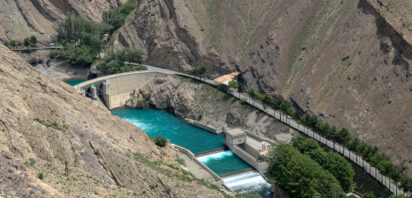
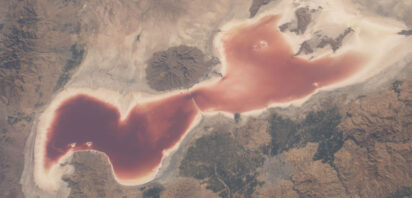
Iran President Issues Stark Warning on Tehran Water Crisis
What Happened
Tehran’s water scarcity and subsidence crises are so profound that the capital will need to be moved to the south of the country, as per recent comments from President Masoud Pezeshkian.
Why It Matters
- Cascading Water Crisis. The comments come amid years of mounting water crisis in Iran, the result of mismanagement, pro-natalist policies, urbanization, and dam building domestically and in neighboring states. Climate change has compounded the challenge, with several studies highlighting a long-term trend of increased temperatures and decreased rainfall, creating added stress on water supply.
- A Sinking Country. Aquifer depletion is fueling subsidence – land sinkage – at an alarming rate. Broadly, some 31,400 square kilometers of land is now sinking at a rate of over 10 millimeters per year. The problem is particularly pronounced in and around Tehran, where the equivalent of the size of Manchester is sinking an average 13 centimeters per year. The main cause is unsustainable extraction from Tehran’s aquifers, which are being tapped at ever-increasing rates amid rapid urbanization. The ground-level consequences range from sinkholes and ground shifts that damage buildings and critical infrastructure, to permanent damage and, eventually, potential collapse of underground water tables.
- Fueling Political Risk. The threats posed by water scarcity are not strictly abstract or geological. Shortages have roiled Iran’s domestic politics in recent years and will persist as a source of volatility going forward. Widespread protests erupted over water scarcity in 2018 and 2021, and have been ongoing in various forms since then, sometimes merging with other anti-regime movements such as the Mahsa Amini wave of 2022-2023. Should current rainfall trends continue (2024 saw a staggering 42% decrease in precipitation compared to the long-term average), the crisis risks becoming existential, with the capital literally running out of water (‘day zero’). This dire context sheds light on President Pezeshkian’s comments, which are essentially signaling that business as usual is no longer an option.
Belt and Road – US Style?
What Happened
Advisors to Asim Munir, Pakistan’s Army Chief of Staff, have floated the idea of a US-funded and operated port in the town of Pasni on the Arabian Sea so as to open the door to critical mineral investments in Pakistan, as per reporting from Financial Times. Pasni is just 110 kilometers west of the China-operated Gwadar Port, a key Belt and Road maritime hub.
Why It Matters
- US-Pakistan Bonhomie Continues. A paradigm shift has transpired in US-Pakistan relations since the downfall of Imran Khan and the four-day war between India and Pakistan in May. The new normal was on display in the recent White House state visit where the Pasni proposal was floated, complete with thumbs up, suggestions of a Nobel Prize, and some shade being thrown at India – an oft target of Trump’s ire of late.
- Reshuffled Geopolitics of South Asia. The US-Pakistan thaw would seem to represent a recalibration of South Asian geopolitics, especially when viewed in combination with the recent Pakistan-Saudi Arabia defense pact and worsening US-India relations. Interestingly, like with Gwadar, a hypothetical US-operated Pasni facility would also compete with the India’s Chabahar Port, which incidentally just had its longstanding sanctions waiver cancelled by the Trump administration last week. Yet there is reason to doubt the longevity of this new geopolitical alignment. While the strategic rationale for Pakistan is clear in that the US thaw can hedge against Islamabad’s longstanding overreliance on Beijing, the same cannot be said for the United States. In alienating India, Washington loses a powerful economic and diplomatic partner, along with a strategic hedge against China, where it’s highly doubtful that Pakistan would ever side with Washington over Beijing in the event of a real conflict given the economic interests involved. Moreover, these populations have dramatically different views of the United States, with Pakistan tending to view the U.S. in an extremely unfavorable light and Indian people, at least until recently, typically skewing more positive than the global average.
- US Belt and Road? The Pasni port is another case where the benefits don’t quite add up for Washington. The proposal is extremely vague and early days, though it is explicit in ruling out Washington using Pasni as a military base. And though the Trump administration has dabbled in state capitalism over his second term, the United States still lacks the kind of state-owned entities that could build and operate a port in the same vein of the BRI model.
Asia
Right-wing Sanae Takaichi Set to Become Japan’s First Female Prime Minister
What Happened
The 64-year-old Sanae Takaichi will take over as prime minister after being voted in as the leader of Japan’s ruling Liberal Democratic Party. Takaichi will take over from Shigeru Ishiba, who resigned in September after the LDP suffered resounding defeats in both levels of parliament.
Why It Matters
- A Test for Monetary Policy. Takaichi will be tasked with providing assurance to an unsettled Japanese electorate, with several economic issues looming large. There is the immediate concern of US tariffs on Japan’s heavily export-reliant economy, along with moribund consumer spending of late. But the bigger picture is the ongoing normalization of monetary policy, which has swapped deflation for inflation at the cost of a voter backlash over cost of living. Takaichi, a protégé of Shinzo Abe, is broadly expected to continue this pivot. However, she has been vocal about the government taking the lead on monetary policy and has advocated for a path of monetary easing, government spending, and tax credits to carve a path out of Japan’s economic wilderness. This puts the expected Bank of Japan rate hike in question despite its relatively low level of 0.5% and persistent food inflation, which was 2% year-on-year in August (an advisor has floated January 2026 as a possibility). The markets have been quick to signal their approval of the choice, with the Nikkei up 4.75% on Monday.
- An Iron Lady for Japan. Takaichi, who models her political career after the UK’s Margaret Thatcher, could set herself apart from predecessors in the foreign policy realm. She is an avowed nationalist and, like her mentor Shinzo Abe before her, has made frequent visits to the controversial Yasukuni Shrine. She decried Japan’s ‘masochistic view of its own history’ in her book and supports revising the pacifist clauses in Japan’s constitution. Even more interesting, Takaichi has been an advocate for stronger Taiwan-Japan ties, often equating Taiwan’s security with that of Japan (this strategic dynamic was covered in greater depth in a recent article), and at one point floated the idea of a ‘quasi-security alliance’ with the island. If translated into official policy, these views will send ripples through the current Indo-Pacific security framework. They don’t bode well for bilateral relations with South Korea, as Takaichi has been vocal about Japan’s claim to the disputed Dokdo/Takeshima island, risking a new bout of the all-too-familiar headaches for Washington in coordinating US-Japan-ROK ties. Takaichi also maintains a hawkish stance toward China and presumably will be more willing than the Ishiba to get behind Washington’s expanded forward deployment of intermediate-range offensive platforms like Typhon and coordinate defense measures surrounding a Taiwan contingency.
North America
Pentagon Quietly Sounds Alarm on US Missile Stockpiles
What Happened
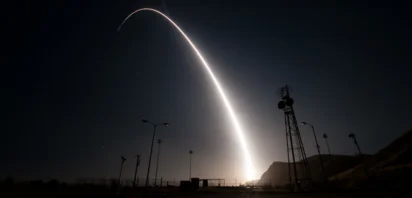
The Pentagon is urging defense contractors to ramp up production of 12 critical weapons on a ‘breakneck schedule’ out of concern that US stockpiles would be woefully insufficient for a conflict with China, as per reporting from the Wall Street Journal.
Why It Matters
The need is real and continues to be reflected in modern conflict, notably:
- The Israel-Iran war, where sophisticated missile defense systems such as THAAD and the Iron Dome risked being overwhelmed by mass asymmetric strikes.
- The Red Sea shipping crisis, where cost and stockpile concerns ultimately curtailed the longevity of Operation Rough Rider.
- The Ukraine war, where Russia demonstrated the political will and industrial capacity to enter a war economy footing that outproduced and slowly ground down its opponent, to the extent that Russia is now churning out four times the ammunition as all of NATO combined.
But the execution will be easier said than done. First there’s time, with some missiles taking up to two years to assemble. Then there’s political will, as this envisioned ramp-up in production exceeds the $25 billion budgeted in the Big, Beautiful Bill. Third there’s supply chains, with certain key inputs still subject to production bottlenecks or adversarial control. And finally, there’s the fact that the US must work through private defense contractors, some publicly traded, that require all of these things up front before ramping up production. Put simply, there will need to be sustained political will and lead time before these stockpiles can be replenished.