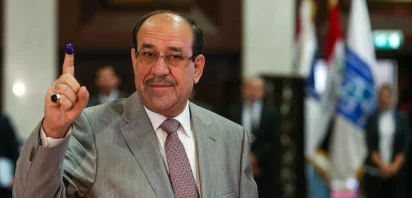
The 2025 Iraq Parliamentary elections will serve as yet another datapoint for the post-Coalition Provisional Authority (CPA) experiment of consociational governance in Iraq. Traditional power brokers, namely Iran, will have their hand in supporting sectarian Shia political alliances, with the most powerful being former prime minister al-Maliki’s State of Law and Hadi al-Ameri’s Fatah Alliance – the largest factions within the Shia Coordination Framework (SCF).
The Framework has already demonstrated signs of fracture, with the Badr Organization, one of the oldest Iran-backed militias in Iraq dating back to the Iran-Iraq war, announcing that it will enter the upcoming elections as a separate entity from the Fatah Alliance, following IRGC Quds Force Commander Esmail Ghaani’s recent meetings with several Shia Coordination Framework leaders, including al-Ameri, to discuss coalition-building ahead of the elections.
The Iran-backed Popular Mobilization Forces (PMF) militia Kataib Hezbollah has reportedly also instructed SCF MPs to “block” al-Sudani’s initiatives until the November election, possibly in an attempt to garner controlling influence within the coalition or demonstrate an already-existing sway over members.
These power struggles are taking place across three dimensions: debates over the level of Iranian influence in the Iraqi Parliament, the presence of US military bases in Iraq, and the official codification of the PMF and its related duties, recruitment, and political presence into Iraqi law – an issue that will come before the Iraqi Parliament prior to elections in the form of the Popular Mobilization Authority Bill.
In terms of the relationship with Iran, it is vital to note that the Iranian government and related organizations in Iraq likely possess similar, but slightly divergent goals. Iran, in the face of an overwhelming military defeat by Israel in June and the possible disarmament of Hezbollah by the Lebanese government, seeks a reliable coalition in Iraq that can act as a dependable measure of its influence. Meanwhile, every Iran-aligned faction in Iraq must moderate, to an extent, for large swaths of the population that despise Iranian influence, while also seeking to be the leading entity in any prospective coalition.
Iranian Influence and Electoral Reform
Iran has reportedly pushed for unity among SCF and PMF-affiliated parties in an effort to avoid the fragmentation of power and intra-sectarian conflict that followed the 2021 elections. While there have been political rifts during the government formation process after every election in Iraq, two electoral changes took place before the 2014 elections that have led to higher amounts of intra-sectarian conflict and allowed smaller parties to gain more leverage through increased seat apportionment. First, an electoral law change causing a shift away from the Hare apportionment method to Saint Lague apportionment method allowed for more equitable seat apportionment to smaller parties. Second, a 2010 Iraqi Supreme Court ruling allowed government formation to be dictated by the largest after-election bloc. This bloc would take the lead on government formation rather than the list that received the most votes in the election. This change allowed parties and lists that did not get the most votes to form majority governments against the wishes of the party that had the most electoral success. The reform, in turn, led to more intra-list infighting and pre-election coalition splitting, resulting in smaller parties and lists, since parties did not need to pledge allegiance to larger lists before the election in order to serve in the majority after government formation.
Historically, smaller parties may have had to do just that in order to have a chance at governing in the majority or to leverage the name recognition of the larger lists. Inevitably, the change also resulted in excruciating post-election deadlocks over government formation, an issue that would not be solved even after the October 2019 “Tishreen” protests and further electoral reform to a district-based system away from nationwide proportional representation. Popular strife over the perceived and actual corruption associated with the closed-door dealmaking process during both ex-ante coalition building and ex-post government formation, changes in compensatory seat allotment, and the practice of muhassa – allocating leadership and ministerial positions according to sectarian ratios – are largely considered to be factors that led to the anti-government protests in the late 2010s and early 2020s and the rise of Muqtada al-Sadr and his class-oriented coalition, which stands in opposition to the other sectarian Shia factions.
The Muqtada al-Sadr Factor
There are a multitude of dynamic political sub-environments in Iraq. One figure who will likely have an outsized impact on the 2025 election is Muqtada al-Sadr. Despite him announcing his retirement from politics after the 2022 political crisis that resulted in Sadr having all 73 Sadrist MPs resign and Sadr’s followers storming the Parliament, rumors have swirled surrounding his possible return to politics. Despite such rumblings, Sadr announced in July that he would be boycotting the elections unless the militias are disarmed in a major rebuke to Tehran.
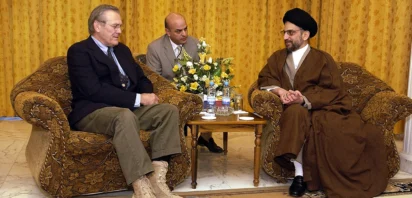
Sadr has long been a dynamic force in Iraqi Shia politics. His father, Mohammed al-Sadr, was an established Shia cleric and organizer and was assassinated, which led to the 1999 Shia Uprising. Another distant relative of his, Ayatollah Mohammed Baqir al-Sadr, founder of the Dawa Party, was brutally tortured and executed by Saddam Hussein’s regime. At various points in the last two decades, Muqtada al-Sadr has led the Mahdi Army and later Saraya al-Salam in insurgency campaigns against US forces, the ISIS insurgency, and even against the Iraqi government and US forces in Basra.
Sadr’s split from the sectarian Shia coalition with which he spent years can be analyzed along multiple axes: his ability to garner personalist support for himself as an individual – separate from the Fatah Alliance or al-Maliki’s State of Law – a long history of conflict with the Iranian government, and an ability to appeal to a different constituency, from a class standpoint, from the rest of the Shia parties. Consequently, it is difficult to predict which faction will receive the largest vote share of his followers. There is a significant possibility that his voters do not participate in the electoral process and instead engage in civil or violent resistance in Baghdad as Sadr has directed them to do in the past.
Alongside the Iranian government’s efforts to maintain unity in the SCF, reports have also indicated that Iran wants Sadr to “participate in the electoral process.” Despite rumors at one point of a Sadr-Sudani alliance, it seems unlikely that Iran would theoretically intend for Sadr’s participation to involve the mainstream SCF, given his tumultuous relationship with the Iranian government and the fact that his personalist popularity and support base would conflict with Iran’s operational goals for the SCF; he would serve as a center of gravitational influence toward himself, rather than actors who will act purely in Iran’s interest. However, the Iranian government may be angling for Sadr’s reentry into politics so that he can act as a counterbalance and therefore a solidifying force for the SCF, since after the 2014 electoral reforms, coalitions form out of necessity, not obligation. The SCF realizing that they need to coalesce in order to prevent Sadr from gaining a controlling interest in Parliament is in all likelihood the most probable path to unity. It is also important to note that this is roughly what occurred after the 2021 elections, with the SCF acting as a unified block to Sadr’s government formation efforts, then seeing pre-existing intra-sectarian divides reappear once Sadr and his affiliated MPs resigned.
Kurdistan, Turkey, and Syria
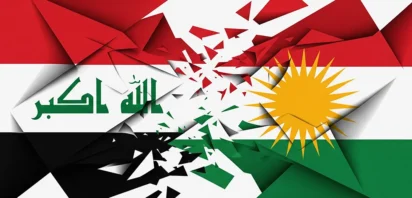
There are other variables in the political landscape. The upcoming election in Syria and the status of the integration of the Syrian Democratic Forces (SDF) into the Syrian Transitional Government (STG) will certainly also have an impact on the Kurdish political landscape in northern Iraq. Turkey has shown inclinations that they want to minimize the level of SDF influence in the Syrian government, and their battles with the People’s Protection Units (YPG) have the potential to spill into Iraq. Due to the Kurdistan Regional Government’s (KRG) potential geopolitical leverage on Turkey and political leverage on Baghdad — if the SCF is fractured — the KRG may try to leverage both Baghdad and Turkey to gain concessions in the energy sector, with all three sides currently in discussion over a potential new agreement for the resumption of use of the Iraq-Turkey Pipeline (ITP). The KRG, and in particular, the Kurdistan Democratic Party (KDP), may angle for remittances in the energy sector, since they have not been able to independently export oil to Turkey since the embargo imposed by Baghdad in 2023. While a 2023 decision by the International Court of Arbitration in France and a 2022 decision by the Iraqi Supreme Court concerning export authority challenged the KRG’s legal authority to independently export oil from Kurdistan to the Turkish Ceyhan Port, the Iraqi Oil Ministry could agree to a deal that is financially favorable to the KRG. The construction of Iraq’s Development Road, a transportation corridor from Basra to the Turkish border, could also serve as negotiating tool for Baghdad, as such a corridor could allow the KRG to export oil to both the north and south.
ISIS
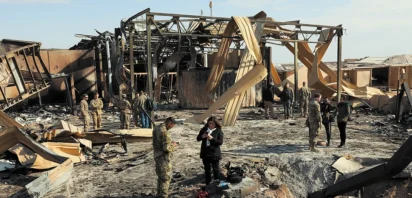
Another electoral factor that could be tied to Syrian stabilization and the SDF is their level of success in counterterror initiatives against ISIS amidst their integration with the STG. Operationally, the SDF may try to secure northeast Syria and border areas, which could mean an increased ISIS presence pushed onto the Iraqi side of the border. A theoretical increased presence of ISIS in the Al Anbar Governerate could result in two things: increased, or at least sustained, US military presence, or higher levels of unification within the PMF and its increased institutionalization – out of necessity. During the past two decades, fractured Shia political and military organization and high levels of success for Sunni political parties have been positively correlated. An increased ISIS threat may necessitate increased levels of both political and military coordination throughout the PMF and SCF, in line with what led to al-Sistani issuing the fatwa that formed the modern iteration of the PMF in 2014. Overall Sunni political organization has suffered during times of ISIS resurgence as well. A unified SCF and PMF could reinforce lines of conflict with Al Anbar via sectarian agitation and facilitate an ISIS resurgence, a historical repeat of al-Maliki’s disbanding of the Sons of Iraq that contributed to the last major ISIS insurgency.
In sum, a plethora of factors will shape the outcome of the 2025 Iraq Parliamentary elections: the stabilization of Syria; Iran’s ability to control and solidify the SCF; Muqtada al-Sadr’s level of participation; and Turkey’s shifting priorities in its interactions with the KRG, which range from economic interests in the energy sector, to political conflict with the SDF and PKK, to regional competition with Iran.