While a surge in Afghanistan and protests in Iran have been grabbing all of the headlines, Iraq’s political landscape has quietly started to heat up in the lead up to elections next March.
Analysis
Sectarian violence in Iraq has recently spiked – a trend that can be expected to continue leading up to parliamentary elections in March. While the recent upsurge is still tame compared to the height of the insurgency, the character of the attacks is disquieting insofar that they have tended to be either large, well-planned operations aimed at government institutions or small-scale sectarian assassinations. Of the former, there was the December 8th Baghdad attacks that claimed 122 lives, as well as this week’s double suicide bombing in Ramadi. As for assassinations, one needs not look beyond the Iraq Body Count (IBC) to see a long list of sectarian killings that do not make it into the international news.
As was the case for the Baghdad bombings of last August, this week’s Ramadi attack has some of the markings of an ‘inside job.’ It took place in a high-security zone, a fact that suggests collusion, and the second bomber was wearing an Iraqi army uniform. The risk remains high that violence will be used as a campaigning tool within Iraq’s nascent political system, and this means that a rash of new attacks should be expected leading up to next March.
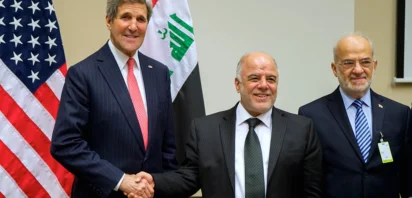
Iraq’s post-war political infrastructure has yet to bridge sectarian divides in Iraqi society, and there is no reason to believe that parliamentary elections in March will deviate from past sectarian voting patterns. With this in mind, the Obama administration has taken up the role of arbitrator in Iraqi politics, scrambling to keep the Iraqi state together by pressuring various factions to cooperate. However, distrust still runs deep.