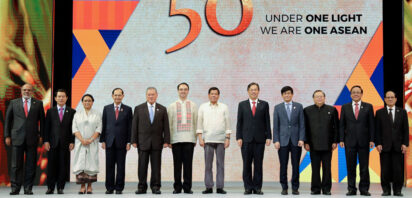
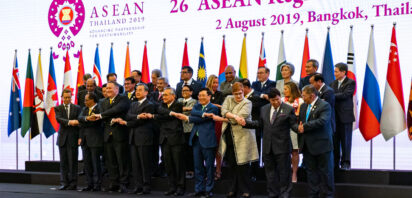
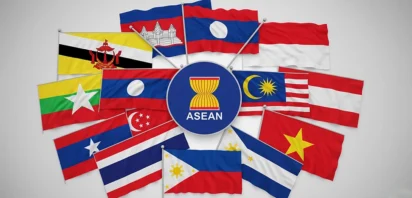
On July 28, 1995, Vietnam officially joined the Association of Southeast Asian Nations (ASEAN), becoming the bloc’s seventh member. The move, hailed at the time as a significant step toward regional reconciliation, capped Vietnam’s emergence from decades of post-war isolation and economic stagnation. Thirty years later, the country’s evolution within ASEAN offers a compelling — though complex — case of diplomacy, development, and regional ambition.
Vietnam’s accession was far from a foregone conclusion. Relations with several ASEAN members, particularly Thailand and Singapore, remained strained over Vietnam’s military involvement in Cambodia from 1978 to 1989. Yet the Vietnamese Communist Party, having launched its market-oriented Đổi Mới (Renovation) reforms in 1986, saw ASEAN not only as a platform for economic revitalization but as a path to geopolitical legitimacy. Integration into ASEAN marked a calculated pivot from confrontation to cooperation.
This gamble has largely paid off. Since joining ASEAN, Vietnam has seen its GDP multiply more than fivefold, becoming one of the region’s fastest-growing economies and a top destination for foreign direct investment. Membership in the ASEAN Free Trade Area (AFTA) and later the Regional Comprehensive Economic Partnership (RCEP) allowed Vietnam to diversify trade ties and embed itself into global supply chains. Today, Vietnam is frequently cited as a rising middle power and regional manufacturing hub.
Yet Vietnam’s story within ASEAN cannot be told solely through economic data and diplomatic milestones. The past three decades also underscore the limits of regionalism — and the contradictions within Vietnam’s own rise.
One clear challenge lies in the bloc’s structural weakness. ASEAN’s consensus-based decision-making, designed to promote unity, often results in paralysis on urgent matters. This has hampered collective responses to key regional flashpoints, including the South China Sea dispute — an issue central to Vietnam’s foreign policy.
Vietnam has been among the most vocal ASEAN states in pushing back against China’s expansive maritime claims. It has actively promoted negotiations over a binding Code of Conduct (COC) for the South China Sea and sought to internationalize the dispute without provoking direct confrontation. However, the lack of cohesion within ASEAN has allowed Beijing to exploit internal divisions, particularly among member states with closer economic or political ties to China. Despite Vietnam’s persistent diplomacy, progress on the COC remains sluggish, and China continues to fortify its presence in contested waters.
Vietnam’s tenure as ASEAN Chair in 2020, during the height of the COVID-19 pandemic, demonstrated Hanoi’s growing diplomatic capacity. It successfully pivoted to virtual diplomacy and sustained momentum on regional cooperation. Still, its inability — along with the bloc’s — to forge unified stances on Myanmar’s military coup and the South China Sea highlighted ASEAN’s chronic indecisiveness.
Internally, Vietnam must contend with growing tensions between rapid economic growth and persistent political and environmental challenges. The country aspires to reach high-income status by 2045, but inequality, corruption, and environmental degradation pose serious obstacles. While Vietnam has developed an increasingly skilled diplomatic corps through ASEAN engagements, its domestic political model remains rigid, with little room for civic participation or institutional reform.
Geopolitically, Vietnam’s strategy of balancing between the United States and China is becoming more difficult to sustain. While it has deepened strategic ties with Washington — particularly as the U.S. seeks to counter Beijing’s influence — Vietnam also remains economically intertwined with China, its largest trading partner. This duality has afforded Vietnam strategic flexibility, but it also exposes vulnerabilities. In an increasingly polarized Indo-Pacific, neutrality is harder to maintain.
At the same time, ASEAN itself faces an identity crisis. Once lauded as a stabilizing force, the bloc now risks irrelevance amid the shifting dynamics of great-power competition. China’s economic footprint in Southeast Asia continues to grow, while US engagement with ASEAN remains inconsistent. In this context, Vietnam’s role as a middle power is both critical and constrained. It must help strengthen the bloc’s institutional coherence while managing its own national interests — a balancing act that becomes more complex with each passing year.
Still, Vietnam’s ASEAN journey has not been without major gains. Participation in the bloc has helped incubate a generation of technocrats and policymakers experienced in multilateral diplomacy. Vietnam has contributed meaningfully to ASEAN’s evolving agenda on climate change, digital governance, and economic connectivity. Its foreign policy pragmatism — seeking gradual progress over confrontation — has earned it credibility within and beyond Southeast Asia.
Yet, if Vietnam hopes to lead ASEAN toward greater relevance, it will need to push for reform from within. This includes advocating for a more flexible and effective decision-making model, upgrading digital integration among member states, and ensuring ASEAN remains a viable platform for managing regional tensions. Without such changes, Vietnam may find itself hamstrung by the very institution that once offered it a diplomatic lifeline.
As it marks three decades of ASEAN membership, Vietnam stands not just as a participant, but as a pillar of the bloc. Its rise is a testament to the long game of diplomacy. But sustaining that ascent will require more than pragmatism. It will demand boldness — in regional leadership, institutional reform, and domestic modernization.
Whether Vietnam can rise to this occasion may well determine ASEAN’s future — and its own.
James Borton is a non-resident senior fellow at Johns Hopkins Strategic Advanced International Studies (SAIS) Foreign Policy Institute and the author of Harvesting the Waves: How Blue Parks Shape Policy, Politics, and Peacebuilding in the South China Sea.
The views expressed in this article belong to the author(s) alone and do not necessarily reflect those of Geopoliticalmonitor.com.