The state of Israel presents a truly unique case in that it is the only nuclear power in the world that has never officially declared itself as such. Although it is recognized among the states that have successfully completed their own atomic program, Israel has never formally confirmed nor denied the possession of nuclear weapons.
In support of the thesis of Israel’s actual possession, however, is the historical course of the Israeli nuclear program, which allows us to outline a relatively clear picture.
The development of a domestic nuclear program has been a key objective for Israel ever since its founding in 1948. As early as 1956, David Ben-Gurion declared: “What Einstein, Oppenheimer, and Teller – all three of them Jews – did for the United States, could also be done by scientists in Israel, for their own people.”
The statement clearly reflects what was later described as a constant concern – perhaps even a near-obsessive fixation – of the very first leader of the nascent Israeli state, upon which an entire strategic vision would be built over the decades.
French Connection: A History of Israel’s Nuclear Program
The idea was to develop a nuclear weapon as the ultimate guarantee of protection for the Israeli people, driven by the fear of another Holocaust. This determination on the part of Jerusalem soon found the firm support of France, which, even at the time, positioned itself as the primary supplier of weapons systems to the fledgling Jewish state.
Thus began the construction of the Negev Nuclear Research Centre near Dimona, which to this day is considered the heart of Israel’s nuclear program. The choice of site was no coincidence: subsequent geological surveys in the region revealed modest, yet useful quantities of material necessary to initiate the reactor.
The exact date of completion and operational status of the facility remains uncertain, but by the late 1950s, speculation already pointed to the existence of a first reactor and a uranium reprocessing plant.
Israel’s commitment was such that the expertise of its scientists – led by physicist Hemed Gimmel, a former student of Enrico Fermi – was placed at the service of their French allies. Among the most significant episodes was the Israeli contribution to the construction of the Marcoule nuclear plant in France.
This cooperation went far beyond scientific collaboration, eventually extending to the transfer of classified information – also obtained through a network of Sephardic Jews – considered highly valuable by the French government in its efforts to suppress uprisings in its North African colonies. In return, France granted Israel full access to the data from the numerous nuclear tests it was conducting at the time in Pacific atolls.
Franco-Israeli scientific collaboration reached its peak in 1956, during the Suez Crisis, when – in line with the secret Sèvres accords – Israel committed to attacking Nasser’s Egypt in the Sinai, thereby creating a pretext for the intervention of Franco-British forces presented as peacekeeping contingents. In exchange, the French pledged to further bolster support for Israel’s atomic program by providing two IRR-2 reactors for supposed civilian use.
It is worth noting that these agreements continued at least until Charles de Gaulle assumed the presidency, at which point he immediately expressed his opposition to ongoing cooperation with Israel. Nevertheless, exchanges persisted – always under strict secrecy – until 1966, leading, among other things, to suspicions and scandals concerning alleged uranium supplies from Gabon.
During the course of these nuclear-related dealings, US President John F. Kennedy also became involved, repeatedly expressing deep concern over the progress of Israel’s nuclear program. On several occasions, he threatened to halt Israeli experimentation, even going so far as to raise the possibility of a pre-emptive strike by the United States on the Dimona facility. Kennedy’s objective was clear: to safeguard the nuclear duopoly shared with the Soviet Union and to prevent regional actors – deemed difficult to control – from entering the nuclear arena.
Following Kennedy’s death, his successor, Lyndon B. Johnson, significantly toned down such concerns, effectively allowing Israel to continue developing its arsenal undisturbed.
With the end of its cooperation with Paris, Israel sought new channels to support its program: first turning to the United Kingdom for various exchanges, particularly concerning the supply of heavy water, and later to Union Minière du Haut Katanga, a Belgian mining company active in the Congo.
The Dawn of Strategic Ambiguity: Israel’s First Nuclear Bomb
By the late 1960s – particularly in 1969 – the US Secretary of Defense, Melvin Laird, was the first to raise suspicions that Israel was by then in possession of its first nuclear weapon, reportedly assembled between 1966 and 1967. These concerns were confirmed the following year during a meeting between President Richard Nixon and Israeli Prime Minister Golda Meir. On that occasion, Nixon insisted that Israel not publicly disclose the introduction of nuclear weapons, nor carry out any tests that might undermine Israel’s strategic ambiguity, which would later form the basis for the Begin Doctrine.
Nixon’s intervention was far from incidental: it was already well known that Israel was considering a preventive demonstration of its nuclear capability in order to deter any potential attack by Arab states.
Reinforcing the position of US intelligence were several reports from West German intelligence services. In June 1976, the German military journal Wehrtechnik reported that Western agencies had documented a presumed underground test carried out by Israel in the Negev as early as 1963. The volume Nuclear Weapons in the Middle East: Dimensions and Responsibilities by Taysir Nashif cites additional sources, suggesting that on 2 November 1966, Israel conducted a non-nuclear test, perhaps a zero-yield or implosive-type test, again in the Negev desert.
Throughout the 1970s, Israel continued to develop its nuclear arsenal, allegedly conducting several atomic tests in the Indian Ocean. These trials, never officially acknowledged by the Israeli government, generated considerable international uproar. The most well-known of these was the so-called Vela Test, reportedly carried out with the informal consent of the South African government, a key strategic partner in supplying Israel’s nuclear program.
Nuclear Ambiguity in the Present Context
The official silence surrounding Israel’s nuclear capability was further eroded by the famous case of Mordechai Vanunu, an engineer at the Dimona facility, who in 1985 provided the Sunday Times with a number of photographs taken inside the plant. The images confirmed not only the existence of nuclear warheads, but also advanced research into the construction of H-bombs and neutron bombs. The consequences for Vanunu were immediate and severe: abducted by the Mossad, he was convicted of treason and imprisoned for 18 years, followed by additional periods of detention.
To this day, the exact number of nuclear warheads in Israel’s possession remains uncertain. While in 1997 the USAF estimated the figure at approximately 400, a 2009 assessment by the International Institute for Strategic Studies (IISS) revised the estimate down to around 200. More recently, the Center for Arms Control and Non-Proliferation reported that Israel possesses 90 active warheads, with the capacity to produce between 100 and 200.
Although the existence of Israel’s nuclear arsenal is now widely accepted internationally, official acknowledgements remain rare and partial. Among these is the public admission in 2013 by former Knesset Speaker and Foreign Affairs and Defence Committee member Avraham Burg, who confirmed the possession of nuclear and chemical weapons by the Israeli state. Another rupture in the so-called nuclear ambiguity occurred at the outset of the 2023 war, when Culture Minister Amihai Eliyahu and Likud MP Tally Gotliv – both members of the governing coalition – openly called on the government to consider the use of nuclear weapons in the Gaza Strip.
In light of such developments, one cannot help but ask: What is the purpose, today, of maintaining a secret so widely known and increasingly fragile? What strategic benefit does Israel derive from elevating nuclear ambiguity into a core politico-military doctrine?
The Begin Strategic Doctrine: An Opaque Truth
Among the key pillars of Israel’s security strategy is the Begin Doctrine. This doctrine, which still underpins the national security policy of the Israeli state today, aims to decisively prevent the emergence of potentially lethal weapons in the hands of regional actors hostile to Israel.
Its foundational principle is the maintenance of Israel’s uncontested nuclear supremacy in the Middle East. Although the Israeli state has never used nuclear weapons – not even tactically – the possibility of their use continues to loom, intermittently, in the background of strategic debate.
What has faded over time, however, is the element of uncertainty: today, Israel’s possession of nuclear warheads is virtually taken for granted.
The link between the lack of official acknowledgement and the strategy of preventive strikes has led to questions about a seeming contradiction in Israel’s international posture.
Pragmatic Doctrine: Operations ‘Opera’ and ‘Outside the Box’
The core principles of the doctrine were formally set out by Prime Minister Menachem Begin in the aftermath of the strike on Osirak during Operation Opera in June 1981.
To better contextualize the moment in which this doctrine was first articulated, it is worth recalling the official statement released by the Israeli government following the attack, which declared: “Under no circumstances shall we allow an enemy to develop weapons of mass destruction against the people of Israel. We will defend Israeli citizens in due time and by all means at our disposal.”
The Israeli action drew an immediate response from the international community, sparking fierce criticism, particularly from the Reagan administration, which imposed a partial embargo on the export of defensive weaponry to Israel. A UN resolution of condemnation followed soon after.
Begin publicly assumed both political and moral responsibility for the operation, stating: “Even if a resolution were passed, and even if the Americans were to vote for it, we will survive. If that reactor had survived, we would not have.”
He described the action as a pure example of pre-emptive self-defence, praising its execution both ethically and legally. The strike on Osirak was thus not seen as an exception, but rather as the beginning of a long-term strategic commitment aimed at ensuring the survival of the State of Israel in the face of any nuclear threat.
The doctrine of pre-emptive self-defence resurfaced in 2007. Quite unexpectedly, Mossad agents uncovered the existence of a Syrian nuclear program after intercepting a regime official linked to Assad in a Vienna hotel.
Following an initial – and unsuccessful – request for US intervention, Prime Minister Ehud Olmert decided to act unilaterally, launching Operation ‘Outside the Box,’ which resulted in the destruction of the nuclear reactor near Al-Kibar.
On that occasion, Israel succeeded in reaffirming the legitimacy of the Begin Doctrine before the international community, which, though it raised doubts about the legality of the strike, could hardly argue against the risks posed by such an arsenal in the hands of Bashar al-Assad.
As Olmert himself remarked during a meeting with the President George W. Bush in June 2007: “If the construction of the Syrian reactors had not prompted concrete action from the Americans, the Israeli forces would have taken care of it. And that is exactly what happened.”
Iran Strikes Impact on Middle East Strategy
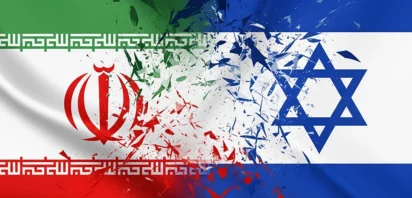
At first glance, Israel’s strikes this past June on the sites at Fordow, Natanz, Isfahan, and Arak might appear to be yet another application of the Begin Doctrine – its third implementation in nearly twenty years – directed against a state deemed threatening to Israel’s security. However, the Iranian case is marked by such complexity and scale that it warrants a more specific analysis.
To reduce the Israeli offensive to the single bombing of June 2025 would be overly simplistic. It would fail to account for the broader strategy pursued by Mossad and the IDF over the past decade, characterized by a long series of targeted, low-profile operations, among which the assassinations of key figures in Iran’s nuclear program stand out. One may recall, in particular, the cases of Majid Shahriari – assassinated in 2010 by an explosive device planted on his vehicle by two motorcyclists in a rather theatrical attack – and Fereydoon Abbasi, who initially survived an attempted killing in January 2011 and was later eliminated during the coordinated attacks of June 2025.
Added to these acts of asymmetric warfare – still very much part of the Begin Doctrine – was the deployment of the Stuxnet virus, jointly developed by the United States and Israel to sabotage the critical infrastructure of hostile countries. In Iran’s case, Stuxnet severely damaged the Natanz facility, disabling numerous uranium-enrichment centrifuges and setting back Tehran’s nuclear program by several years.
Further complicating the Iranian case is the nature of its nuclear program itself, designed from the outset with anticipated Israeli strikes in mind, and developed to be resilient and decentralized across the entire country. To this end, underground sites such as the one at Fordow were constructed, bombed by the USAF on 22 June 2025 using GBU-57 Massive Ordnance Penetrator (MOP) bombs, whose use, it should be noted, has never been authorized for the Israeli Air Force.
Another significant element is the diplomatic success achieved by Netanyahu. Unlike previous offensive operations against neighbouring states, this time the military action was met with an almost unanimous wave of approval from the West. While political dissent was not entirely absent, the operational support in the bombing campaign provided by the United States demonstrates that Israel navigated the situation with notable finesse, thanks in part to its increasingly central role in the global security landscape.
In this regard, the words of German Chancellor Friedrich Merz at the latest G7 summit in Canada are striking in their stark strategic clarity: “This is the dirty work Israel does for all of us.”
Nevertheless, as highlighted by the Institute for National Security Studies (INSS), the Begin Doctrine cannot be followed indefinitely. The Iranian case already offers a clear example of this: unlike the raids on Osirak in 1981 or Deir ez-Zor in 2007, today’s targets are dispersed, concealed, deeply buried, and part of far more sophisticated and fragmented nuclear programs. While Israel’s nuclear monopoly in the Middle East may, for now, remain intact, it has undeniably lost the veil of secrecy that – by the late 1960s – served as a key tool of deterrence against potential aggression from the Arab bloc.
The success of the doctrine, therefore, may well be in jeopardy, especially should the region undergo significant political change, should missions fail, or, in the worst-case scenario, should the situation spiral into a fatal escalation.