On January 23, when addressing global leaders at the World Economic Forum in Davos by video stream, Donald Trump declared: “I’ll demand that interest rates drop immediately… they should be dropping all over the world.” The comments came on the heels of a Federal Reserve meeting days earlier in which chairman Jerome Powell opted to leave the rate unchanged at 4.25-4.5%, defying some calls for a cut. President Trump later took to social media and singled out Powell and the Fed for criticism specifically.
Then just over a week later, Trump struck an entirely different tone when asked by reporters about the decision: “I’m not surprised… I think holding rates at this point was the right thing to do.”
Why the change of heart? Inflation. Trump’s 180 on interest rates, combined with his apparent changing tack on the North America tariffs, suggests that the realities of global economics are beginning to weigh down on elements of the Trump policy agenda.
Inflationary Pressure #1: Business as Usual
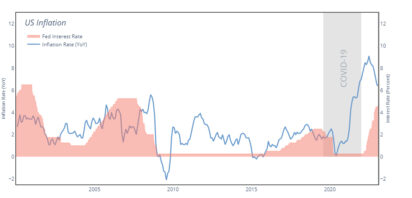
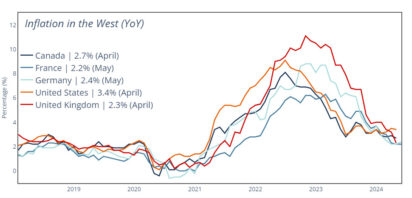
The above graph vividly outlines the massive cost-of-living burdens born by the US population during the Biden era, as COVID-era supply shocks spiked the price of countless household essentials. But of more interest is the post-2022 section of the chart, where the Fed embarked on a series of hikes unprecedented since the Great Recession, only to bring inflation down to the 2-4% range. Herein lies an uncomfortable truth: the inflation crisis had not been ‘solved’ by the time Donald Trump reclaimed the White House. Rather, inflation was blunted but not beaten, and only through interest levels that remain abnormally high in the context of recent monetary history. Note the late 2024 section of the graph in particular, where attempts to ease from the 5.5% interest level spurred a return to near-3% rates of inflation.