A recent situation report surveyed the wide-open field in Peru’s April 11 general election, where no one candidate garnered more than 15% support in pre-election polls. The ultimate result was even more shocking, producing a win for Pedro Castillo, a left-wing union activist who barely registered in pre-election polling. Though the count is still ongoing, the early count suggests that Castillo’s opponent could be Keiko Fujimori, the right-wing daughter of disgraced ex-president Alberto Fujimori.
The potential now exists for an ideologically polarizing run-off contest, where voters are forced to choose between two starkly different visions for the future of Peruvian society.
Analysis
The latest official count shows Pedro Castillo in the lead with 16% of the vote, followed by Hernando de Soto (13.6%), and Rafael Lopez Aliaga and Keiko Fujimori, both of whom are tied at 12.9%. However, an initial fast count suggests that Fujimori will eventually finish in second place, allowing her to move on to the second-round ballot on June 6.
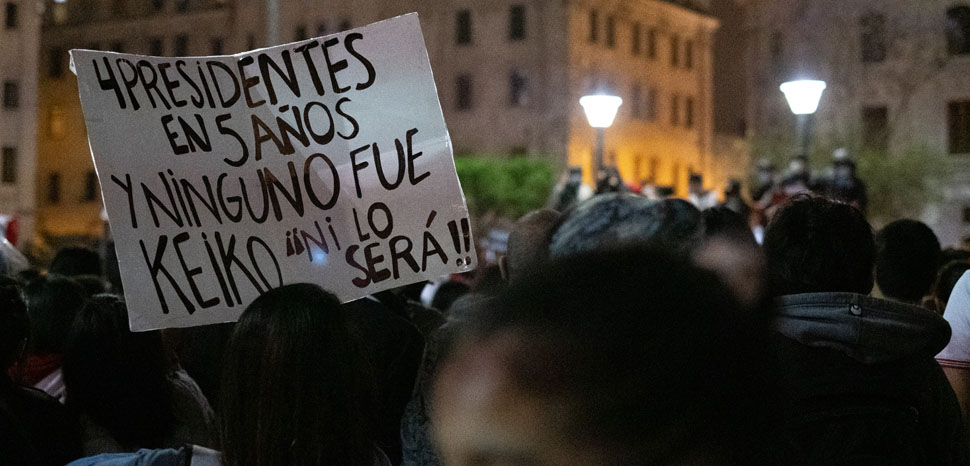
Castillo might have come out of nowhere to win the first round decisively, but his ascent as an anti-establishment spoiler was predictable given the pervasive public apathy toward Peru’s elites. Castillo spent the campaign period touring Peru’s rural areas and holding large rallies. And despite scant coverage of his platform in the national press, his message of “the political class has had their chance; it’s our turn” resonates in a country where institutional dysfunction has become the norm.
Upon learning of his first-round victory, Castillo remarked that “the blindfold has just been taken off the eyes of the Peruvian people.”
And what will these people see should Castillo prevail in the second round? A far-left program of strengthening state control over the economy and alleviating poverty.
Castillo’s policies are broadly anti-foreign capital. He has vowed to remake Peruvian society from the ground up by nationalizing foreign mines, deepening state control over a variety of other sectors such as health, banking, and telecommunications, and rewriting the Peruvian constitution in order to reduce the power of business interests and strengthen the presidency vis-à-vis Congress.