Brazil has emerged as a global hotspot in the COVID-19 pandemic. The country now has the third-most active cases in the world, behind only Russia and the United States, and 249 deaths were recorded yesterday alone.
The outlook will deteriorate further over the near term. If the current rate holds, total deaths will double every two weeks. As of May 25, the death count stands at 23,522. And the health systems of major cities like Sao Paolo and Rio de Janeiro are already at the point of near-collapse.
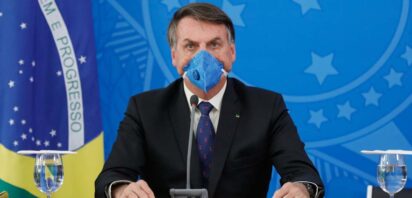
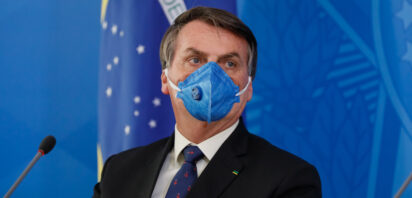
Where does Brazil’s COVID-19 outbreak go next, and will President Bolsonaro – infamous for his blasé attitude toward the crisis – pay for his government’s bungled response?
Analysis
Brazil’s response to COVID-19 has lagged compared to all of its Latin American peers. For example, Argentina posted just four new cases on Monday, and Chile posted 43 new cases. By comparison, Brazil posted 249 new cases over the same period. Moreover, case numbers are likely hiding the true extent of Brazil’s outbreak, as testing there continues to be lower than in other countries (Brazil tested just 3,461 people per 1 million; that number is 45,187 in the United States). Rather, the number of deaths is a better albeit still imperfect indicator, and here Brazil is also in worse shape than its neighbors. Brazil currently has a rate of 108 deaths per 1 million people, far beyond that of Chile (40), Argentina (10), and even Mexico (57), another country that has struggled to contain the virus.
The epidemic is still trending upward. Estimates put Brazil’s R rate – the number of new people infected by each case – at around 2. An R number of below 1 is required for the epidemic to recede.
If you were to draw a chart chronicling Brazil’s disastrous response to COVID-19, it would flow downward from President Jair Bolsonaro. The firebrand Brazilian president was an early and ardent believer in the pandemic being much ado about nothing, and the country’s worsening circumstances have not intervened to change his mind. Bolsonaro has railed against lockdowns, fired his own health minister, and sought to project a sense of life-as-normal whenever the lens is fixed on him. The result has been a lack of buy-in from many Brazilians on social distancing measures. By one estimate last week, just 40-55% of people were respecting social distancing rules.