The Financial Times is reporting a rise of approx. 15% in the price of construction materials in major Chinese cities, reversing a recent trend of month-on-month declines. The data suggests an uptick in new infrastructure projects, a favored tool of policymakers to stimulate economic activity during periods of contraction.
But new fiscal stimulus is not without its own risks, particularly in the case of China, where the government is already struggling to deleverage the formal and informal lending sectors. A new state-led infrastructure bonanza could lead to more ‘white elephant’ projects which, though useful in stimulating economic activity over the short-term, seldom provide enough of a long-term growth dividend to justify the initial investment.
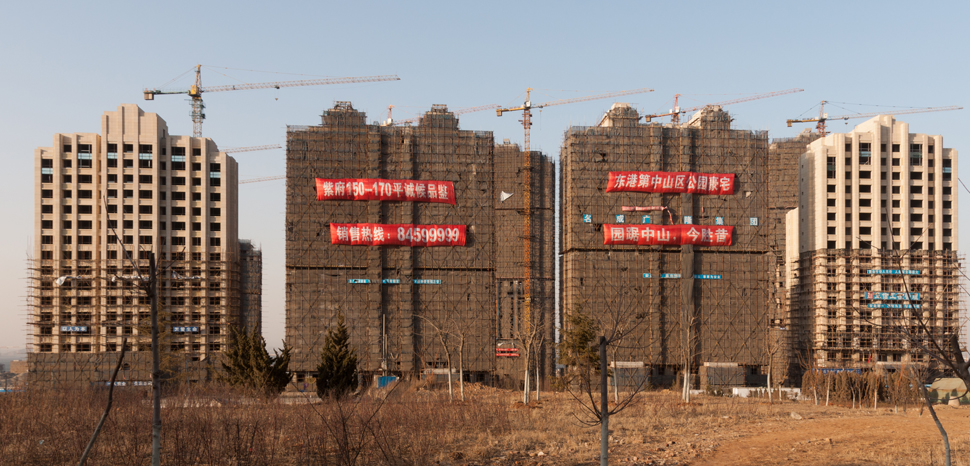
Think the ghost cities and empty airports that used to feature prominently in Western media reports on China. Nowadays, not so much. Amid the ongoing US-China trade war and societal tightening of the Xi Jinping era, such matters have increasingly been regarded as a closely guarded state secret.
A new round of infrastructure stimulus would contradict the Chinese government’s official line, which stresses the need for ‘quality growth’ – even if it comes at a slower pace than recent years – rather than any new major stimulus program. According to official figures, infrastructure spending grew just 3.3% over the first 10 months of 2019.
The stimulus issue boils down to two overriding considerations: growth and debt.
China’s official GDP rate came in at 6.6% in 2018, just above the government target of “around” 6.5%. This target was reduced to 6-6.5% for 2019, and there are indications that the final number may fall short of the mark. Front and center is the country’s third quarter growth rate of just 6% – its lowest rate of expansion in over 25 years. Analysts are expecting that number to fall even further in the fourth quarter, barring a sudden resolution of the trade war.
There’s always room for a healthy degree of skepticism so far as China’s official growth numbers are concerned. National figures are fed into by the country’s 32 regional governments, which are composed of officials who are essentially incentivized to paint as sunny an economic picture as possible, even if the ground-level realities don’t match up.

&BAP_Guise(CM-28)-412x198.webp "Abukama class destroyers; cc MOD Japan, modified, https://en.wikipedia.org/wiki/File:JS_Abukuma%EF%BC%88DE-229%EF%BC%89%EF%BC%86BAP_Guise%EF%BC%88CM-28%EF%BC%89.jpg")