On October 24 2015, representatives from 21 Asian countries signed a memorandum of understanding to form a new Beijing-headquartered regional institution, the Asian Infrastructure Investment Bank (AIIB). The countries were: Vietnam, Uzbekistan, Sri Lanka, Thailand, Singapore, Qatar, the Philippines, Pakistan, Myanmar, Oman, Nepal, Bangladesh, Brunei, Mongolia, Malaysia, Laos, Kuwait, Kazakhstan, India, Cambodia, and China.
The AIIB is expected to have an initial authorized capital pool of $100 billion, of which $50 billion will be subscribed capital. Founding members will go back to their respective countries and ratify the treaty, and the bank will be formally established by the end of 2015.
Impact
The foundation of the AIIB is being viewed as a step towards China establishing a regime of international institutions to compete with the post-WWII order (World Bank, International Monetary Fund (IMF), and later the Asia Development Bank (ADB)) – institutions it had no say in forming. The push towards establishing new institutions seems to stem from the fact that the old ones show no sign of reforming to accommodate China’s added weight in international politics. Recall that in the wake of the 2009 global financial crisis, there were increased calls to scrap the informal agreement that sees the head of the IMF a European citizen and the head of the World Bank a US citizen. These calls ultimately fell on deaf ears, meaning that China is essentially being asked to submit to the sole authority of an international institution it has no real chance in reforming to better reflect its own interests. Herein lies the motivation for Beijing to forge ahead with its own institutional approach.
The Party has tried to downplay the idea that the AIIB will compete with the ADB and the World Bank. A People’s Daily editorial run soon after the signing of the memorandum argued that the AIIB would complement existing institutions and not compete with them, particularly because the existing regime does not overly focus on infrastructure development. In positive terms a new bout of region-wide infrastructure spending would be of obvious benefit in that it would link peripheral economies to Asia’s new economic hub in China.
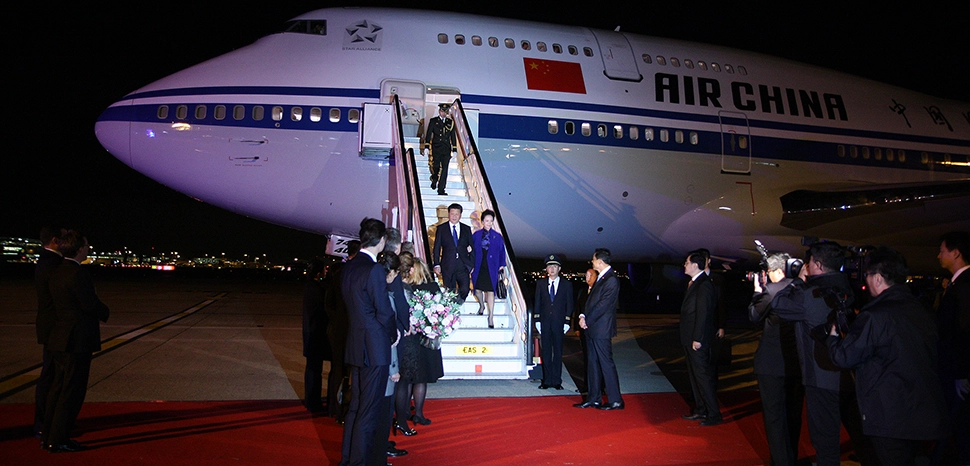
But fast forward to March 2015 and it’s the normative aspect of the AIIB that is making headlines. China has been negotiating with various Western powers to join the AIIB, and these efforts paid off in a big way last week when the Cameron government agreed to join as a founding member. The United Kingdom is the first Western country to do so, and it reportedly accepted the Chinese terms at face value without attempting to alter them, even as Australia and South Korea are currently negotiating for some assurances on environmental or good governance grounds before ascending to the bank. The Cameron government has consistently been eager to engage with Beijing, and this latest accommodation reflects a desire to make London a global hub for renminbi trading and Chinese investment.