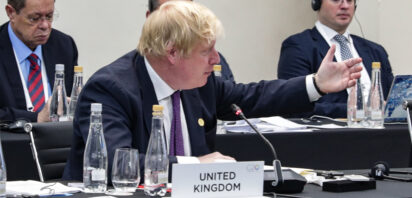
On the surface, the appointment of Boris Johnson as prime minister of the United Kingdom seems to signal the arrival of endgame in the Brexit saga, if nothing because a ‘hard Brexit’ is finally out in the open as a viable if not preferred option to be pursued by the new government. Johnson’s first moves in office did nothing to dispel the idea, like his blunt rejection of the backstop deal, which produced the expected result of freezing out any potential new talks with the European Union.
But now, as before, news of the impending death of Britain’s epic, slow-motion political train wreck may be premature. There are still plenty of electoral and parliamentary knife fights to play out before this is all finished.
Here’s what to expect from the opening months of a Johnson premiership:
Analysis
Hard Brexit is the goal. All signs are pointing to a government preparing for a hard Brexit (the UK leaving the European Union without an exit deal). Johnson himself has been one of the highest profile critics of his predecessors attempt at a ‘soft Brexit,’ and he now owes his position at the apex of British politics to this one issue. He has surrounded himself with advisors and a cabinet of fellow travelers: Dominic Cummins (strategist behind the Vote Leave campaign) is his chief of staff; Dominic Rabb (former Brexit minister) is foreign secretary; Michael Gove is cabinet office minister; Theresa Villiers is environment secretary, etc. The relatively moderate, soft Brexit, voices like Jeremy Hunt and Philip Hammond have all been pushed out. Moreover, the goal of a hard Brexit is no secret; it has been explicitly stated by members of the Johnson cabinet. Michael Gove recently told the Sunday Times that his government was “working on the assumption” of a no-deal Brexit.