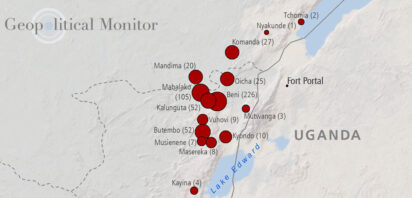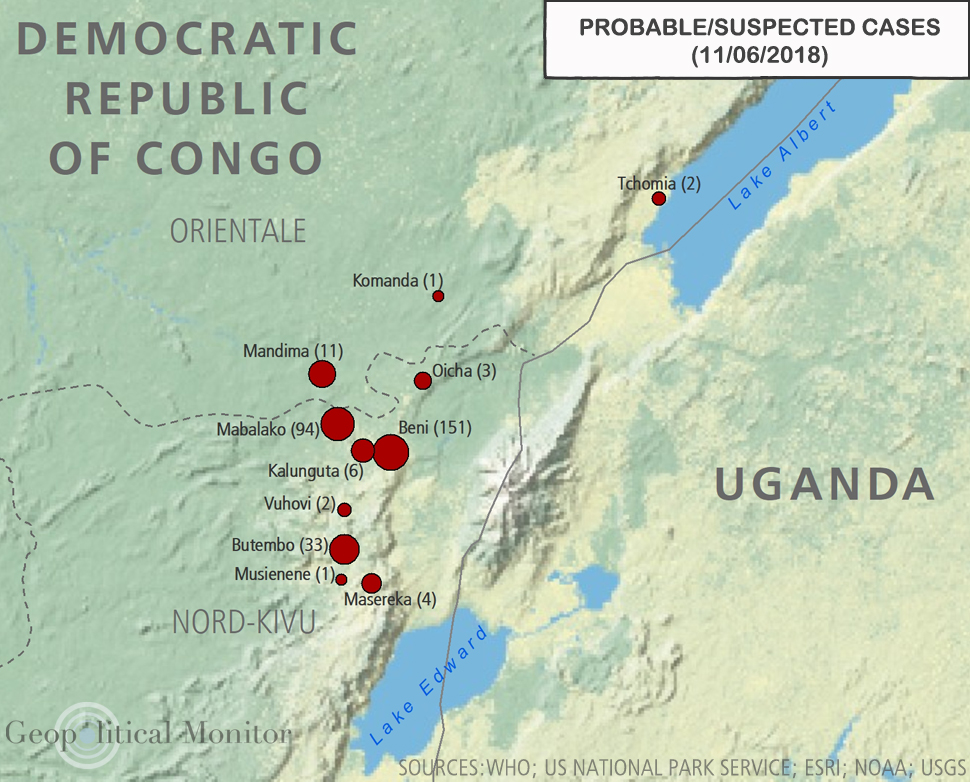
The latest WHO situation report sheds new light on the evolving Ebola outbreak in the DRC’s North Kivu province. According to the report, there have been 29 new cases over the past week, 15 of which are located in Beni.
With 329 confirmed and probable cases, the WHO has now declared this Ebola outbreak to be the worst in the history of the Democratic Republic of Congo.
Yet there are also some positive developments of late. For one, despite a series of false alarms, the disease has yet to spread to neighboring countries like Uganda, South Sudan, or Rwanda. A vaccination drive has also seen some 27,360 people receive an experimental vaccine, including over 9,000 frontline health workers, with encouraging early results.
Impact
The current outbreak remains under control. However, the conditions of northeast DRC will continue to pose unique risks vis-à-vis outbreaks in the past.
The border with Uganda is one such risk. Just 100 km from the outbreak’s epicenter in Beni, the DRC-Uganda border zones are loosely policed and can see up to 50,000 crossings a day. Authorities are now taking precautions at the border, checking the temperatures of everyone who crosses. But the long incubation period of Ebola – which can sometimes take weeks before symptoms appear – increases the odds of the virus getting through.