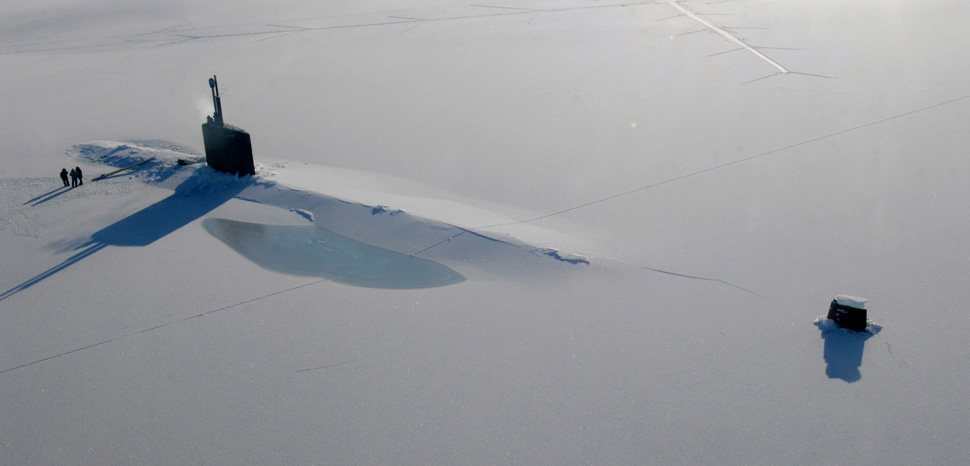
Climate change has the potential to dramatically alter the geopolitical scene in the 21st century. While the phenomenon will have a worldwide impact, its effects will be particularly marked in the Arctic. As the polar ice cap melts, new maritime shipping lanes will open in the region. The so-called Northern Sea Route (NSR) has the potential to become a game-changer in the world’s geopolitical order. As a matter of fact, it would be a new and much shorter connection between Eastern Asia and Europe, with huge potential implications for trade. Moreover, the Arctic is estimated to host considerable hydrocarbon deposits, which attracts the attention of powers like Russia, China, Japan and others. As the Arctic becomes an area of increased maritime traffic, energy exploitation, and possibly great power competition, the Bering Strait will gain significant strategic relevance. Considering that it separates two rival powers in the United States and Russia, and that China would be one of the main economic beneficiaries of the NSR’s opening, it is likely that the Bering Strait will gradually be militarized moving forward.
Background
It is widely accepted that global warming is causing the polar ice caps to melt. Apart from the considerable environmental concerns, this phenomenon also has major economic and geopolitical ramifications.
First, climate change is opening a new maritime course across the previously inaccessible Polar Circle known as Northern Sea Route (NSR), which will open new opportunities for trade between Europe and Asia. Second, it appears that the Arctic is home to huge hydrocarbon reserves, which are now being made accessible by the melting ice. Of course, drilling in the region remains extremely challenging, but as the climate warms extracting energy resources in the area will become easier. Among the great powers, China seems particularly interested in developing the Arctic. The NSR represents a shorter journey than the traditional sea lanes of communication (SLOC) crossing the Pacific and the Indian Ocean, and exploiting the Arctic’s energy resources would reduce China’s reliance on imports from the politically unstable Middle East. States like Japan and South Korea are also interested in establishing a presence around the North Pole for similar reasons.
Then there’s the region’s dominant power: Russia. As with the others, Russia wants to develop the NSR to boost its own economy (since it would benefit from the maritime traffic along its northern coast) and wants to exploit the Arctic’s energy resources in order to reinforce its position as a major oil-exporting country. But Moscow also has major security concerns in the region. As global warming opens ice-free routes in the Arctic Sea, Russia is sensitive about the movements of military vessels of competing powers next to its northern shores. In regard to monitoring and controlling access by competing powers, the Bering Strait will become an essential maritime chokepoint for Moscow.