Ukrainian politics has been a point of geopolitical intrigue for over a decade now. 2004 brought waves of protesters into the streets following a contested run-off election between pro-West candidate Victor Yushchenko and the Russia-leaning Viktor Yanukovych. The former’s victory helped plant the seeds of the Kremlin’s current paranoia of ‘color revolutions’ installing pro-West governments in its near abroad.
Much like the Arab Spring, the outbreak of the Orange Revolution was a resounding victory for ‘people power’ and human rights – as long as one overlooks the details. In truth, even after the Supreme Court overturned the second run-off result, Yushchenko received around 52% of the vote in the third round.
Thus from the very beginning of Ukraine’s turn towards the West, there wasn’t anything approaching a national consensus. Ukrainians were split then just as they are now.
Background
The fractured nature of Ukrainian politics – most evident now in the economic/linguistic divide between the two sides of the civil war – has long frustrated attempts to pass sweeping reforms at the national level. After Yushchenko was swept into power by the Orange Revolution, he didn’t use his moment of triumph to push ahead with difficult political decisions. Rather he set about trying to destroy the political career of his prime minister, Yulia Tymoshenko, who was another key leader in the Orange Revolution. This infighting split the pro-West movement and helped contribute to Viktor Yanukovych (the antagonist of both the Orange Revolution and the Maidan protests) being elected president in 2010.
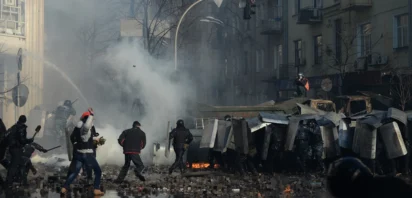
What came next is an unfortunate episode of history repeating. President Yanukovych was ousted following the Maidan protests in 2014, triggering the current civil war in which rebels from the eastern industrial heartland have taken up arms the government in Kiev, which they perceive as illegitimate. Now four years on from those dramatic events, the Volodymyr Groysman government is still trying to eliminate pervasive corruption in Ukrainian society.
In the words of former Georgian president Mikheil Saakashvili, “Ukraine had a revolution, but no revolutionary change.”
And judging by the state of Ukrainian politics, real change could still be a long time coming.
Three Major Challenges of Ukrainian Politics
Corruption
Ukraine scored a 30 in Transparency International’s 2017 corruption index, which means it’s the 130th most transparent country in the world. That the score has barely moved since 2012 reflects the country’s prolonged struggle to escape from the kind of crony authoritarian politics that prevailed during the Soviet era.
Ukraine’s corruption culture is resilient because those who have benefit ted from it – the oligarchs and their allies who presided over the period of post-Soviet privatization – are the very ones who have been tasked with putting an end to it. It’s an enduring conflict of interests that has been very hard to escape from. The past decade of upheavals in Ukrainian politics never really succeeded in installing an entirely new political class; instead, the old guard was allowed to take turns at the trough of public finances while the public became more disenchanted with politics with every passing year.