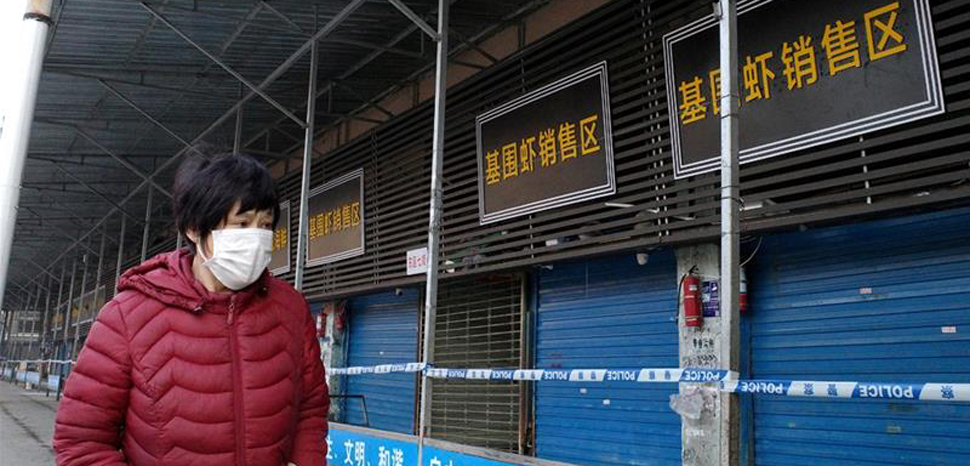
Signals have only increased indicating that the Wuhan coronavirus is an extraordinary global health crisis, one that will play out over the course of months, maybe years. From our initial comparison to SARS being published last week up until now, the case load in China has jumped from 4,473 to 17,302. Despite radical efforts by state and Party authorities to lock down tens of millions of people in Hubei province, the case graph remains vertical with no signs of leveling off. And the virus has made new inroads overseas, reaching India, Thailand, Japan, Russia, Australia, the United States, and Canada.
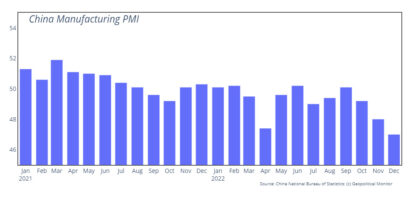
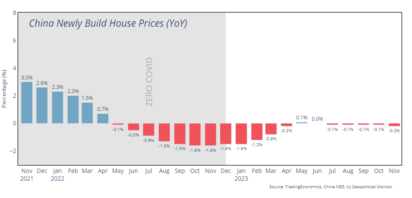
It appears as though the Wuhan coronavirus will not be disappearing anytime soon. And that’s very bad news for not only the Chinese economy, but the wider global economy as well.
Analysis
This past week also brought new indications of the economic stakes involved: the Dow shed over 600 points on Friday, before making a partial recovery on Monday. Predictably, the gloom has been more pronounced in Asia, where regional supply chains are highly integrated with China. Taiwan’s Taiex exchange was hammered to close the week out, posting a 5.75% loss – the largest ever in a single trading session. Mainland China’s markets were similarly battered when they opened on Monday, with Shanghai’s SE Composite Index posting a loss of 7.72%. Shenzhen followed suit with a drop of 8.5%. It was the indices’ worst trading day since 2015 and 2007 respectively.
Now it’s all hands on deck for the Chinese authorities, and not just in order to demonstrate the competency of the party-state system by containing the outbreak (which itself had a hand in creating in the decision to arrest the earliest whistleblowers). This effort won’t stop at the draconian quarantine measures imposed on a growing list of the country’s major metropolitan areas. There’s also the health of China’s financial system to worry about and – given the pervasiveness of corporate, consumer, and local government debt – this could end up being just as daunting of a task for Beijing.
The response began on Monday with a $170 billion USD cash injection into money markets. The People’s Bank of China also cut the 7-day reverse repo rate by 10 basis points. Both moves are intended to ensure liquidity over the short-term.