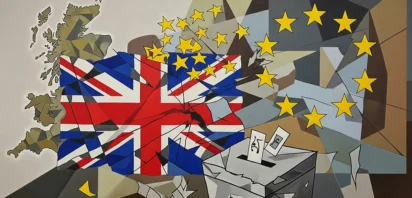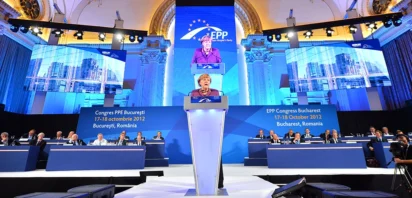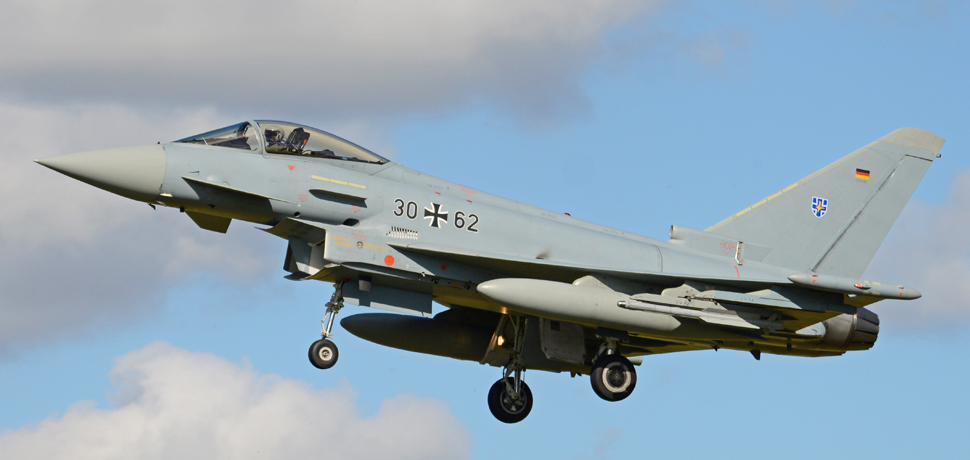
Brexit is one of many challenges that the European Union is facing today. There is much debate in the UK as well as in mainland Europe about what would be the best Brexit deal, fueled by the high number and complexity of the issues at stake. Yet these debates often neglect the impact of Brexit on the EU’s Common Security and Defence Policy, even though the military role of the Union recently hit the headlines after French President Emmanuel Macron called for the establishment of an “European Army,” a notion that was subsequently endorsed by German Chancellor Angela Merkel.
The question remains: What will Brexit mean for EU initiatives on defense and security?
Background
Before appraising the impact that Brexit will have on the prospects of a unified EU defense force, it is first necessary to examine the two issues separately.
Brexit, which was triggered following a referendum in 2016, is now at a crucial juncture. After long and complicated negotiations, the UK and the EU have reached an agreement (more than 500 pages long) on the terms of Brexit, which the British Parliament will now have to approve. In the words of the European Council President Donald Tusk, Brexit remains a “lose-lose” scenario, and the real task at hand is to limit damages for both sides. At the same time, various EU policymakers have made it clear that renegotiation is not an option. In other words, the EU is adopting the “carrot & stick” approach: it offers the UK a “soft” Brexit based on a common agreement, while warning that if Parliament rejects it, then Britain will have to face a “hard” Brexit.
In parallel to the Brexit process, and in an international context of evident divergences between Europe and the United States over NATO and collective self-defense, encapsulated by growing doubts over America’s commitment to protect its allies, French President Macron seized on celebrations for the 100th anniversary of the end of WWI to call for a “European Army” meant to ensure the defense of the continent from external threats like Russia and, most notably, even the United States. Macron’s suggestion was later supported by Germany’s Merkel, yet reactions have been mixed and there is much skepticism over the actual feasibility of the initiative, especially in the short-term.
The Macron plan must be considered in the context of the EU’s Common Foreign and Security Policy, or CFSP, which includes a more specific initiative called the Common Security and Defense Policy (CSDP). These policies are the result of a decade-long process whose achievements remain quite limited. First, the name is highly misleading: the term “common” suggests that the CFSP & CSDP are regulated via the communitarian method, which implies that EU member states have at least partially devolved their foreign and defense policy (a core component of national sovereignty) to the supra-national institutions of the EU. Yet, this is definitely not the case: both are managed via the intergovernmental method, therefore any initiative requires unanimity to be approved in the large majority of cases. Consequently, foreign relations and national security are still a strict competence of the individual member countries, not the EU. The reality is that the CFSP & CSDP simply express a willingness of member states to attempt coordinating their actions on foreign policy and defense, and this is an important first step in any plan to establish a common “EU Army.”
The idea of having joint armed forces dates back to the 1950s and the abortive project of the European Defence Community, which was rejected by the French parliament (ironic considering that France is now taking the lead to revive the concept). Since then, the consistent desire of member states to keep defense a strictly national competence has prevented any considerable progress. By now, the main form of cooperation on security comes in the form of the EU Battlegroups, joint battalion-size forces of approximately 1,500 troops that operate in rotation periods of six months to ensure that at any time there are two of them ready for deployment. Yet, the Battlegroups are only rapid intervention units meant for crisis management; and they have neither the material capabilities nor the juridical competences to ensure collective self-defense, which remains a prerogative of NATO.