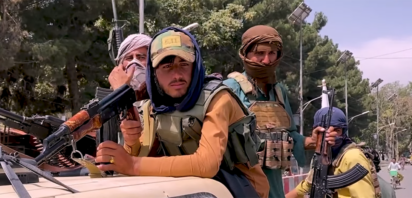
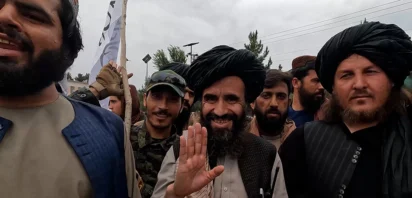
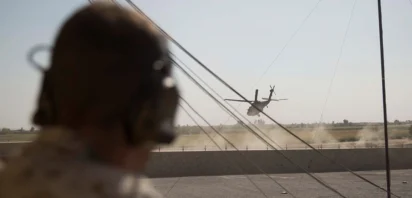
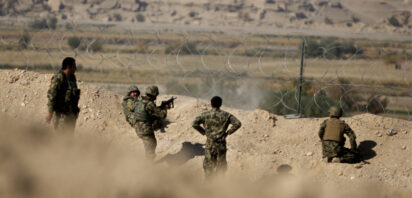
Despite sustained international condemnation and relative diplomatic isolation, the Taliban government is likely to remain in power for the foreseeable future. Following its return to Kabul in August 2021, many analysts predicted regime collapse driven by economic stagnation, internal factionalism, or armed opposition. More than four years later, these expectations have not materialized. Instead, the Taliban has consolidated territorial control, marginalized organized opposition, and secured pragmatic engagement with neighboring states.
The durability of Taliban rule is shaped by three interrelated factors: 1) Regional and great powers increasingly prioritize stability in Afghanistan over political transformation, viewing renewed conflict as a greater threat to their interests than Taliban governance; 2) The Taliban’s ideological foundations limit the effectiveness of external pressure and conditional recognition; and 3) Afghanistan’s social structure, historical resistance to radical reform, and the absence of a credible alternative authority capable of ruling the country in its entirety reinforce Taliban control from within.
Together, these dynamics suggest that continued Taliban rule represents the least destabilizing outcome under current conditions. Efforts to impose or pressure regime change or radical reform risk renewed civil war, balkanization of territory, and regional destabilization.
Regional and Great Power Interests: Stability over Transformation
For the first time since the late 1970s, a single local authority exercises effective territorial control over nearly all of Afghanistan. Small pockets of armed opposition persist but they do not meaningfully contest control. Neither Soviet- nor internationally-backed governments of the 1980s and 2000s, respectively, achieved comparable control, which inhibited security, governance, and regional economic initiatives.
Today, despite governance and human rights concerns, regional states broadly accept the Taliban as the de facto authority and are cautiously adjusting their policies accordingly. Despite divergent interests, regional actors—Russia, China, Iran, the Central Asian states, India, and Pakistan—share a preference for stability in Afghanistan over political experimentation. For each, renewed instability would threaten border security, disrupt trade and transit, complicate the return of refugees, and entice proxy conflict reminiscent of the warlord era of the early 1990s.
Regional engagement prioritizes security coordination, trade, transit, and dialogue through bilateral and multilateral mechanisms. China and the Central Asian states approach Afghanistan through counterterrorism and economic lenses; Iran engages to manage refugees, border security, water resources, and trade; India prioritizes engagement to enhance strategic access to Central Asia and counterbalance both Pakistani and Chinese influence; and Pakistan, despite strained relations, has little incentive to destabilize the country, given the high risk of internal and international blowback and a surge of Pashtun militancy on both sides of the Durand Line. Pakistan is strategically constrained from pursuing destabilization in Afghanistan due to internal and external security risks, as it seeks closer relations with the United States and Gulf states and deepens strategic relations with China and Russia.
Although Russia remains the only country to have recognized the Taliban government as de jure, all regional actors maintain pragmatic working relations to varying degrees. This engagement reflects a broader global trend: great power competition and decades of armed conflict in the country have reduced the appetite for interventionist projects of state transformation. The U.S. and Europe are increasingly focused on the Indo-Pacific and Europe, respectively, while Russia and China prioritize stability along their peripheries for security and economic reasons, as well as broader geopolitical interests related to advancing a multipolar world order. Afghanistan, in this context, is no longer viewed as a site for ideological experimentation, but as a risk to be contained and gradually integrated.
Economic Incentives and Regional Integration
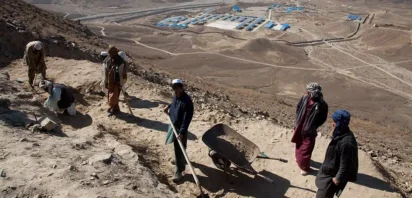
Economic incentives also play a critical role in sustaining Taliban rule. Regional actors increasingly frame engagement with Afghanistan around investment, trade, and transit rather than political reform. Afghanistan’s geography positions it as a potential transit corridor linking South Asia and Central Asia, making centralized control and stability a prerequisite for regional trade and energy projects.
Historical precedent illustrates this logic. In the mid-1990s, despite criticism of Taliban governance, the U.S. explored engagement with the Taliban as part of a broader geostrategic and regional energy strategy, seeing them as a stabilizing force to engage with the newly independent states of Central Asia following the dissolution of the Soviet Union. In a 1996 Washington Post op-ed, Zalmay Khalilzad—who later became the US ambassador and then the special representative for Afghanistan reconciliation—argued then that re-engagement in a Taliban-controlled Afghanistan could promote peace and advance American interests.
Proposed pipeline projects, notably those involving Unocal, reflected a strategic calculus prioritizing stability and connectivity over governance concerns to strengthen American influence in Central Asia: two pipelines to transport Central Asian gas and oil through Afghanistan to South Asian and global markets. US engagement was severed only after al Qaeda’s US embassy attacks in Kenya and Tanzania in 1998. Today, the under-construction TAPI pipeline follows the same route and reflects the same strategic mindset of enabling integration and containing risk.
America is again re-engaging the region with a similar mindset. In November 2025, President Trump held a C5+1 meeting with the presidents of the Central Asian states, a region whose development is interconnected with a stable and integrated Afghanistan. Regional actors are cautiously engaging the Taliban not out of ideological alignment, but because the costs of isolation and instability are higher than those of pragmatic cooperation.
Ideology, Governance, and the Limits of External Pressure
A central source of friction between the Taliban and the international community is ideological incompatibility rather than miscommunication. UN agencies and Western governments continue to pressure and approach Afghanistan as though they retain the same leverage from the 2001-2021 period.
The UN Security Council met on December 10 to discuss developments in Afghanistan. The UN Secretary-General’s Special Representative for Afghanistan, Georgette Gagnon, warned that the Taliban’s reluctance to engage multilaterally with the international community risks donor disengagement, as donors are increasingly frustrated by the Taliban’s failure to seriously address their concerns.
Taliban leaders consistently assert they won the war against the US-led coalition with Allah’s assistance and therefore have a religious duty to govern according to Sharia law, including enforcing hudud punishments and qisas, as well as mandating hijab for women. The Taliban leadership reject the premise stated by Gagnon, deriving their legitimacy from religious authority rather than elections or international recognition.
From the Taliban’s perspective, external demands to alter legal structures or social norms are not policy disagreements but calls to violate religious duty. Accepting a non-Islamic governance system or liberal democratic policies would constitute shirk (polytheism)—elevating man-made authority over Allah’s law, thereby undermining the religious legitimacy of their rule.
Emir Hibatullah Akhundzada has repeatedly rejected external directives, emphasizing that Afghanistan will not adopt non-Islamic systems or values, even if doing so entails continued poverty, which he characterizes as divinely ordained should the alternative require compromising religious principles. In the Emir’s words: “We have a relationship of devotion to one God, we cannot accept the orders of others [non-Muslims] who Allah does not like.”
This framing renders conditionality of recognition and external pressure ineffective. A fatwa (religious decree) framing defense of its Islamic system as farḍ ʿayn (collective obligation)—meaning jihad must be waged if it comes under attack—raises the political cost of dissent and significantly complicates any internal or external effort to overthrow or significantly reform the system. This does not eliminate internal disagreement, but it limits political fragmentation by sacralizing obedience to the system.
The impasse between the Taliban and international actors reflects fundamentally incompatible systems rather than misunderstanding. Paradoxically, this benefits the Taliban by facilitating regional engagement grounded in non-interference and multipolarity, principles that directly support its continued rule while promoting regional stability and security.
Intra-Taliban Dynamics and Consolidation of Authority
While internal disagreements exist, they have not translated into meaningful fragmentation. Power remains centralized under Emir Akhundzada, and dissenting figures have been sidelined when challenging core rulings, thereby reinforcing hierarchical discipline. High-profile criticism, such as Deputy Foreign Minister Sher Mohammad Abbas Stanikzai’s January 2025 criticism of the ban on female education above age 12, resulted in his swift marginalization and self-exile rather than policy change.
Cryptic dissent on multiple occasions by Interior Minister Sirajuddin Haqqani has not altered policy, and Akhundzada has continued consolidating authority. The leadership views dissent as a threat to unity and stability rather than a source of reform. In practice, what external observers perceive as “hopeful pluralism” is viewed by the Taliban as a potential source of instability to be suppressed through ideological discipline, religious legitimacy, and hierarchical norms. These dynamics reduce the likelihood of internal collapse of the Taliban government driven by factionalism.
Local Legitimacy and Social Constraints
Domestic realities of Afghanistan further reinforce Taliban rule. The Taliban emerged in the mid-1990s as a reaction against warlordism, corruption, and civil war following the Soviet withdrawal. While Pakistan’s Inter-Services Intelligence (ISI) provided early support, the Taliban were not a foreign creation. They drew legitimacy from Afghan society’s desire for order and Islamic governance after years of factional violence and unchecked corruption.
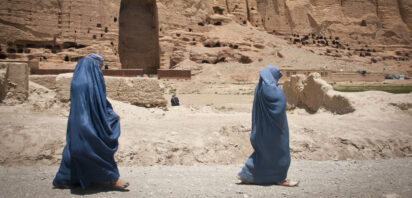
Many social norms enforced by the Taliban—particularly regarding gender roles—align with deeply conservative attitudes prevalent across Afghan society, especially in rural areas, where over 70% of the population lives and traditional patriarchal social structures continue to exert significant influence over daily life. These norms cut across ethnic groups and have historically constrained reform efforts by Afghan rulers, as well as Soviet-, and US-backed governments. Even among communities often critical of the Taliban—such as the Hazara—these norms persist.
Over the past century, Afghanistan’s history reflects repeated resistance to social reforms imposed by internal or external actors when those reforms were perceived as incompatible with Islam and traditional customs. In the late 1920s, fierce backlash against King Amanullah’s reforms to allow female education and make the hijab optional incited a civil war, leading to his abdication and self-exile. Images of Afghan women in miniskirts in the 1960s and 1970s reflected a small urban elite and were rejected by most Afghans. After 2001, reforms associated with women’s rights and female education were largely sustained by foreign leverage and military presence; once intervention ended, enforcement collapsed.
The collapse of the Afghanistan National Army in 2021 underscored the limited willingness to fight for a system perceived as externally imposed and internally corrupt. Remember President Joe Biden’s words in the days before the completion of the American withdrawal, “American troops cannot and should not be fighting in a war and dying in a war that Afghan forces are not willing to fight for themselves.” The sudden implosion the Ghani government and Afghan National Army reflect a pattern: Governments, institutions, and reforms in Afghanistan fail when they lack local legitimacy among the Afghan population.
Why the Taliban Are Likely to Endure
The Taliban government remains entrenched not because of international approval, but because regional interests, internal legitimacy, and global priorities favor stability. No regional or great power currently views regime change in Afghanistan as desirable, and none is willing to incur the high costs required to dislodge the Taliban.
Internally, the Taliban’s ideological cohesion, centralized authority, and religious legitimacy have minimized dissent and marginalized organized opposition. Historically, the Taliban has demonstrated resilience to external pressure: they were removed in 2001 only through international military intervention, yet retained extensive shadow governance throughout the occupation.
Taken together, these dynamics—global and regional preference for stability, the Taliban’s ideological resistance from external pressure, and the absence of internal or external actors capable of replacing the current regime—explain why the Taliban is likely to remain in power for the foreseeable future. Under current structural constraints, Taliban rule represents the least destabilizing option, regardless of international approval or disapproval.
Philip Acey is a Canadian PhD candidate in International Relations and an independent political researcher and analyst. He conducted four months of research in Afghanistan in 2024-2025 and has worked for over a decade across Europe, Asia, Africa, and South America. His research has advised the UN Security Council, diplomats, and humanitarian organizations.