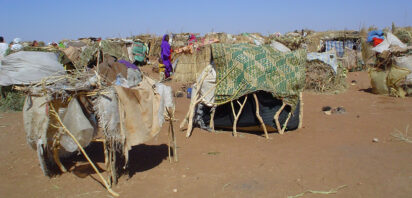
Sudan’s Rapid Support Forces (RSF) operate what may be the most financially successful non-state economy active today. Estimated annual revenues of $1–2 billion derive from gold mining, narcotics production, agricultural plunder, livestock trade, checkpoint taxation, and substantial patronage from the United Arab Emirates. This war economy, commanded by RSF leader Mohamed Hamdan Dagalo (widely known as Hemedti), funds a conflict that has displaced over 12 million Sudanese and triggered what the United States has formally designated as genocide in Darfur.
The collapse of Syria’s state-sponsored Captagon industry following the fall of the Assad government in December 2024 has added a second dimension. Sudan is rapidly filling the resulting market gap, with discovered production capacity surging roughly 14-fold in RSF-controlled territory over approximately 20 months.
Gold: The RSF’s Financial Backbone
Gold is the RSF’s dominant revenue source, with estimates suggesting that Darfur mines alone generated approximately $860 million for the group in 2024. Total Sudanese gold production runs 70 to 90 tonnes annually according to SWISSAID, with at least half smuggled through illicit channels.
The RSF’s gold geography has shifted since the war’s April 2023 outbreak. Jebel Amer in North Darfur, once the cornerstone of Hemedti’s empire, was already declining and has been further degraded by Sudanese Armed Forces (SAF) airstrikes. The Songo mines in South Darfur have become the primary production area, where the Dagalo family’s Al-Junaid Multi Activities Company resumed operations by late 2025. Chatham House documents three RSF operational modes: direct mining through Al-Junaid, protection rackets forcing artisanal miners to trade through RSF channels, and individual units extracting and extorting at smaller scales.