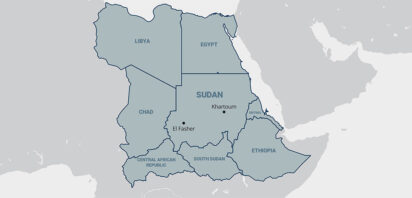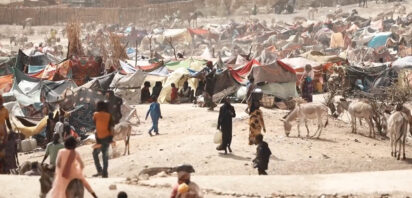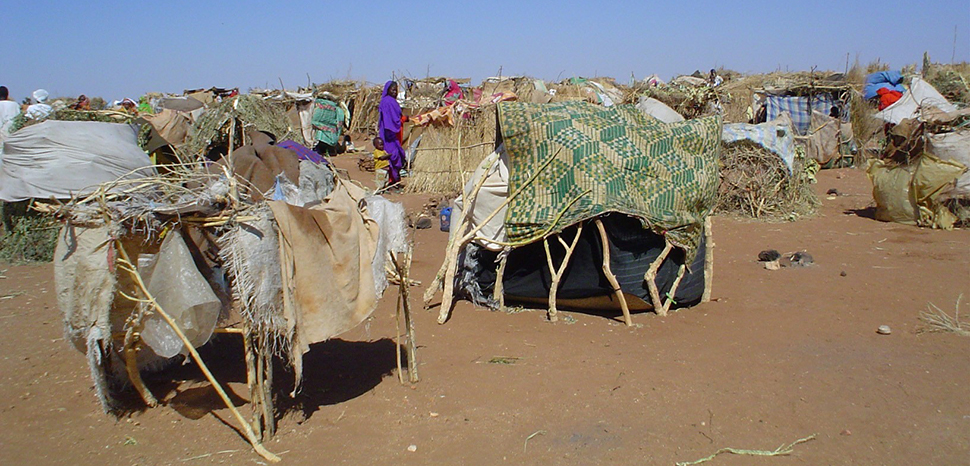
El Fasher, the last army-controlled city in Darfur, is currently surrounded by the Rapid Support Forces (RSF). Should the city fall, the RSF will gain control over an area roughly the size of France, along with Sudan’s borders with Libya, Chad, Central African Republic, and South Sudan. But it would spell disaster for the approximate 800,000 people sheltering there, who would be faced with the immediate prospect of genocidal violence without any feasible routes of escape.
Background
Sudan’s history as a joint protectorate under the Anglo-Egyptian Condominium until 1956, followed by independence, has been marked by significant internal divisions and conflicts. The major north-south divide contributed to two brutal civil wars, culminating in the secession of South Sudan in 2011. The region has also endured the oppressive regime of Omar al-Bashir from 1989 to 2019, which came to an end amid a massive wave of civil unrest. The coup that eventually toppled al-Bashir involved two military factions: the Sudanese Armed Forces (SAF), led by General Abdel Fattah al-Burhan, and the Rapid Support Forces (RSF), led by Mohamed Hamdan Dagalo.
The RSF-SAF divide is key to understanding the current civil war. Where the SAF is Sudan’s de jure military, the Rapid Support Forces (RSF) is a paramilitary group established in 2013 under Sudan’s National Intelligence and Security Service. Originating from the predominantly Arab Janjaweed militias, the RSF was originally formed to counter anti-government rebel activities in Darfur. Known for its brutality and flagrant human rights violations, the RSF has been implicated in numerous atrocities in Darfur and other regions. These include violence against civilians, sexual violence, extrajudicial killings, and war crimes.