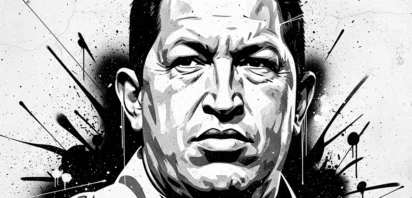
For years, outside observers treated Venezuela as a warning about the limits of populism. The script seemed straightforward enough. Hugo Chávez built a highly personalized political system around charisma, oil wealth, ideological polarization, and direct emotional identification with “the people.” When oil prices collapsed and Chávez himself died in 2013, many analysts assumed the system would eventually follow him into the grave.
Instead, Chavismo Venezuela did something more complicated and, from a geopolitical perspective, potentially more important.
It survived.
Not gracefully. Not prosperously. Not without enormous human suffering. But it survived nonetheless, despite sanctions, diplomatic isolation, economic collapse, hyperinflation, institutional decay, international condemnation, and one of the largest migration crises in modern hemispheric history.
That endurance deserves closer attention because Venezuela may represent something larger than a failed populist experiment stubbornly clinging to power. Increasingly, it looks like a possible template for what might be called post-populist authoritarianism: a system in which the charismatic energy that originally built the regime fades, but the authoritarian structure itself adapts and persists.
That possibility matters far beyond Latin America.
Many contemporary authoritarian systems face the same long-term problem. What happens after the founder weakens, ages, loses legitimacy, or disappears altogether? What happens after Erdoğan in Turkey? After Orbán in Hungary? After Ortega in Nicaragua? After the Castro generation in Cuba? After Putin in Russia, whenever that day eventually arrives?
For decades, political science often treated highly personalized regimes as inherently vulnerable during succession. The logic made sense. Charisma rarely transfers cleanly. Elite factions splinter. Patronage networks weaken. Internal rivalries intensify. Once the central figure disappears, the system supposedly begins to unravel.
Venezuela complicates that assumption.
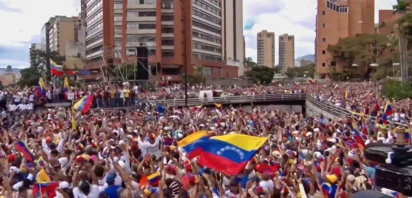
Nicolás Maduro never possessed Chávez’s charisma. He lacks Chávez’s instinctive political magnetism, rhetorical command, and emotional hold over supporters. Chávez could fill public spaces with revolutionary theater. Maduro often appeared less like a revolutionary tribune than a bureaucratic survivor navigating permanent crisis.
Yet that difference may explain why the Venezuelan system evolved rather than collapsed.
Chávez built the movement. Maduro built the survival architecture.
Under Chávez, the regime depended heavily on mobilization and mythology. Chavismo presented itself not merely as a political project but as a historical mission tied to anti-imperialism, social justice, redistribution, and popular sovereignty. Chávez fused nationalism, populism, and spectacle into a governing model centered on himself. Institutions weakened steadily during this process, but high oil prices masked many underlying structural problems.
By the time Maduro inherited power, however, the regime no longer possessed the economic conditions necessary to sustain Chávez-style populism. Oil production cratered. Inflation spiraled. Public services deteriorated. Migration surged. International pressure intensified.
In theory, those conditions should have fractured the state.
Instead, the system adapted into something colder, harder, and more fragmented.
Modern Venezuela: A Post-Ideology Cartel
Modern Venezuela operates less like a mass ideological movement and more like a decentralized survival system. Loyalty no longer revolves primarily around revolutionary enthusiasm. It revolves around mutual dependence, elite coordination, coercive management, and the fear of what follows collapse.
That distinction matters enormously.
The Maduro government survives not because it commands overwhelming popular legitimacy. Most evidence suggests otherwise. It survives because key sectors of the political, military, economic, and security apparatus remain deeply invested in the system’s continuation. The costs of transition have become extraordinarily high for those inside the regime.
This is where Venezuela becomes geopolitically important.
Authoritarian durability increasingly depends less on charismatic legitimacy and more on networked survival.
In Venezuela, military elites gained expanded economic influence over ports, mining operations, food distribution, and other strategic sectors. Informal economies expanded alongside formal ones. Sanctions pressure encouraged adaptation through illicit trade, smuggling networks, and alternative financial arrangements. Armed colectivos, regional political brokers, intelligence structures, and criminal actors became woven into overlapping systems of governance and protection.
The result resembles neither a traditional dictatorship nor a coherent ideological state. It looks more like fragmented authoritarian management held together through negotiated interests and shared vulnerability.
Ironically, the very weakness of the Venezuelan state may have helped the regime survive.
Classic authoritarian systems often seek monopoly control. Venezuela increasingly operates through partial control instead. Different actors exercise influence across different territories, industries, and informal systems. The central government coordinates these networks unevenly rather than fully dominating them. That fragmentation creates inefficiency and corruption, but it also disperses risk. The regime becomes less dependent on a single charismatic center of gravity.
In practical terms, Venezuela evolved from a populist project into a survival ecosystem.
A Sign of Things to Come?
Venezuela’s evolution may preview a broader trend in global authoritarianism.
Many modern regimes no longer depend solely on ideology to maintain cohesion. Instead, they increasingly rely on combinations of:
- institutional hollowing
- politicized courts
- security patronage
- economic dependency
- selective repression
- informal governance
- elite fear of post-regime accountability
In these systems, succession does not necessarily produce collapse. Sometimes it produces adaptation.
Turkey offers one possible future example. Erdoğan has dominated Turkish politics for decades through a blend of populism, nationalism, institutional restructuring, and personal authority. Yet the long-term durability of Erdoğanism may ultimately depend less on Erdoğan himself than on the political and security architecture surrounding the state his party created.
Hungary offers a similar trajectory. Viktor Orbán built a highly centralized system grounded in media influence, party dominance, patronage networks, and institutional control. But the long-term significance of Orbánism may depend less on Orbán personally than on whether the political architecture surrounding the state can reproduce itself after the charismatic center weakens or disappears.
Nicaragua already shows some signs of this transition. Daniel Ortega and Rosario Murillo maintain power through increasingly rigid repression and centralized control, but the revolutionary fervor associated with the Sandinista legacy has weakened considerably. The regime survives through coercive capacity and institutional dominance rather than broad ideological mobilization.
Cuba may represent an earlier version of this trajectory altogether. The revolutionary mythology of Fidel Castro gradually gave way to a more administrative and security-oriented authoritarian structure. The revolutionary founder mattered enormously in constructing the system. The post-founder regime focused on preserving it.
Russia raises perhaps the most consequential version of this question. Putinism currently remains deeply personalized, but Russia’s governing system also contains extensive networks of oligarchic interests, security institutions, regional power arrangements, and economic dependencies. The eventual post-Putin transition may test whether modern authoritarian systems can outlive the individuals who initially shaped them.
Venezuela suggests they can.
Policy Impacts
The durability of the Venezuelan regime carries uncomfortable implications for Western policymakers.
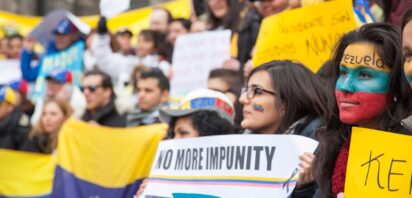
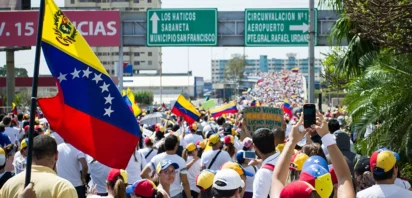
For years, much of the international conversation around Venezuela implicitly assumed that pressure would eventually trigger regime fracture. Economic collapse would produce elite defections. Sanctions would isolate the government. Public anger would overwhelm the system. The opposition would capitalize on growing dissatisfaction.
Instead, the regime absorbed extraordinary levels of stress.
This does not mean sanctions “failed” in a simplistic sense. They imposed real economic pain and constrained state capacity in important ways. But Venezuela demonstrated that heavily sanctioned authoritarian systems can adapt if they possess sufficient internal coordination, external partners, informal economic networks, and coercive resilience.
That lesson extends beyond Venezuela.
Iran learned similar adaptation mechanisms under sanctions pressure. Russia accelerated its own parallel economic and financial strategies after the invasion of Ukraine. China studies these cases closely because Beijing increasingly views resilience against external pressure as a core strategic priority.
The broader point is that authoritarian systems today operate within a much more interconnected survival environment than many Cold War-era models anticipated.
External pressure alone rarely determines outcomes.
Internal network cohesion matters more.
Venezuela also exposes a deeper strategic problem for democratic opposition movements. Opposition coalitions often focus heavily on removing the leader, assuming institutional recovery naturally follows political transition. But what happens when the system no longer depends entirely on the leader?
What happens when corruption, patronage, illicit economies, security structures, and political survival become intertwined across multiple sectors of the state?
In those circumstances, transition becomes far more difficult because too many actors fear the consequences of systemic change. Accountability itself becomes destabilizing. Political reform threatens not only careers, but protection networks, economic interests, and personal security.
That dynamic may become increasingly common in the coming decades.
The uncomfortable possibility emerging from Venezuela is that modern authoritarianism may be evolving beyond charismatic populism into something more durable, fragmented, and adaptive. The founder still matters, especially during the regime’s rise. But long-term survival increasingly depends on whether the system can depersonalize power enough to endure after the founder fades.
Venezuela’s real geopolitical significance may therefore lie not in its collapse, but in its persistence.
For years, analysts viewed the country primarily as a cautionary tale about failed socialism, corruption, and economic mismanagement. All of those elements remain important. But Venezuela may also represent an early preview of how authoritarian systems survive after the mythology weakens.
That possibility should concern democracies far more than the familiar image of a strongman delivering fiery speeches from a balcony.
The next generation of authoritarian systems may not rely on charisma nearly as much as we once assumed.
The views and opinions expressed in this article are those of the author alone and do not represent those of Geopoliticalmonitor.com