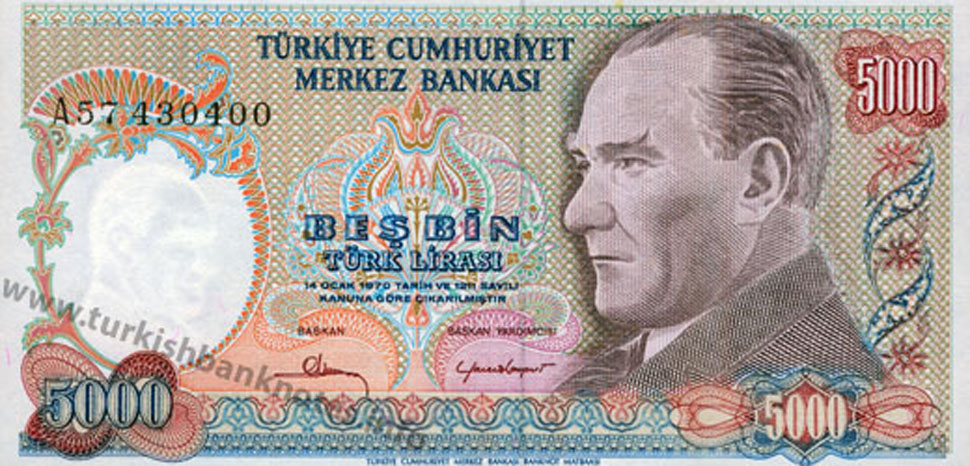
Interest rate normalization in the United States and European Union was always going to impact emerging economies by diverting hot money flows back to safer returns in the developed world. But the unknown factor was: How big of an impact would it have? Would this be a slow and gradual rebalancing, or a panicked flight of bank runs, debt defaults, and in extremis a new systemic contagion in the global financial system. Some analysts are now finding portents of the latter in Turkey’s ongoing currency crisis.
The Turkish lira is currently down 6-7% on Monday, now having lost over 40% of its value this year.
Here are some key trends to consider when assessing Turkey’s contagion threat:
- Emerging market currencies. The Turkish lira rout will sap investor confidence across a range of emerging market currencies, even if the market in question has better economic fundamentals than Turkey. So far, this is precisely what we’re seeing in the widespread sell-off of emerging market currencies. South Africa’s rand dropped as much as 10% on Monday to match 2016 lows. The Russian rouble has also tumbled to a two-year low of 68.66 to the dollar, accelerating a decline that began last week when President Trump announced new sanctions over the Skripal poisoning. India’s rupee hit an all-time low against the dollar following a 1.54% decline on Monday; the drop would have been even steeper had the Reserve Bank of India not intervened. The Mexican and Argentine pesos have also been down over the past week, with the latter hitting an all-time low against the USD. The Indonesian rupiah is an emerging market currency standout in Asia, a region that has so far emerged relatively unscathed. It has now hit a three-year low against the dollar amid active central bank intervention. As capital flows out of emerging markets, it’s often parked in US dollar assets, increasing the value of the USD, which has predictably been surging in Monday trading. A stronger USD can exacerbate structural weakness in emerging markets, particularly with regards to current account deficits and USD-denominated debt servicing. The result is a negative feedback loop, one in which countries like South Africa, Turkey, Argentina, and Indonesia are very susceptible.