The Strait of Malacca is usually described in the language of vulnerability: a chokepoint, a narrow passage, a crisis waiting to happen. That description is not wrong. But it is incomplete. For Malaysia, Malacca is not merely a route through which the world’s ships pass. It is a strategic industrial spine linking energy security, manufacturing continuity, port competitiveness, food systems, maritime governance and national economic resilience.
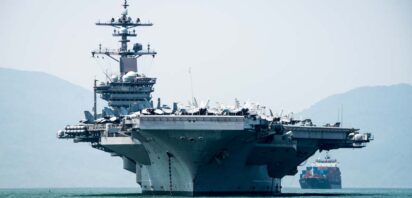
The latest crisis in the Strait of Hormuz has made this clearer. As shipping through Hormuz slowed sharply in recent weeks, attention turned quickly to Malacca, the other great artery of Asian commerce. Reuters described Malacca as the world’s busiest maritime trade route, carrying nearly 22% of global trade and 29% of maritime oil. In 2025, more than 102,500 ships passed through it. Its narrowest point is only about 1.7 miles wide, making it both indispensable and exposed.
For Malaysia, that exposure is not abstract. Malacca sits beside an economy that wants to move up the industrial value chain. Malaysia is not only a littoral state watching ships glide past its coast. It is a manufacturing economy, a semiconductor hub, an energy consumer, a palm oil exporter, a port economy, and a country whose industrial future depends on the uninterrupted movement of inputs, fuel, components and finished goods.
That is why the old vocabulary of “sea lane security” is no longer enough. A disruption in Malacca would not only affect shipping companies. It would show up in freight rates, insurance premiums, LNG prices, fertilizer costs, port congestion, factory delays and consumer inflation. ASEAN economic ministers have already warned that the Middle East crisis is raising oil and LNG volatility while sharply increasing freight, insurance and logistics costs. They also noted that rising energy and transport costs are cascading into food systems, including fertilizer prices and supply-chain disruptions.
In other words, the next maritime crisis may not arrive as a naval blockade. It may arrive as a revised freight quote, a delayed turbine part, a higher electricity bill, or a food manufacturer unable to absorb another logistics shock. That is the quieter danger of chokepoint politics: it translates geopolitics into operating costs.
Malaysia has so far responded cautiously and correctly to renewed attention on Malacca. When Indonesia’s comments about monetizing the route triggered concern, Malaysian officials stressed that no unilateral decision can be made over the strait. Defence Minister Mohamed Khaled Nordin said any decision involving the waterway must be agreed upon by Malaysia, Indonesia, Singapore and Thailand. That position matters. Once a strategic waterway becomes politicized, external powers will not remain politely outside the room. They will enter under the language of freedom of navigation, commercial protection, or energy security.
But keeping Malacca open cannot only mean opposing tolls or issuing diplomatic assurances. It must mean building the physical, institutional, and industrial capacity to keep commerce moving under stress. This is where Malaysia has an opportunity to shift the conversation. Malacca should not be treated merely as a maritime passage. It should be treated as a national industrial corridor.
That corridor includes Port Klang, Tanjung Pelepas, Johor’s industrial zones, Penang’s electronics ecosystem, LNG infrastructure, power plants, ship repair, bunkering, warehousing, customs systems and the smaller but vital maintenance firms that keep industrial equipment alive. It includes the unglamorous world of spare parts, rotating equipment, pumps, bearings, marine services and emergency repair. These are not side characters in the national security story. They are the machinery of resilience.
Thailand’s renewed promotion of its US$31 billion Land Bridge plan shows that other countries are already thinking beyond geography. The project proposes two deep-sea ports, road and rail links, and energy infrastructure that would offer an alternative route to Malacca
Whether the project becomes commercially viable is a separate question. The strategic signal is clear: countries are trying to convert chokepoint anxiety into infrastructure leverage.
Malaysia should do the same, but without panic. Malacca’s value will not disappear because another route is proposed. Its value will decline only if Malaysia assumes geography alone is enough. Geography gives Malaysia relevance. Capacity gives Malaysia power.
Three actions should follow.
First, Malaysia should build a Malacca Industrial Resilience Plan that maps which sectors are most vulnerable to maritime disruption: energy, semiconductors, food inputs, heavy industry, chemicals and critical machinery. This should include stress tests for freight spikes, port delays, fuel shortages and insurance shocks.
Second, Malaysia should strengthen a littoral-state crisis mechanism with Indonesia, Singapore and Thailand. The priority should be fast communication during disruptions, common shipping advisories, anti-piracy coordination, environmental response, and clear legal messaging against unilateral tolls or restrictions.
Third, Malaysia should invest in the industrial services around maritime security: ship repair, port digitization, maintenance yards, emergency warehousing, fuel storage, and critical spare-parts capacity. The country should not only host passing trade. It should service, secure and profit from the industrial ecosystem around it.
The Strait of Malacca is not just a chokepoint. For Malaysia, it is a test of whether the country can turn strategic geography into strategic capability. The ships will keep passing. The question is whether Malaysia will remain a coastal observer or become the industrial backbone of the route the world cannot afford to lose.
The views and opinions expressed in this article are those of the author alone and do not represent those of Geopoliticalmonitor.com