The Concept of the Foreign Policy of the Russian Federation (CFPRF) is a document outlining Russia’s strategic vision, guiding principles, and priorities in international relations. The document, most revised in 2023, represents the first comprehensive foreign policy statement Moscow published in the wake of the Ukraine war. Its content provides insight into how Moscow views the world since the war broke out and what President Putin believes the future may hold.
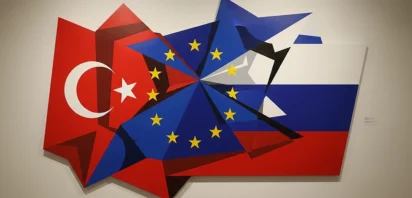
Broadly, the CFPRF outlines Russia’s vision for reshaping the international order and its role within it. Similar to China, Russia calls for a multipolar world, emphasizing cooperation with emerging powers. The layout of the strategy highlights Russia’s priorities, with China, India, and the Global South at the top of the list and the United States and Europe relegated toward the bottom. It addresses various regions, starting with the near abroad and including the Islamic world. The section concerning the United States is entitled ‘The U.S. and Other Anglo-Saxon States.’
Although the Cold War ended over 30 years ago, Russia’s perspective remains bipolar, which is ironic given its advocacy for a multipolar world. It views global competition as a struggle between the US-led international order, based on Western values and laws, and the rest of the world, which includes Russia. The document is at times Janus-faced, emphasizing the importance of sovereignty, independence, adherence to international law, and the United Nations Charter while also advancing a repudiation of this very same US-led Western order, since, for example, Russia’s invasion of Ukraine violates both international law and the UN charter.
The subtext is one of Moscow demanding respect, and the document emphasizes its status as the successor of the USSR and one of the world’s two great nuclear powers. It also highlights Russia’s permanent membership on the UN Security Council. Russia views its invasion of Ukraine as an act of leadership, promoting the multipolar world it envisions. The foreign policy concept, aligned with Russia’s National Security Strategy, supports its right “to protect its vital interests.” Controlling Ukraine is deemed necessary for Russia’s foreign policy goals. Additionally, due to its recognition of and alliance with the Luhansk and Donetsk People’s Republics, Russia feels obliged to aid and protect these “allies and partners.”
The term “allies and partners” appears repeatedly throughout the document, indicating that Moscow’s partnerships do not require the global recognition of statehood or international organizations. They include entities like the Luhansk and Donetsk People’s Republics, the Republic of Abkhazia, and the Republic of South Ossetia. The document states that Russia will support allies facing color revolutions, justifying the invasion of Ukraine by claiming that a color revolution in 2014 turned Kyiv away from Russia by outside machination rather than spontaneous political movement. Similar arguments apply to regions like Georgia and Armenia, where Moscow opposes citizens’ demands for a pivot toward Europe.