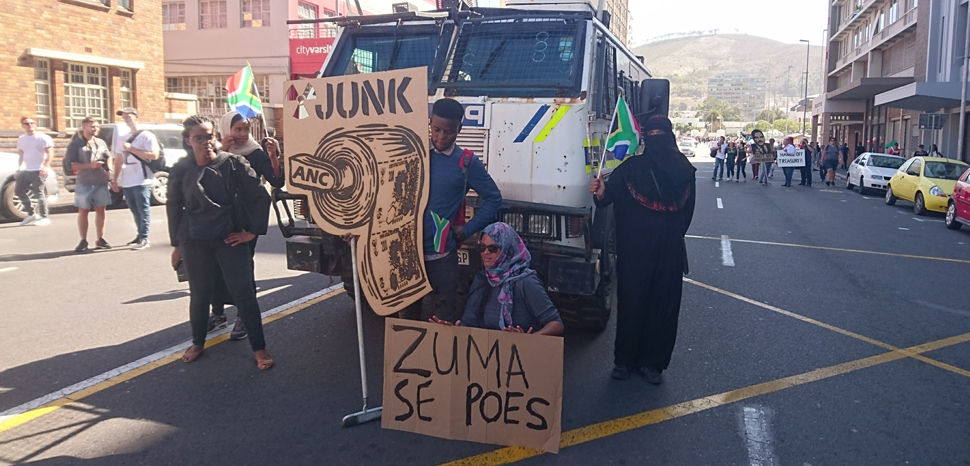
Nearly 25,000 troops have been deployed to Gauteng and KwaZulu-Natal provinces in South Africa, following a week of rioting that has left at least 117 people dead and thousands of businesses looted and razed.
The riots broke out soon after former president Jacob Zuma was jailed for contempt of court on charges stemming from an earlier refusal on his part to give evidence in an anti-corruption investigation. However, this catalyzing event obscures more longstanding issues of economic inequality in the country, issues that have come to the fore during COVID-19. South Africa might be one of the first countries to see such social tensions spill into open conflict, but it won’t be the last.
Analysis
A legacy of inequality
The riots have been the worst violence since the lead-up to the fall of apartheid, and they took place in two of the countries most populous provinces. Gauteng, home to the city of Johannesburg, accounts for nearly a third of South Africa’s GDP alone.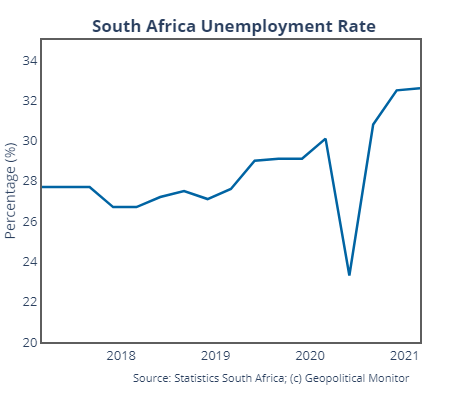
South Africa has long ranked among the most unequal countries in the world. The present governing system inherited a deeply unequal wealth distribution from the racist apartheid era, and little has changed after decades of democratic rule. This is reflected in South Africa’s Gini Coefficient, which has barely moved since 1993 where other emerging markets have redistributed wealth. In 1993, South Africa’s Gini was approximately 0.6. It was 0.63 as of 2015 (the last year that the South African government released such data), which means inequality actually deteriorated over the first two decades of ANC rule. As a result, some 20% of the population controls nearly 68% of income (the average among emerging economies is 47%).
Unemployment is another perennial issue of the post-apartheid era. In 2018, some 28% of the population was unemployed (the rate is even higher when those who are no longer looking for a job are taken into account) – well over the emerging market average of 6%. For young people aged 15-24, the unemployment rate was over 50%, over triple the emerging market average.