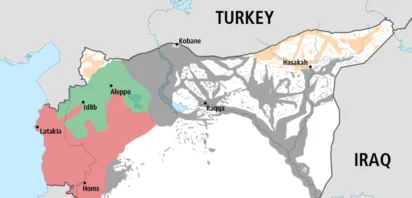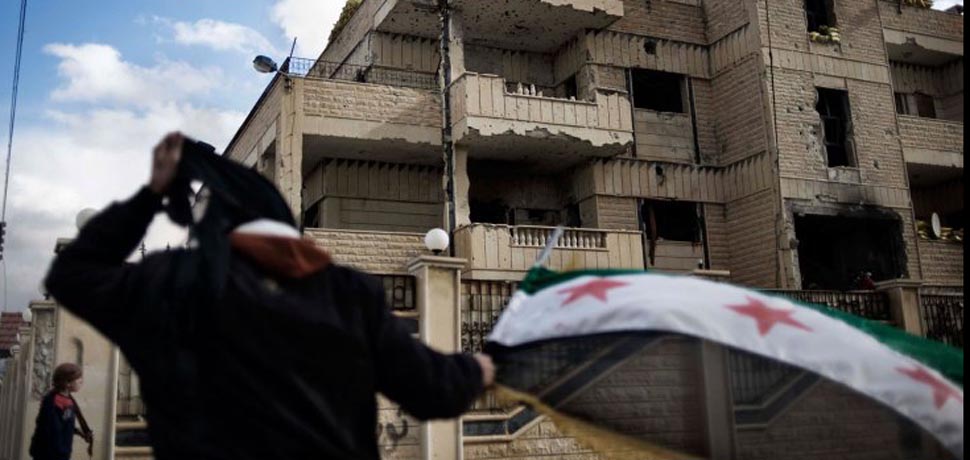
On November 27, Hayat Tahrir al-Sham (HTS), a Syrian rebel group allied with Turkish-backed factions, launched a major offensive against Syrian government forces in Idlib. The assault led to the capture of Aleppo, the country’s second-largest city, along with other strategic areas in Aleppo and Hama governorates. HTS is now pushing toward the city of Hama and the capital, Damascus, though the outlook remains uncertain.
Turkey’s support has been critical to HTS’ recent success, allowing the group to seize territory in northwest Syria and develop a diversified economy in areas under its control. But the fall of Aleppo could well mark a turning point in this gradual advance, as the Syrian regime, backed by Russia and Iran, is preparing to mount a counteroffensive. And while HTS has formed alliances with other players in the Syrian civil war, the group’s future success will largely depend on whether it can maintain control of the territory it has gained.
Hayat Tahrir Al-Sham: Islamist Veteran of the Syrian Civil War
The advent of Hayat Tahrir al-Sham dates back to the earliest stages of Syria’s political uprising in 2011. In 2016, Abu Muhammad al-Jawlani, leader of the Nusrah Front, broke ties with al-Qaeda. The following year, the Nusrah Front merged with other anti-regime factions in northwestern Syria to form HTS. The group later established the Syrian Salvation Government, which administers the territories under its control via ten ministries. In 2018, HTS members who remained loyal to al-Qaeda formed a separate group, Hurras al-Din.
HTS primarily targets the President Bashar al-Assad regime and seeks to replace it with a government based on a rigid interpretation of Islamic law. In terms of tactics, HTS has employed suicide bombings and guerrilla strikes, tending to be limited to small arms. Abu Muhammad al-Jawlani, also known as Ahmed Hussein al-Shar’a, continues to lead the group. The US Department of Justice is offering up to $10 million for information leading to his capture due to his suspected involvement in various terrorist activities, including the kidnapping and killing of Kurdish and Druze minorities.