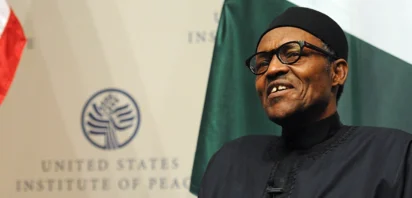
In a quietly devastating move, the closure of the United States Institute of Peace (USIP) marks a major setback not just for American diplomacy, but for the very idea that peace is a strategic priority in US foreign policy. Born in 1984 out of a bipartisan conviction that the United States should promote peaceful conflict resolution worldwide, USIP stood as a rare bridge across political lines. Its closure is not just a bureaucratic adjustment—it’s a signal that the United States may be abdicating one of its most critical forms of global leadership: soft power.
The USIP wasn’t a behemoth in terms of budget or personnel, but its impact far outstripped its modest footprint. In conflict zones from Iraq to Myanmar, South Sudan to the Philippines, the Institute worked with local leaders, civil society groups, and even former combatants to foster sustainable peace. It did the slow, often unheralded work that prevents wars, heals fractured communities, and counters violent extremism before it metastasizes into international crisis.
The impact of its dissolution will be felt immediately—and nowhere more critically than in places like Mindanao in the southern Philippines. USIP had been playing a pivotal role in supporting the fragile peace process between the Philippine government and the Moro Islamic Liberation Front (MILF), a former separatist group turned political actor. This region, long plagued by insurgency and communal violence, is now navigating a complex post-conflict transition, where a misstep could reignite violence. The USIP provided not just technical expertise and funding, but a trusted third-party presence, something neither China nor any regional actor can replicate with similar credibility.
The Institute also acted as a buffer against radicalization. In Mindanao and beyond, USIP initiatives provided at-risk communities with alternatives to extremism by fostering local peacebuilders and supporting reintegration programs. In doing so, it served as a frontline actor in the long game of counterterrorism—one that doesn’t rely on drones or special forces, but on trust, time, and teaching.
Now, that infrastructure is gone.
Let’s be clear: dismantling USIP is not a matter of cutting fat—it’s an act of self-sabotage. Despite the closure, the institute still holds operational funds—governed under 501(c))(3) guidelines and IRS stipulations—and must redirect these remaining funds per its charter to similar peace-promoting work under nonprofit oversight.
For fiscal year 2025, Congress allocated approximately $55 million to the US Institute of Peace, with the Biden administration requesting $61 million for FY 2026—plus an additional $4 million to restart operations following a two-month shutdown.
Although the US Supreme Court recently overturned lower court injunctions that had stalled efforts by President Donald Trump and his Office of Government Efficiency (DOGE) to restructure parts of the federal government, the full 2025 appropriation remains intact. Federal agencies are still required to use those funds in accordance with nonprofit regulations governing the use of federally appropriated money.
In an age when the United States is facing competition not only from rising authoritarian powers like China and Russia but also from transnational threats like extremism, failed states, and mass displacement, institutions like USIP offer a unique advantage. They advance American values without coercion. They engage rather than dictate. And they deliver results that military power alone cannot.
The closure is also a strategic blunder in the context of US-China competition. Beijing has aggressively expanded its influence across the Global South through initiatives like the Belt and Road Initiative, often prioritizing infrastructure over governance, loans over legitimacy. USIP, by contrast, advanced stability and democratic norms. It helped the United States compete in the ideas market of developing countries, presenting an alternative model of partnership—one based not on extraction, but on empowerment.
Now, the vacuum left behind is China’s opportunity. Without USIP, Washington cedes important diplomatic ground—especially in countries wary of great-power politics but eager for support in navigating internal divisions and conflict. USIP’s closure tells these countries: when it comes to peace, you’re on your own.
It’s not just international fallout either. Domestically, this closure reflects a troubling shift in how we conceive of power. That peacebuilding is increasingly dismissed as “soft,” or worse, naïve, reveals a strategic short-sightedness that could cost the U.S. dearly. The Institute’s demise suggests that the appetite in Washington for diplomacy over deterrence is waning fast. That’s not strength—it’s a blind spot.
Critics might argue that the U.S. has embassies, and multilateral partnerships that can pick up the slack. But none of these institutions are designed with peacebuilding as their core mission. USIP’s unique value lay in its singular focus, its long-term engagement, and its ability to work beyond formal state-to-state channels. Replacing that with generic diplomacy or development programs is like replacing a surgeon with a general practitioner. Necessary, perhaps—but nowhere near the same.
The ripple effects of this closure will unfold over years, not weeks. Peace processes will falter for lack of support. Local mediators will be left without training, resources, or international backing. Conflict prevention programs will wither. And the United States global reputation—as a country that not only wages war but also seeks to end it—will erode.
At a time when the U.S. faces a credibility deficit in much of the world, when trust in its intentions is waning and its rivals are gaining ground, cutting off one of the few institutions designed to build bridges rather than walls is a stunning act of strategic negligence.
Peace does not sell headlines. It is not splashy or immediate. But it is indispensable. And with the shuttering of the US Institute of Peace, we have just made the world a little more dangerous—and the American project a little less inspiring.
The views expressed in this article belong to the author(s) alone and do not necessarily reflect those of Geopoliticalmonitor.com.