
In most strategic assessments, sustained domestic instability correlates with declining external influence. A state beset by recurring balance-of-payments crises, civil-military tensions, and active insurgencies along its borders is not typically expected to command the simultaneous attention of Washington, Beijing, Riyadh, Tehran, Doha, and Ankara.
Pakistan does. Explaining why requires moving beyond standard measures of national power.
Pakistan’s GDP ranks in the low-to-mid 40s globally by nominal size. Its foreign exchange reserves fell below $3 billion in early 2023 before emergency financial support and International Monetary Fund (IMF) interventions stabilized the situation. Its political landscape has been marked by the imprisonment of former prime minister Imran Khan, repeated military interventions in civilian governance, and some of the region’s most complex insurgent threats. Yet every major power with interests in South Asia, the Gulf, or Central Asia maintains an active stake in Islamabad’s stability.
Understanding why requires a structural account of Pakistan’s geopolitical position, one that takes geography, institutional agency, and competing external interests seriously.
Defining Structural Relevance
Pakistan occupies a node where four distinct strategic zones intersect: South Asia, Central Asia, the Gulf, and western China. This geographic convergence is not merely cartographic. Instability in Pakistan simultaneously affects Chinese logistics infrastructure, Gulf energy security, Afghan border dynamics, and US counterterrorism calculations. Few states in the region occupy such an intersection of competing strategic interests.
This distinguishes Pakistan from other regionally significant states. Bangladesh and Sri Lanka each occupy positions of strategic importance, but neither sits at the confluence of major-power interests in the same configuration. Pakistan’s relevance comes less from what it projects outward than from what it connects.
While civilian governments remain formally responsible for diplomacy, Pakistan’s military establishment has historically exercised decisive influence over core external relationships, particularly with Washington, Beijing, Riyadh, and Afghanistan. This gives Pakistan’s foreign policy a continuity that civilian governments alone could not sustain, even during periods of acute domestic political turbulence.
Washington: Recalibrated Engagement
US-Pakistan relations entered a period of sustained strain following the Taliban takeover of Afghanistan in August 2021, an outcome many American policymakers viewed through the lens of long-standing concerns about Pakistan’s regional strategy. The suspension of Coalition Support Fund payments and broader trust deficits defined much of the relationship in the years that followed, although the Biden administration’s approval of a $450 million F-16 sustainment package in 2022 indicated that selective security cooperation remained intact.
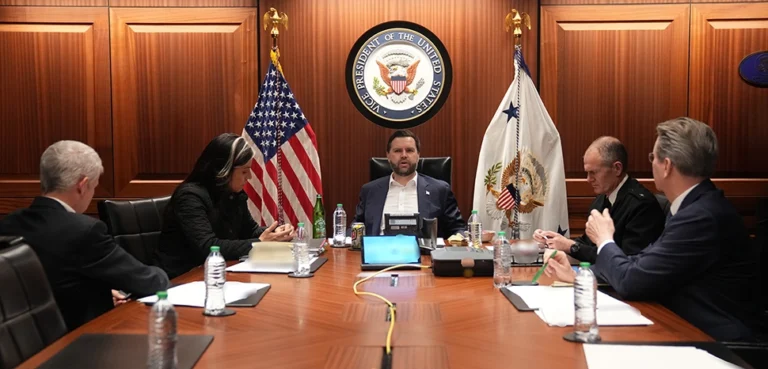
That picture has shifted considerably. Pakistan emerged as the primary mediator in the US-Iran conflict that began in February 2026, hosting the first direct talks between Washington and Tehran since 1979 in Islamabad on April 11-12. Pakistan subsequently brokered a ceasefire between the two sides, and President Trump acknowledged halting US military operations in the Strait of Hormuz “at the request of Pakistan.”
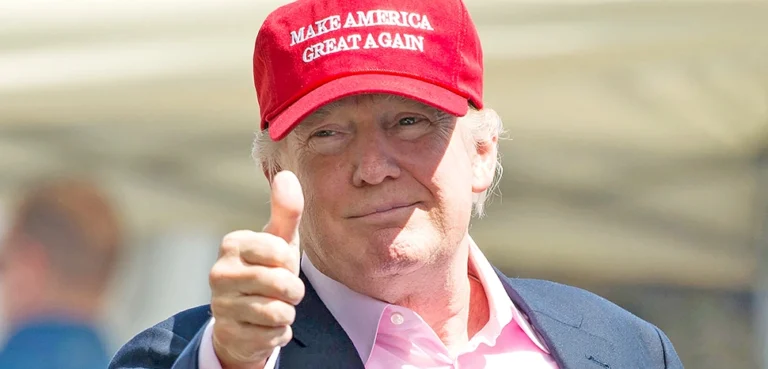
Trump’s public assessment has been unambiguous. When asked whether Washington was reconsidering Pakistan’s role as mediator, Trump replied: “No, they’re great. I think the Pakistanis have been great. The field marshal and the prime minister of Pakistan have been absolutely great.” The personal dimension of this relationship runs deep. Army Chief Field Marshal Asim Munir was invited to a private White House lunch in June 2025, the first time a US president had hosted a non-head-of-state military leader at that level.
The relationship remains transactional at its core. Washington engages Pakistan not out of strategic alignment but because Islamabad holds access to parties and channels that the United States cannot reach directly. That is precisely the structural argument: Pakistan’s value to Washington is less about what Pakistan is than about where it sits and who it can talk to.
Beijing: The All-Weather Partner
China’s relationship with Pakistan extends well beyond infrastructure and is best understood through its formal designation as an “all-weather strategic cooperative partnership,” a framing that captures both its breadth and its deliberate insulation from external pressure.
The China-Pakistan Economic Corridor (CPEC) remains the most visible dimension. Initially announced at approximately $46 billion and later expanded to around $62 billion, CPEC became the flagship corridor of China’s Belt and Road Initiative, providing Beijing with strategic overland access toward the Arabian Sea through Gwadar Port while reducing long-term concerns about dependence on maritime routes such as the Malacca Strait. In practice, multiple infrastructure and energy projects have stalled due to security concerns, macroeconomic constraints, and renegotiation pressures, shifting the relationship from an ambitious development program into a more guarded, security-driven arrangement.
Defense cooperation represents an equally significant and less-examined dimension. China is Pakistan’s largest arms supplier, accounting for the majority of its major weapons imports over the past decade. The co-developed JF-17 Thunder fighter jet forms the backbone of the Pakistan Air Force, while an agreement for eight Hangor-class submarines represents the largest submarine procurement in South Asian history. Most consequentially, Pakistan has confirmed China’s offer of approximately 40 J-35AE fifth-generation stealth fighters, alongside KJ-500 airborne early warning aircraft and HQ-19 air defense systems in a package valued at approximately $4.6 billion. If delivered, this would mark the first export of a Chinese fifth-generation stealth aircraft, fundamentally altering South Asia’s airpower balance and anchoring Pakistan more deeply within China’s defense-industrial ecosystem than any previous transaction.
China also provides Pakistan with critical diplomatic cover. At the United Nations Security Council, Beijing has consistently blocked Western-sponsored resolutions and designations that Islamabad considers threatening, including on the Kashmir issue and the listing of militant figures. This function is difficult to quantify but strategically significant.
Beijing’s parallel engagement on the Iran mediation further illustrates the depth of the partnership. Chinese Foreign Minister Wang Yi called his Pakistani counterpart Ishaq Dar just before President Trump arrived in Beijing for the May 2026 summit with Xi Jinping, commending Pakistan’s facilitation of US-Iran talks and urging it to step up mediation efforts. China stated it would “continue to support Pakistan’s mediation efforts.” That both Washington and Beijing were simultaneously praising Islamabad and seeking to leverage its diplomatic access during the same week illustrates Pakistan’s structural position with rare clarity.
China’s brokering of the Saudi-Iran normalization agreement in March 2023 also carries direct implications for Pakistan. A reduced Riyadh-Tehran rivalry eases pressure on Islamabad to choose between its Gulf partners, creating more room for the multi-directional balancing that Pakistani foreign policy depends upon.
Despite these convergences, the relationship is not without friction. Chinese frustration over security incidents targeting CPEC workers, delays in project implementation, and Pakistani debt renegotiation demands has introduced a harder transactional tone into what was once framed as an unconditional partnership.
The Gulf: Balancing Saudi Arabia and Iran
Pakistan’s most delicate diplomatic challenge lies in sustaining parallel relationships with Riyadh and Tehran, two states whose regional rivalry has shaped broader Middle Eastern politics for decades.
Saudi Arabia has repeatedly provided financial support during Pakistan’s liquidity crises. Riyadh deposited $3 billion into Pakistan’s central banking system in 2021 and has repeatedly extended deferred oil payment arrangements. Military cooperation, including Pakistani advisory roles in Saudi Arabia, also remains significant.
Iran represents a different form of necessity. Pakistan’s emergence as mediator in the US-Iran conflict reflects precisely this dynamic: Islamabad’s historically managed relationship with Tehran gave it credibility with both sides that no purely Western-aligned state could claim. Despite the January 2024 cross-border crisis, in which Iran struck targets inside Pakistani territory in Balochistan and Pakistan launched retaliatory strikes inside Iran’s Sistan-Baluchestan province two days later, diplomatic engagement resumed rapidly. That Pakistan could host Iranian delegations in Islamabad just months later reflects the resilience of this functional relationship.
An important precedent came in April 2015, when Pakistan’s parliament voted against joining the Saudi-led Yemen coalition. That decision established an enduring principle in Pakistani foreign policy: Gulf rivalries would not entirely determine Islamabad’s alignments. The Iran mediation of 2026 is the clearest expression of that principle to date.
Turkey and Qatar: Diversification Rather than Replacement
Pakistan’s relationships with Turkey and Qatar reflect a broader strategy of expanding partnerships rather than substituting existing ones.
Defense cooperation with Turkey has deepened considerably. Pakistan acquired Bayraktar TB2 armed drones in 2021 and has collaborated on the MILGEM corvette program for the Pakistan Navy. Political coordination in international forums, including shared positions on Kashmir and Palestine, has strengthened bilateral relations beyond the defense domain.
Qatar’s significance exceeds its size. Doha hosted the Taliban political office established in 2013 and later facilitated negotiations culminating in the Doha Agreement process, in which Pakistan remained an active participant. Qatar also serves as an important labor destination for Pakistani workers, a relevant energy partner through liquefied natural gas (LNG) imports, and a diplomatic platform central to engagement with Taliban-led Afghanistan.
The India Variable
Any account of Pakistan’s external relationships that omits India produces a distorted picture. The India-Pakistan rivalry is not peripheral to Islamabad’s foreign policy. It remains one of its central organizing principles.
Pakistan’s cultivation of Taliban relationships, its resistance to Indian connectivity projects through Afghanistan, and its emphasis on nuclear deterrence all reflect long-standing security concerns about India. The May 2025 aerial clashes between India and Pakistan, in which Chinese-supplied J-10CE fighters performed effectively against advanced Indian platforms, reinforced Pakistan’s defense dependency on Beijing while sharpening New Delhi’s concerns about the China-Pakistan military relationship.
The US relationship has historically functioned partly as a hedge against conventional asymmetry. China provides both economic resources and strategic balancing capacity. Gulf relationships increasingly carry an India dimension as well. Gulf states have expanded economic engagement with India in recent years, a development Islamabad watches carefully as regional competition extends into economic and diaspora domains.
Constraints and an Uncertain Trajectory
Pakistan’s balancing strategy faces real limits, and several constraints raise questions about its long-term durability.
Economic fragility remains the most significant. Pakistan has entered twenty-four IMF arrangements since 1958, reflecting recurring structural fiscal weakness rather than isolated crises. The $7 billion Extended Fund Facility approved in September 2024 stabilized immediate pressures without resolving the deeper vulnerabilities underneath. The ongoing US-Iran conflict carries its own economic risks: Pakistan received roughly $30 billion in remittances between 2025 and 2026, over half from Gulf states, making prolonged regional instability a direct threat to its foreign exchange base.
Domestic political fragmentation compounds these challenges. Civil-military tensions and prolonged political contestation have reduced predictability and raised concerns about institutional continuity among external partners.
The mediation role itself carries risks. Pakistan’s credibility depends on maintaining the confidence of both Washington and Tehran simultaneously. Any perception that Islamabad is tilting toward one side risks collapsing the neutrality on which its diplomatic value rests.
Most significantly, intensifying US-China strategic competition may gradually narrow the space that currently allows Pakistan to engage multiple blocs at once. As alignment pressures increase, maintaining functional relationships with both Washington and Beijing may become progressively harder to sustain.
Conclusion
Pakistan’s emergence as the primary mediator in the US-Iran conflict of 2026 is not an accident of diplomacy. It is the direct product of structural position: a state that maintains functional relationships with Washington, Beijing, Riyadh, and Tehran simultaneously, and that can therefore offer something no purely aligned actor can provide.
Pakistan has not resolved its internal vulnerabilities, and several continue to deepen. Yet the week in which both Trump and Wang Yi publicly praised Islamabad’s mediation role while the US president flew to meet the Chinese leader illustrated, with unusual clarity, what Pakistan’s structural relevance actually looks like in practice.
Its foreign policy success lies not primarily in projecting power, but in remaining structurally difficult to ignore across an expanding landscape of competing interests.