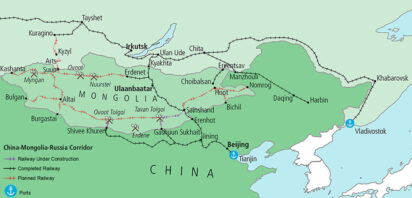
Since the fall of the Mongol Empire in 1368, Mongolia, a small nation with a population of only 3.3 million, has struggled to maintain its independence against the looming influence of its two giant neighbors, China and Russia. Following the collapse of the Soviet Union and its transition to democracy, Ulaanbaatar has faced numerous challenges in crafting an independent foreign policy, often risking the wrath of Beijing or Moscow by resisting pressures from both countries. To balance this delicate relationship, Mongolia has implemented a “Third Neighbor” policy, which seeks to cultivate ties with Western nations, particularly the United States, as a counterbalance to the overwhelming influence of Russia and China. However, in enacting this policy, Ulaanbaatar remains careful not to push these relationships too far, always mindful of maintaining a delicate equilibrium that avoids provoking either of its powerful neighbors.
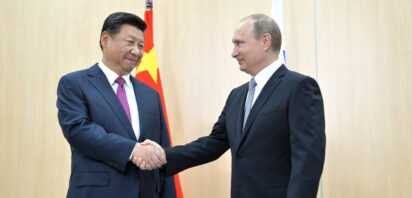
Mongolia holds a disproportionately significant strategic importance for China and Russia. This importance is rooted in Mongolia’s role as a landlocked buffer state, crucial to the regional geopolitical balance. Although Beijing and Moscow have a “no limits” partnership, the two nations do not fully trust each other. While both would like to dominate Mongolia, they also prefer to have a buffer state separating their territories. Historically, Mongolia has adeptly played China against Russia and vice versa, carefully managing these relationships to prevent itself from becoming a province of either, while also avoiding angering one by appearing closer to the other.
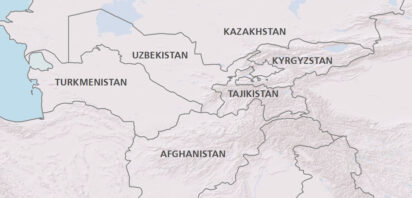
Mongolia’s sensitivity to this delicate balance is partly informed by history. Southern Mongolia, also known as Inner Mongolia, was annexed by China in 1911 and that the PRC has a Mongol population of about six million, almost double that of Mongolia itself. On the other side, Mongolia borders Russia’s Far East, which includes several Mongolic republics such as Tuva, Buryatia, and Kalmykia. These regions, with their significant Mongolic populations, underscore the importance of Mongolia’s strategic maneuvering, which is crucial for its sovereignty, stability, and continued existence.
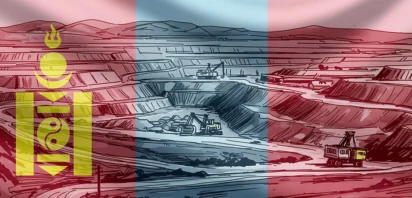
Economically, Mongolia is heavily reliant on China, its largest trading partner. In 2022, about 84% of Mongolia’s exports, mostly consisting of minerals such as coal, copper, and gold, were destined for China. This dependency on the Chinese market leaves Mongolia vulnerable to fluctuations in Chinese demand and Beijing’s economic policies. At the same time, Mongolia’s manufacturing sector is limited, making it dependent on imports for many basic goods, such as clothing, footwear, household appliances, electronics, packaged foods, personal care products (such as shampoo and soap), cleaning supplies, construction materials, and automobile parts.