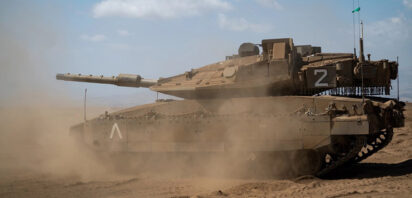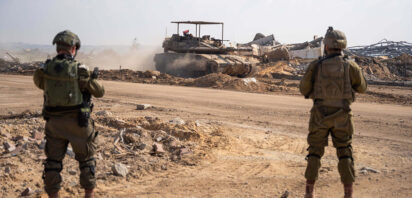
Israel’s consideration of reoccupying the Gaza Strip cannot be understood as a rash political maneuver. Instead, it reflects a rational response to the structural pressures and persistent insecurity that define Israel’s operating environment. Gaza, under Hamas’s control since 2007, has functioned as a base for periodic rocket attacks and psychological warfare. The October 2023 Hamas-led assault marked a significant breach in Israel’s deterrent posture, an attack that not only inflicted civilian casualties but publicly exposed Israel’s vulnerabilities.
In the absence of a central international authority capable of enforcing peace, states primarily rely on their own military capacity to safeguard their sovereignty. For Israel, this means acting decisively in environments where it perceives imminent or ongoing threats. Reoccupation, though costly, is being considered as a necessary measure to eliminate Hamas’s infrastructure and reestablish deterrence.
This rationale exists even in the face of mounting diplomatic opposition and domestic fatigue. From a systemic standpoint, the international community cannot be relied upon to neutralize threats or restore Israeli deterrence. Even long-time allies such as the United States provide fluctuating levels of political support. Under these conditions, unilateral military action becomes a structurally rational, albeit politically controversial, means of ensuring security.
By refraining from articulating a clear post-war vision, Israel preserves its capacity to act flexibly in a rapidly evolving strategic context. This strategic ambiguity is not a flaw but a feature, enabling decision-makers to adjust operational parameters without precommitting to a politically divisive endgame.
Israel’s Military Capacity Is Being Undermined by Structural Fatigue
The Israel Defense Forces (IDF) is a formidable institution with advanced technological capabilities, but it is not invulnerable to exhaustion. Unlike the professional standing armies of larger powers, the IDF relies heavily on reservists drawn from civilian life, many of whom have endured repeated deployments during the Gaza campaign. As the war approaches its second year, internal strain is becoming increasingly apparent.
Reservists are exhibiting signs of psychological fatigue and noncompliance. Reports of suicides and widespread resistance to renewed deployments indicate a systemic overstretch. This internal strain undermines the IDF’s operational readiness and casts doubt on its ability to sustain a long-term occupation without significant restructuring or reinforcements.
This situation is further complicated by Israel’s concurrent military responsibilities on multiple fronts: Hezbollah in Lebanon, proxies in Syria, instability in the West Bank, and the ongoing strategic competition with Iran. Each of these threats demands resources and attention, dividing the IDF’s focus and stretching its human and logistical capacities.
Institutional opposition from within the military, most notably from figures such as Chief of Staff Eyal Zamir, reflects this internal cost calculus. This resistance to reoccupation is not rooted in pacifism or diplomacy but in operational realism. Military leadership recognizes that an occupation could divert essential resources, degrade the IDF’s deterrent posture on other fronts, and produce a low-yield, high-liability engagement with no clear endpoint.
Partial Control Reflects a Deliberate Strategy to Contain Without Governing
Given the prohibitive costs of full reoccupation, both in terms of manpower and political capital, Israeli planners appear to be gravitating toward a strategy of selective territorial control. This approach does not envision a comprehensive return to full governance in Gaza, but rather the occupation of key infrastructure points: roads, border crossings, and supply routes.
This strategy aims to achieve operational denial by preventing militant factions from consolidating territory or using it as a staging ground, while deliberately avoiding the responsibilities of civilian administration. Israel would seek to retain control only over areas deemed militarily essential, allowing governance vacuums and humanitarian deterioration to persist in other regions.
This reflects a deliberate trade-off: by occupying only parts of the Gaza Strip, Israel minimizes its troop commitments and financial obligations. The objective is not to foster stability in Gaza, but to manage and contain it, prioritizing the suppression of threats through fragmentation and disruption, rather than through reconstruction or long-term development.
However, this model carries structural risks. Security vacuums invite further instability. In areas left ungoverned or inadequately patrolled, militant groups can reestablish operations and rebuild networks. Moreover, the worsening humanitarian crisis in these areas could trigger regional spillover effects, potentially drawing external actors into the conflict or accelerating diplomatic estrangement.
In effect, this model privileges tactical control over strategic resolution. It is a stopgap solution, designed for risk management rather than conflict resolution.
Past Occupation Proves That Territorial Control Cannot Neutralize Resistance
Israel’s historical experience in Gaza from 1967 to 2005 provides a vital reference point for evaluating current strategic debates. During this period, Israeli forces maintained a direct military presence in the enclave, navigating a hostile population, enduring repeated uprisings (the First and Second Intifadas), and incurring significant military and civilian casualties.
Over time, it became clear that the costs of occupation far outweighed the strategic benefits. The demographic balance (an increasingly youthful and impoverished Palestinian population) made the occupation untenable. The 2005 unilateral disengagement under then-Prime Minister Ariel Sharon was a sober assessment of strategic overstretch. It reflected the realization that continued presence in Gaza would drain Israel’s security, political, and economic resources.
Today, the ideological push to reoccupy Gaza is driven largely by far-right factions who view the Strip as an inseparable part of the historic Jewish homeland, regardless of demographic realities or military feasibility. This ideological commitment sits uneasily with the lessons of prior occupation. It risks repeating a cycle in which military control generates unending resistance, provoking new insurgencies while yielding minimal strategic stability.
Israel’s leadership is thus confronted with a central paradox: the desire to impose control over a territory historically marked by persistent resistance. History demonstrates that military dominance does not guarantee security, and that efforts to reshape demography or suppress the political identity of the local population are rarely sustainable under conditions of external scrutiny and internal dissent.
Diplomatic Isolation Is the Inevitable Consequence of Escalated Occupation
Reoccupation carries not only domestic and operational costs but significant diplomatic liabilities. Already, key international actors, including Canada, France, and the United Kingdom, have signaled growing disapproval of Israeli strategy in Gaza. These countries are on the brink of recognizing Palestinian statehood, and further escalation may accelerate such moves.
This represents a shift in the external balance of Israel’s strategic environment. Historically, diplomatic support from Western allies has provided Israel with both legitimacy and access to critical military technology. As that support erodes, Israel risks being repositioned within the international system as a pariah state, rather than a reliable security partner.
The Arab world, too, is recalibrating. Even states that recently pursued normalization agreements, such as Saudi Arabia and the United Arab Emirates, are withholding reconstruction aid and conditioning future cooperation on meaningful progress toward Palestinian statehood. These shifts constrain Israel’s freedom of action and increase the risk of diplomatic isolation at precisely the moment it seeks to consolidate regional influence.
The cumulative effect of these pressures is strategic attrition: the gradual erosion of Israel’s international standing, economic relationships, and ability to project power through alliances. Unlike military costs, which are visible and felt on a day-to-day basis, diplomatic costs accumulate invisibly until they reach a critical inflection point, at which the international consensus typically pivots irreversibly toward isolation and sanctions.
Electoral Instability Undermines the Viability of a Sustained Gaza Strategy
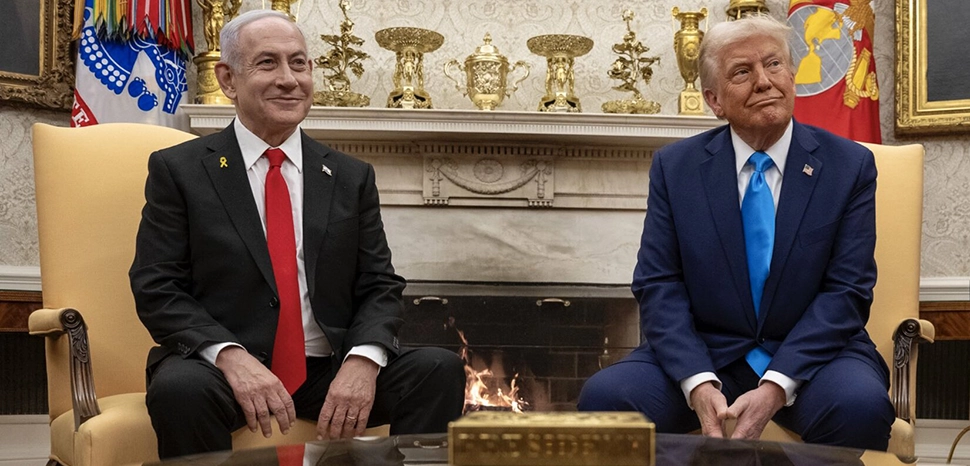
Strategic planning in Israel is increasingly shaped by the approaching 2026 elections, which are widely expected to result in a change of government. Current polling indicates that Prime Minister Benjamin Netanyahu’s coalition is unlikely to secure a majority, raising the likelihood of a new administration with different priorities and ideological alignments.
This exposes a temporal vulnerability in the reoccupation strategy. Military operations that demand sustained, multi-year engagement cannot be maintained across successive government cycles without broad bipartisan support. Yet such support is absent. Key figures in the political opposition, including Yair Lapid, have publicly criticized the prospect of reoccupation and instead call for a renewed focus on diplomatic solutions.
This volatility means that a reoccupation begun in 2025 may be abandoned or reversed by 2027, leaving behind a chaotic security environment and a demoralized military. This would mirror the aftermath of the 2005 disengagement, which created a vacuum that ultimately empowered Hamas.
Moreover, domestic political dynamics actively shape strategic decision-making. Netanyahu’s calculus may include an assumption that military escalation can consolidate public support and forestall political collapse. In this sense, foreign policy becomes entangled with regime survival, distorting strategic clarity in favor of short-term political positioning.
The consequence is a policy environment in which long-term objectives are subordinated to electoral expediency, and strategic decisions are vulnerable to reversal or abandonment depending on the composition of the next ruling coalition.