Geopolitics Weekly contextualizes emerging geopolitical trends around the world, distilling the cacophony of global events into one easy reader. It lands in the inbox of Geopolitical Monitor subscribers every week.
Asia
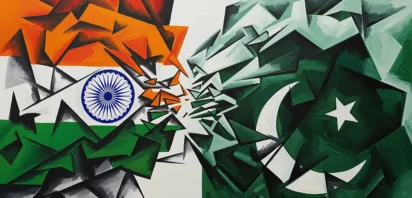
India-Pakistan Tensions Boil Over after Kashmir Attack; Risk of Kinetic Conflict Rising
What Happened
On April 22, a terrorist attack killed 26 tourists in the Pahalgam region of Kashmir. The attack has reportedly been claimed by The Resistance Front (TRF) – a lesser-known outfit formed in the wake of New Delhi’s decision to take direct federal control of Kashmir in 2019. Pakistan has denied involvement in the attack and has been calling for a neutral probe, potentially involving China (a close Pakistan ally) and Russia (a close India ally); however, Islamabad’s past support for Kashmir-based militants belies credibility in the view of New Delhi. Bilateral tit-for-tat blowback is now escalating alongside near daily exchanges of fire along the Line of Control in Kashmir, and there is a real risk of military conflict breaking out between the two nuclear-armed states, whether intentional or not.
Kashmir is a region in the Himalayas claimed by both India and Pakistan since independence. India-administered Jammu and Kashmir, with its population of around 13 million, historically enjoyed constitutionally-guaranteed autonomy and self-governing privileges owing to how it originally joined the Indian Dominion as an independent princely state. This political arrangement changed in 2019, when the Indian government revoked Article 370 and 35A and took direct control of the region. The Kashmir Valley itself is predominantly Muslim, while Jammu is majority Hindu with a sizable Muslim minority. Pakistan-administered Kashmir is predominantly Muslim, with a population of around 4.5 million.