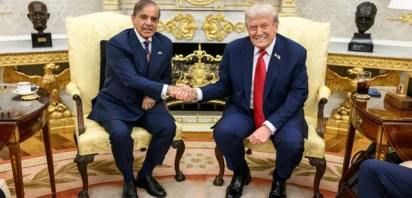
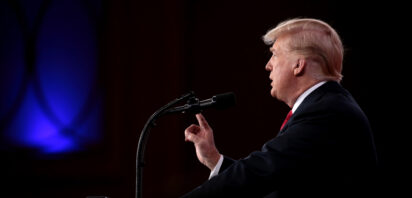
Early November saw Central Asian leaders arrive at the White House, where they met with the Trump administration to celebrate a decade of the C5+1 framework. Throughout the discussions, a number of strategic agreements were signed. More than just a diplomatic gathering, the summit represented a meaningful step into a new chapter of US engagement with the region. President Trump noted, “…the C5+1 format contributes to strengthening economic partnerships, improving security cooperation, and expanding overall cooperation.” Both prior to and following the summit, most analysts and political commentators approached the cooperation from an economic perspective by emphasizing trade and investment deals. However, a new layer of analysis is needed to explain the evolving nature of this complex relationship between Washington and Central Asia in the context of the current international system.
Intensifying geopolitical shifts in Central Asia, alongside US interests in critical minerals, raise an essential yet complex question: How should the region adjust its multi-vector foreign policy? That is to say, how will deepening economic engagement with the U.S. shape Central Asia’s position amid Russian and Chinese influence? Practical answers for this policy question come from a thorough analysis of what is at stake for the major powers in the region, and under which terms the U.S. is acting toward Central Asia.
US Policy vis-à-vis Russian and Chinese Interests
As US foreign policy evolves, so have the needs of Central Asia. Over the past ten years, the region has emerged as a hotspot for emerging economic connectivity, abundant natural resources, and a potential counterbalance to Beijing and Moscow. However, despite emerging diversification strategies, much of this remains rhetorical in nature as the region continues to act as a vital bridge between China and Russia and maintains close economic and security ties with both nations. Notably, since the invasion of Ukraine in 2022, exports of dual-use goods, including machine tools, UAVs, and telecommunication devices, have skyrocketed, undermining Western sanction efforts and potentially serving as a point of contention between the United States and the region.
It should be noted that Russia, China, and the United States share some common interests in Central Asia, such as regional stability, access to energy and mineral resources, and counterterrorism cooperation; however, their strategic priorities often clash. Namely, given the nature of the current international system and the heightened tensions among these powers, they are likely to collide in the foreseeable future over control of critical resources: China dominates rare earths and mineral processing, Russia prioritizes energy projects, and the U.S. pushes for diversification of supply chains and alternative partnerships. Under the Trump administration, US engagement in the region is largely transactional, seeking to encourage Central Asian states to undertake business and projects that serve US strategic and economic interests. This approach is not a Cold War–style containment strategy; rather, it represents the application of selective pressure in key strategic fields that allows the U.S. to maintain influence without overcommitting. In this context, frameworks like the C5+1 are designed to balance Russian and Chinese influence while keeping the U.S. strategically relevant in the region.
US Foreign Policy through a Realist Lens
The transactional nature of US foreign policy, particularly in the context of its ‘great power competition’ with China and Russia, means that trade and investment ties alone might not secure stable, long-term partnerships. From a realist perspective, Washington does not engage Central Asia on the basis of investment volumes or economic cooperation per se, but rather on how the region fits into the broader strategic rivalry with Beijing and Moscow.
Historical evidence offers numerous examples demonstrating that, in US. foreign policy, strategic interests consistently outweigh economic ties. Washington has repeatedly acted against states with which it maintained deep trade, investment, or security relationships whenever its broader strategic objectives were challenged. The U.S. has repeatedly prioritized strategic interests over economic ties, imposing sanctions or diplomatic pressure even on close trade and security partners. For instance, Washington sanctioned Turkey and expelled it from the F-35 program over its purchase of Russia’s S-400 system, pressured Germany through sanctions on Nord Stream 2 to counter Russian influence, and forced India to end Iranian oil imports despite deep energy interdependence. Similarly, the United States pressured South Korea on burden-sharing and 5G security, and threatened punitive measures against Saudi Arabia during the 2020 oil price war.
Central Asia possesses a critical strategic nexus in the US–China and US–Russia competition, where Washington’s responses are driven primarily by shifts in geopolitical leverage rather than bilateral goodwill. Consequently, the U.S. is likely to exert pressure on states that expand security cooperation with Russia or deepen economic integration with China, particularly in sectors such as technology, digital infrastructure, and energy, which demonstrates that investment alone would not insulate a country from strategic recalibration.
To add to the so-called multivector diplomacy of the region, it is pertinent to state that Washington generally tolerates Central Asian states as long as they maintain a balanced approach in their foreign relations. However, if a state tilts too far toward China or Russia, by supporting sanctioned companies, deeply integrating into Chinese technological networks, or helping evade sanctions, the U.S. is likely to respond with measures such as sanctions, banking restrictions, diplomatic pressure, or limits on technology transfers. In the case of Uzbekistan, Kazakhstan, and Kyrgyzstan, the US Bureau of Industry and Security (BIS) has added 15 entities to the Entity List and several dozen to the Office of Foreign Assets Control’s Specially Designated Nationals List (OFAC SDN), including several financial institutions such as Kyrgyzstan’s Keremet Bank and the Kazakh branch of Russia’s VTB Bank. This increasingly aggressive approach toward regional sanctions signifies that US policy in the region is guided primarily by strategic considerations rather than entirely by economic engagement, and underscores regional vulnerability to the impact of secondary sanctions.
Last but not least, investments from Central Asia in the United States are minimal relative to Washington’s broader global priorities. Even projects worth billions are too small to create meaningful dependency or vulnerability, and thus do not generate leverage, allowing the U.S. to impose pressure or sanctions on Central Asian governments without significant cost.
Future Trajectories
When US interests are threatened by the China–Russia presence in Central Asia, it will likely take action against Central Asian states, even if those states invest heavily in the U.S. or maintain good trade relations.
In the coming decade, US–Central Asia relations are likely to remain cordial but inherently fragile, contingent on Central Asian states avoiding actions that cross red lines in security or technology cooperation with China and Russia. Pressure from Washington is likely to rise if China expands security initiatives, Russia seeks to reassert influence through the CSTO or intelligence networks, or Central Asian states facilitate sanctions evasion, making multivector diplomacy increasingly difficult, while investments in the U.S. will offer little protection. Ultimately, the stability of the relationship is less dependent on the value of the Central Asian investment and more on the C5 states’ continued ability to successfully navigate and limit the strategic influence of China and Russia without crossing a clear red line.
Close cooperation among Central Asian states, coupled with the Uzbekistan–Kazakhstan tandem, could generate significant gains in trade, investment, and technology in the coming years. A notable example is the establishment of the US–Uzbekistan Business and Investment Council, co-led by Ambassador Gor and Saida Mirziyoyeva, Head of the Presidential Administration of Uzbekistan. This initiative strengthens trade and investment ties and creates opportunities for digital innovation and technology transfer. That is to say, it is a reflection of the United States’ strong interest in strategic economic engagement with the region.
The views expressed in this article belong to the author(s) alone and do not necessarily reflect those of Geopoliticalmonitor.com.