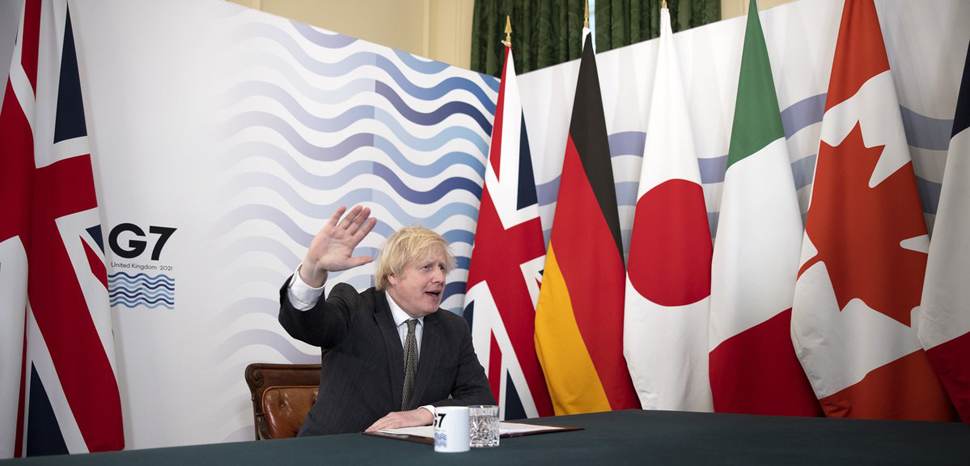
This week’s G7 foreign ministers summit in London has concluded with a massive, 87-point and over 12,000-word communique pledging cooperation on a laundry list of global issues, including everything from Russia and China to media freedom and development finance.
Here are the major takeaways from the document:
A new geopolitical calling for the bloc
The G7 (then G6) was originally founded as a principally financial grouping that sought to coordinate economic policy in the wake of the oil shock of the 1970s. A lot has changed since then, evident in this week’s communique, which leaps headfirst into the realm of global politics. Consider the three clauses of the preamble:
Democracy is under pressure globally; the pandemic continues to pose acute global challenges; new technological threats are mounting; and the catastrophic effects of climate change are increasing. We commit to strengthening open societies, shared values, and the rules-based international order. We affirm that free and fair trade, and the free and secure flow of capital, data, knowledge, ideas and talent is essential to our long-term prosperity. We affirm that liberal democracy and free and fair markets remain the best models for inclusive, sustainable social and economic advancement… We will promote respect for, and protect, human rights for all individuals, regardless of where they live and whatever their identity, faith, gender, disability or race…
We affirm the need to take collective action on the most pressing foreign and security challenges…
We commit to renewing global cooperation, including strengthened G7-Africa partnerships and greater engagement in the Indo-Pacific. We welcome Australia, India, the Republic of Korea and South Africa to the Foreign and Development Ministers’ meeting as guest countries to take forward shared priorities ahead of these countries’ participation in the G7 Leaders’ Summit in June…