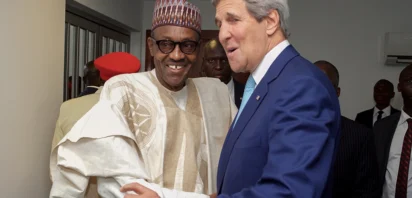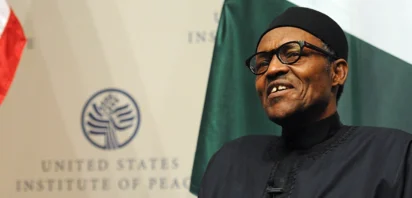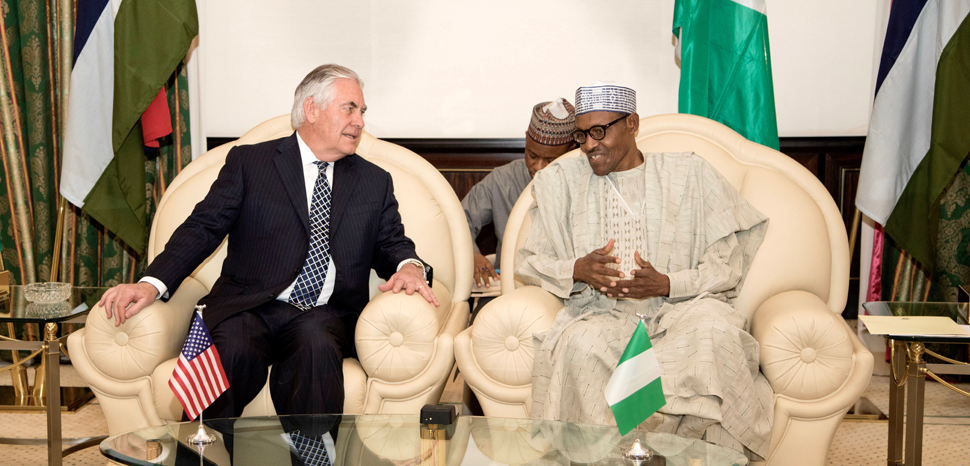
The Nigeria elections appear as a dark cloud looming over President Muhammadu Buhari’s head. His time in office has seen the country jump from one crisis to another. But in recent months, the incumbent president has faced his greatest political challenge yet. On July 5, the ruling All Progressives Congress (APC) split, and will now be known as the ‘Reformed – All Progressives Congress’ (R-APC). Those who left the party did so in the hopes of depriving the former general a second term in office.
The split has weakened confidence both within the cabinet and among ordinary citizens, causing some analysts to wonder whether Buhari will be able to win a second term and be able to uphold his campaign promises of rooting out corruption and bolstering a flailing economy. His record over his first term has fallen short of the mark and, when combined with rumors of failing health and long stints in London hospitals, the overall suggestion is that if Buhari doesn’t step down, he will have a rough reelection campaign ahead of him.
Impact
President Buhari’s political power appears to be waning. With the presidential elections looming in February of next year, opposition members are starting to capitalize on the president’s weakness, suggesting that his leadership is more and more akin to a dictatorship. The R-APC breach, which comes at a time of great instability in Nigeria, might prove to be more of hindrance for the Buhari administration than initially thought. While the administration still has a strong following in much of the northern regions, and still hope to replicate the electoral map that took Buhari to victory in 2015, it was his standing in not just the north but the southwest as well that allowed him to claim victory. Should these regions decide to back another northern region candidate, then Buhari’s prospects of serving a second term will be a dim.