The Middle East has always been a battleground for power competition between external and regional forces, often employing local proxy armies. Today, the primary backers of these proxy forces include Iran, the United States, Saudi Arabia, Turkey, and Russia. Other, less prominent sponsors include Israel, the United Arab Emirates (UAE), Qatar, Egypt, Pakistan, and select European Union (EU) member states.
The People’s Republic of China (PRC) is also becoming a major player in the region and is heavily invested in the outcomes of conflicts and wars in the Middle East. Its engagement tends to be economic and diplomatic. At present, there do not appear to be any direct connections between the PRC and regional proxy armies. China does indirectly support militias through its diplomatic backing and economic engagements with Iran, as well as other third-party supporters of militias in the area.
Proxy armies commonly emerge from marginalized local factions, comprising ethnic or religious minorities that have endured repression or disadvantages imposed by the dominant majority or local authorities wielding political or military control within a nation. Consequently, these factions forge alliances with foreign powers, viewing such alliances as essential for their survival or to attain various objectives, whether military, political, or diplomatic.
The analysis below examines several of the most prominent proxy armies within the Middle East, covering their operational areas, motivations, and, where feasible, an estimate of their size. Yet, accurately determining personnel figures is difficult due to the lack of detailed information maintained or disclosed by these groups. Moreover, many of these forces operate irregularly, with fighters joining or departing as required or at their own discretion. (For details on the state patrons backstopping many of these proxies, refer to the first article in this series).
Regional
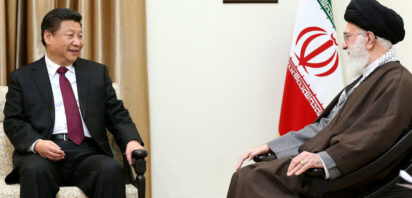
Islamic Revolutionary Guard Corps (IRGC): The Islamic Revolutionary Guard Corps (IRGC) is one of the region’s most significant and influential groups. While it doesn’t precisely fit the conventional definition of a “proxy army” due to its status as an official state entity, it operates independently of the military chain of command, directly answering to Supreme Leader Ayatollah Ali Khamenei. Notably, the IRGC’s Quds Force extends its operations beyond Iran’s borders, providing funding, training, guidance, and weaponry to various terrorist organizations.