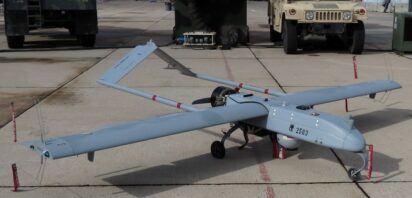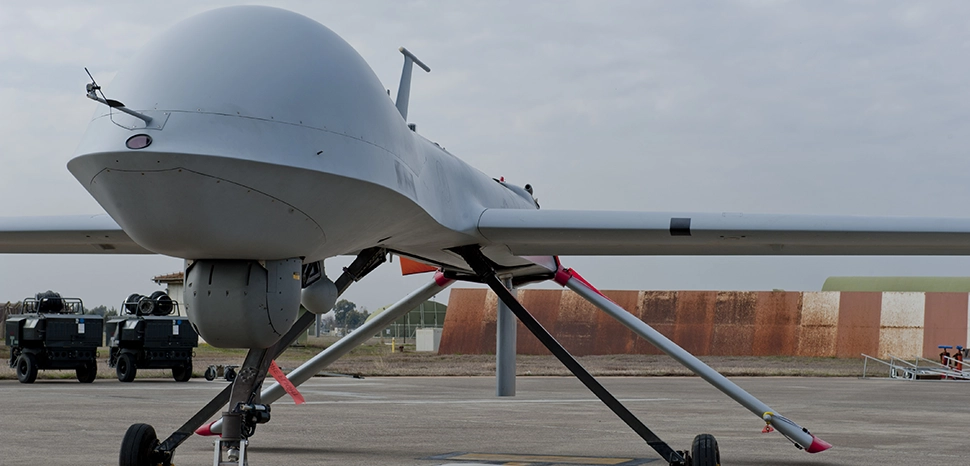
The military use of unmanned aerial vehicles dates back decades, with early reconnaissance drones already appearing during the Vietnam War and later conflicts. However, drones only began being used widely during the war in Afghanistan, where the United States relied heavily on UAVs for surveillance, reconnaissance, intelligence gathering, and targeted strikes against enemy targets. The conflict demonstrated the value of persistent aerial monitoring and precision remote strikes, gradually normalizing the use of unmanned systems in modern warfare. In Afghanistan, drones were also increasingly used for logistics support, infrastructure monitoring, and broader military coordination, further expanding their battlefield role.
The use of drones leaped even further during the 2020 Nagorno-Karabakh War between Azerbaijan and Armenia, which became the first major interstate conflict where unmanned systems played a central battlefield role. Azerbaijan’s extensive use of Turkish Bayraktar TB-2 drones, Israeli loitering munitions, and reconnaissance UAVs demonstrated how deadly drones can be against armored vehicles, artillery systems, and air defenses. This conflict sealed UAVs as a vital part of the modern battlefield rather than supplementary assets.
In the Ukraine war, both sides increasingly relied on drones for reconnaissance, artillery adjustment, long-range strikes, logistics disruption, and direct attacks against armored vehicles and personnel. The conflict eventually accelerated the rapid evolution of FPV drones, loitering munitions, naval drones, and AI-assisted systems. The scale of drone usage and the unprecedented damage inflicted by relatively cheap unmanned systems fundamentally changed global military discussions about the future of warfare itself.
Regional Insecurity and Unmanned Systems in the South Caucasus
The South Caucasus occupies a particularly important place in the evolution of modern drone warfare. The 2020 Nagorno-Karabakh War became the first conflict where unmanned systems were systematically integrated to overwhelm and defeat a capable conventional force.
Although the region has not witnessed large-scale armed conflict since Azerbaijan’s 2023 operation in Nagorno-Karabakh, the South Caucasus still retains a noticeable degree of geopolitical instability. More than 20% of Georgia’s territory remains occupied by Russia following the 2008 war, while relations between the two countries continue to be tense. Armenia’s relations with Russia have also become increasingly strained in recent years as Prime Minister Nikol Pashinyan gradually expanded cooperation with the European Union and the United States. In addition, the Iran war introduced another layer of regional tension, with Azerbaijan briefly becoming involved after an alleged Iranian drone hit an Azerbaijani airport in Nakhchivan. Even though direct military confrontation remains unlikely in the near future, these security concerns continue to encourage South Caucasus states to modernize their armed forces and further explore the military potential of unmanned systems.
Azerbaijan: Drone Pioneer and Expanding Military Hegemon
Azerbaijan remains the most advanced and institutionally developed drone operator in the South Caucasus. The country continues actively expanding its unmanned warfare capabilities through both procurement and domestic development efforts. In recent years, Azerbaijan adopted several new drone systems into service, including domestically produced UAVs such as the “İti Qovan.” Azerbaijan’s leading defense producer “Azersilah” is also actively involved in UAV design and production efforts. Alongside local production initiatives, Azerbaijan continues operating a diverse fleet of Turkish and Israeli unmanned systems, including Bayraktar TB-2 and Akıncı drones, while also showing interest in acquiring additional advanced UAV platforms in the future. The country also established dedicated training and maintenance facilities for Akıncı drones. The military cooperation framework established with Türkiye under the 2021 Shusha Declaration further strengthened cooperation in defense technologies, training, and military-industrial development.
Azerbaijan also increasingly seeks to deepen cooperation with Turkish defense companies beyond simple procurement by exploring possibilities for joint drone production and broader defense-industrial collaboration with Baykar. In recent years, both sides signed cooperation agreements and memorandums regarding technology exchange, industrial cooperation, and potential localized production of Baykar systems in Azerbaijan, signaling Baku’s long-term interest in developing more sustainable domestic unmanned systems production.
One of the most important developments, which received little international attention, was the formal establishment of dedicated Unmanned Systems Troops within the Azerbaijani Armed Forces. The experience of Ukraine demonstrated that such an institutionalization of unmanned forces allows for better coordination and battlefield results. The commander of the newly established forces, Colonel Adam Huseynov, is known to have received high-level military decorations following the 2020 Nagorno-Karabakh War. Although Azerbaijani authorities have not officially clarified the exact location of the Unmanned Systems Troops within the broader military structure, the sequence of units presented during the 2025 military parade suggests that the new forces are likely integrated into the Azerbaijani Air Force structure.
Azerbaijan’s expanding drone capabilities are also supported by steadily increasing military expenditure. The country’s defense budget grew from approximately $2.24 billion in 2020 to a planned $5.1 billion in 2026, reflecting Baku’s continued emphasis on military modernization and technological development.
Armenia: Adapting to the Lessons of Defeat
Armenia’s approach to drone warfare and unmanned systems modernization is heavily shaped by the lessons of its military defeat during the 2020 Nagorno-Karabakh War, where Azerbaijani drones inflicted devastating damage on Armenian units and exposed major weaknesses in Armenia’s armed force structure. Since then, Yerevan has accelerated military modernization efforts with a strong emphasis on unmanned systems. This shift was clearly visible during the 28 May 2026 military parade, where Armenia showcased a wide variety of modern UAVs and unmanned systems ranging from small reconnaissance drones to larger strike-capable platforms. Among the systems displayed were reconnaissance and attack drones such as the UL350 and Storm-320. Armenia also showcased Chinese-made CH-4 strike drones equipped with precision-guided munitions, Iranian AD-08 Majid short-range air defense systems, and domestically produced drones such as the AW5R and Krunk-25.
One of the most interesting developments was Armenia’s demonstration of ground-based robots known as “Gail” (“wolf”). Similar unmanned ground systems have increasingly attracted attention following their use in Ukraine, where they were employed for logistics, reconnaissance, casualty evacuation, and even direct combat support missions. However, effective use of such systems requires strong communications infrastructure, coordination capabilities, maintenance networks, and institutional adaptation — areas where Armenia still faces important challenges. Nevertheless, the decision to integrate UGVs into military modernization efforts demonstrates Armenia’s growing awareness of broader unmanned warfare trends extending beyond aerial drones alone.
Another major post-2020 development was the establishment of the Unmanned Aerial Vehicle Directorate within the Armenian Armed Forces in 2024. The creation of a specialized UAV command structure demonstrates that Armenia increasingly views unmanned warfare as a strategically crucial military sphere. Armenian officials have repeatedly referenced the lessons of Ukraine as highly important for Armenia’s future military development, while simultaneously continuing active drone-related cooperation with a variety of foreign partners.
Armenia’s military procurement strategy also underwent significant diversification following 2020. While Russia previously dominated Armenian arms imports, Yerevan increasingly expanded defense cooperation with countries such as India, France, China, Iran, and the United States, while still maintaining certain Russian military ties. The purchase of Chinese strike drones and American-made V-BAT reconnaissance UAV’s reflects Armenia’s broader attempt to avoid overdependence on a single supplier.
Armenia’s military modernization is also reflected in rapidly increasing defense expenditure. The country’s military budget increased from approximately $634 million in 2020 to around $1.44 billion in 2026, demonstrating the importance Yerevan places on rebuilding and modernizing its armed forces following the 2020 war.
Georgia: Falling Behind in Drone Warfare
Compared to Azerbaijan and Armenia, Georgia appears significantly less advanced in the integration of unmanned systems within its armed forces and is increasingly falling behind in this field. The country’s arguably only significant drone-related project is the cooperation between the Georgian defense company Delta and the Polish firm WB Technologies under the Delta WB initiative. The partnership focuses on local production of systems such as the FlyEye reconnaissance drone and the Warmate loitering munition. Georgian authorities announced plans for serial production of these systems in summer 2023, and the initiative initially attracted considerable attention as a potential step toward strengthening Georgia’s domestic military-industrial capabilities.
However, despite the ambitious plans, there have been no follow-up announcements regarding successful large-scale production or operational deployment. Unlike Azerbaijan and Armenia, Georgia also has not established dedicated unmanned systems forces or specialized drone branches within its military structure. The relatively modest scale of Georgia’s recent military parade raises further questions regarding the current pace of military modernization. During the 26 May 2026 Independence Day Parade, Georgia showcased very limited military equipment and did not publicly demonstrate drone systems, in contrast to Armenia and Azerbaijan where unmanned systems occupied a visible place in military presentations.
Recently, professor and political analyst Lasha Dzebisashvili sharply criticized the government for insufficient military funding, procurement problems, and the lack of meaningful development of domestic military production capabilities. Georgia’s prolonged political instability and polarization may also partially explain the weak pace of military reform and modernization in recent years. This situation is particularly important given Georgia’s geopolitical environment, where Abkhazia and South Ossetia remain occupied by Russia following the 2008 war, creating a long-term security challenge for the Georgian state.
Georgia’s military spending reflects a similarly cautious trajectory. While the defense budget increased from approximately $288 million in 2020 to around $662 million in 2026, military expenditure as a percentage of GDP declined during the same period. This differs noticeably from Armenia and Azerbaijan, both of which significantly expanded military spending and modernization efforts following the 2020 Nagorno-Karabakh War.
Looking Ahead
The South Caucasus remains one of the regions where the importance of unmanned systems is most visible. The experience of the Nagorno-Karabakh wars, followed by the lessons emerging from Ukraine, demonstrated to regional actors that drones are a crucial weapon in 21st century warfare. As a result, all three South Caucasus states show at least some level of interest in developing unmanned warfare capabilities, although the scale of implementation varies significantly.
Azerbaijan currently stands out as the clear regional leader in drone warfare integration due to its domestic production, diversified procurement, and creation of dedicated unmanned systems structures. Armenia, largely motivated by the lessons of defeat in 2020, is rapidly attempting to modernize and diversify its military capabilities with increased emphasis on drones. Georgia, despite possessing some domestic production initiatives, lags significantly in practical adaptation. Overall, it appears that drone adaptation will remain one of the most important military modernization trends in the South Caucasus in the coming years.