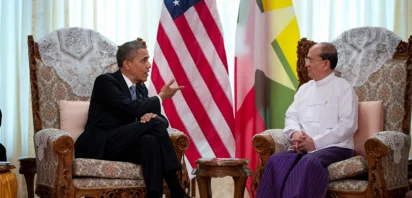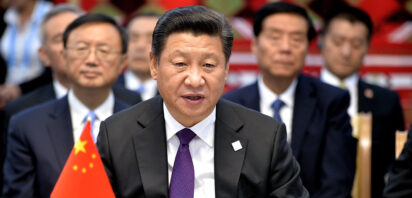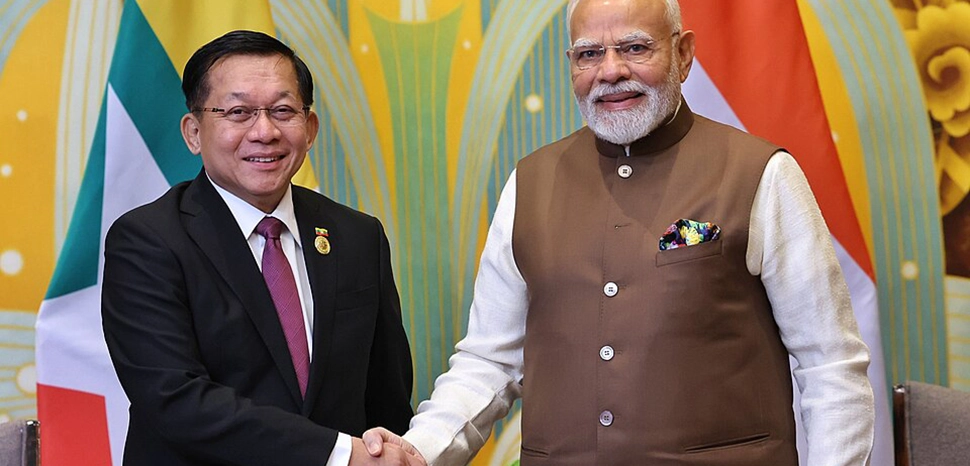
Following his first foreign visit to India, Myanmar’s president, U Min Aung Hlaing, travelled to China. While his visit to New Delhi was widely interpreted as an attempt by Naypyidaw to secure international legitimacy for the new government and reduce its dependence on Beijing by expanding its strategic options, his subsequent visit to China demonstrated that Myanmar cannot simply abandon its most influential partner. Taken together, the two visits suggest that geopolitical competition in South Asia and the Bay of Bengal is entering a new phase.
Dialogue as Advantage
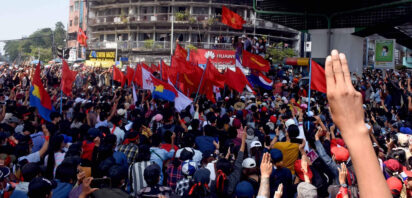
Since the junta consolidated power in 2021, Myanmar has been largely isolated. Western governments and most Association of Southeast Asian Nations (ASEAN) countries denounced the transition, instead voicing support for the National Unity Government formed by politicians and activists ousted during the coup. China filled the resulting power vacuum by becoming Naypyidaw’s primary economic and diplomatic partner, providing arms, technology, diplomatic support, and political legitimacy.
Beijing anchored the partnership with a project of great strategic value: the China-Myanmar Economic Corridor (CMEC). The CMEC, a Belt and Road Initiative (BRI) project, links Yunnan Province to the deep-water port of Kyaukpyu on the Bay of Bengal. The corridor offers Beijing direct access to the Indian Ocean, bypassing the Malacca Strait, through which approximately 80% of China’s seaborne energy imports currently pass. The recent global oil crisis sparked by the Iran war and subsequent closure of the Strait of Hormuz demonstrates that the CMEC is a strategic corridor, not merely an economic project.
New Delhi did not turn away from Naypyidaw. It engaged. After the June 1 talks, Foreign Secretary Vikram Misri summed up the situation: “Our engagement with Myanmar is not intended to be a commentary on the internal political arrangements in that country. We have always proceeded on the principle that sustained dialogue is what is important.” He added: “Disengagement only produces a vacuum that others go on to fill, to our detriment.”
Five years of consistently applying this principle, rather than issuing performative condemnations that cost little and change little, created the diplomatic opening of Min Aung Hlaing’s visit to New Delhi.
The meeting with Modi produced agreements to deepen cooperation in trade, investment, connectivity, border management, and, most consequentially, critical minerals and rare earth elements. Myanmar is now the world’s third-largest producer of rare earth elements, with an estimated output of around 31,000 metric tons in 2024. This includes dysprosium and terbium, which are essential materials for electric vehicle motors, wind turbines, and advanced defense systems. Currently, the vast majority of that output flows to China. A diversified supply corridor from Myanmar would greatly benefit India’s clean energy and semiconductor ambitions and efforts to reduce Chinese dominance over critical mineral processing chains.
Against this backdrop, both sides emphasized the urgency of completing the Kaladan Multimodal Transit Transport Project and the India-Myanmar-Thailand Trilateral Highway. These projects are crucial for connecting India’s northeast to Southeast Asia, and are central to India’s Act East policy. But Chinese investment strategically fulfils only Beijing’s interests by coming with political conditions and a growing physical presence, and India’s Kaladan Corridor and the Trilateral Highway are oriented towards regional integration of Myanmar. While Vikram Misri acknowledged that the security situation was the main obstacle to both projects, Min Aung Hlaing assured that Myanmar’s territory would not be used against Indian interests.
Between Two Powers
Yet, even as Min Aung Hlaing met with Prime Minister Narendra Modi at Hyderabad House, Myanmar’s foreign minister, Tin Maung Swe, swiftly traveled to Beijing for talks with his counterpart, Wang Yi, quietly reassuring a patron who had not been consulted before the itinerary was set. And within days of the India visit’s conclusion, a formal Chinese state invitation was extended to Min Aung Hlaing, who arrived in Beijing on 15 June, just twelve days after leaving New Delhi.
Myanmar’s leader was given a 21-gun salute and an honor guard at the Great Hall of the People — protocols usually reserved for recognized heads of state. This was precisely the diplomatic legitimization that the Myanmar president was seeking. The two sides signed 18 memoranda of understanding covering security, development, trade, health, science, and infrastructure. Xi urged accelerated progress on the CMEC, calling it a flagship project of the BRI and pressed Min Aung Hlaing to advance the construction of the Kyaukpyu deep-sea port and the Muse-Mandalay railway. In turn, Min Aung Hlaing pledged to “make every effort” to protect Chinese enterprises and personnel, as well as commit to finalizing the BRI cooperation plan.
The Corridor India Cannot Ignore
However, China had already begun implementing countermeasures before Air India One landed at Palam Airport. In August 2025, Min Aung Hlaing’s administration established the BRI Leading Committee for Implementation, headed by the junta leader himself. This institutional mechanism was designed to bind the new government to CMEC commitments before any diplomatic diversification occurred. In February 2025, Myanmar enacted the Private Security Services Law, granting Chinese security firms legal entry to protect BRI projects and personnel. This physical presence cannot easily be displaced by a bilateral declaration from New Delhi.
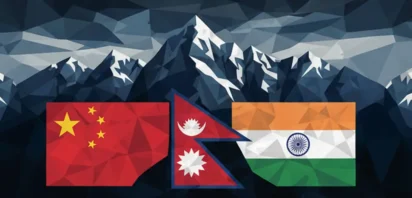
The strategic picture becomes considerably more complicated for New Delhi at this point. The Kyaukpyu deep-sea port is located on the Bay of Bengal near the INS Varsha nuclear submarine facility that is under construction on India’s eastern coast. China’s track record with dual-use port infrastructure, such as the port of Gwadar in Pakistan, the facility in Djibouti, and the port of Hambantota in Sri Lanka, warrants sustained scrutiny. A port intended for commercial use that gradually acquires the characteristics of a strategic logistics hub would represent the kind of incremental encroachment that does not immediately raise alarm but rather accumulates over time to create a qualitative shift in the regional balance of power. When read alongside the China-Pakistan Economic Corridor, which presses on India’s western flank, and the proposed Chinese connectivity investments through Nepal, which press on India from the north, CMEC forms part of a string of concurrent corridors that press on India simultaneously from multiple vectors. Each project is defensible as an individual development initiative. Together, however, they constitute a systematic effort to constrain India’s strategic space across its entire near-abroad through infrastructure rather than confrontation. The Bay of Bengal has now become the critical theater in that competition.
In this context, India’s approach has proven its efficiency and superiority over other available options. While Western governments and most ASEAN members lost leverage by excluding Myanmar’s government and refusing to engage in meaningful dialogue, New Delhi secured a seat at the table in Naypyidaw. The June 2026 visit yielded tangible results: a strengthened position as Naypyidaw’s preferred regional interlocutor, a critical minerals agreement that chips away at China’s monopoly over resource output, and credible regional leadership through the Act East policy. However, response cannot be limited to diplomatic symbolism, no matter how well managed, and must include concrete actions.