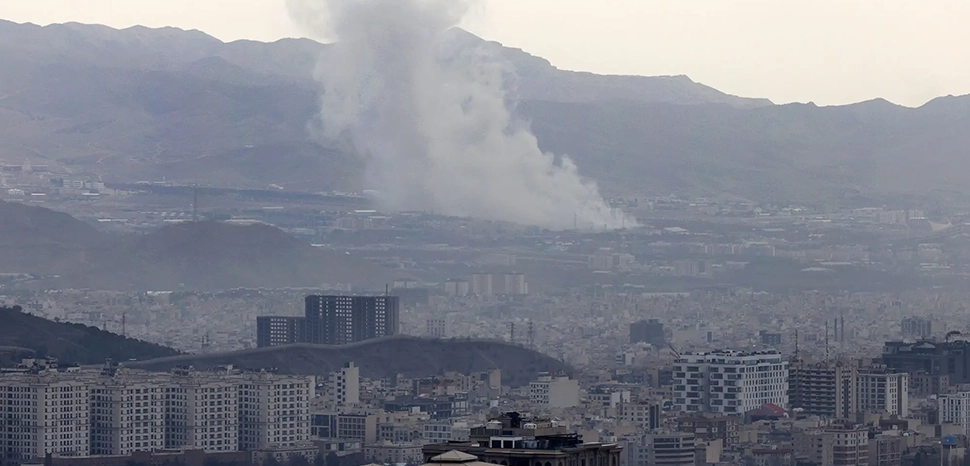
Water infrastructure has emerged as a strategic target in the Iran war, echoing many other past and recent conflicts. Iran has repeatedly accused the US and Israel of targeting water infrastructure such as desalination plants, water pipelines, and other civilian infrastructure. For example, Tehran accused the US of striking a freshwater desalination plant on Iran’s Qeshm Island, disrupting water supplies in around 30 villages in early March. The same month, the US President Donald Trump threatened: “I could take out things within the next hour, power plants that create the electricity, that create the water. They have desalinization all over the place. We could do things that would be so bad they could literally never rebuild as a nation again.” More recently, various media reporting indicates that the latest wave of US strikes damaged two reservoirs, resulting in some 20,000 people having their drinking water cut off near Sirik Town in southern Iran. For its part, Tehran has also been accused of carrying out attacks on water plants in the United Arab Emirates, Kuwait, and Bahrain.
Legally, targeting water infrastructure runs contrary to the provisions of the International Law Association’s 57th Conference Report, the UN 1997 Watercourses Convention, and the draft Geneva List of Principles on the Protection of Water Infrastructure.
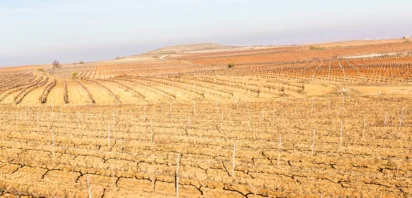
Iran has been grappling with a water crisis that far predates the outbreak of the current war. Water supply in the country is expected to fall from around 670 billion cubic meters in 2019 to roughly 540 billion cubic meters by 2080. On the contrary, demand is expected to increase by 30% by 2050 due to population growth. It is estimated that over 70 percent of Iran’s aquifers are overdrawn. Statistically, around 90 percent of Iran’s water supply is used for agricultural activities, which accounts for around 12 percent of the country’s GDP and 14 percent of employment.
According to the World Resources Institute’s Aqueduct, Iran falls into the “extremely high” category of water risks country. Kaveh Madani, who coined the term “water bankruptcy,” argues that Iran’s water situation cannot be attributed to a single factor, but that water mismanagement and continued investment in activities without understanding the limitations and without foresight regarding climate change are major causes. “Water bankruptcy” is the persistent post-crisis condition where withdrawal exceeds the system’s renewable freshwater inflows, resulting in a situation where “historical levels of water supply and ecosystem function cannot be restored without disproportionate social, economic, or environmental costs.”
Analysts have observed that water infrastructure builders prioritized “political power and predatory profit-seeking” over holistic water conservation, ecological protection, and public welfare. In a survey entitled Iranians’ Attitudes Toward the 12-Day War, conducted from September 24-28 in 2025, some 75% of the 30,372 Iranian participants blamed domestic mismanagement and inefficiency as the main cause for inadequate water and electricity supply. Another 14% attributed it to natural factors, and only 4% to international sanctions.
Water mismanagement, compounded by climate change, is having a perilous impact on Iran. In late 2022 and January 2023, about 270 Iranian cities and towns witnessed acute water shortages. According to the Iran Water Resources Management Company, the total water reserves stood at about 18 billion cubic meters, and 63 percent of the country’s dams stood empty. Many major water sources in Iran are shrinking, and drought has also driven migration from rural areas to cities. In 2025, acknowledging the dire water outlook, Iranian President Masoud Pezeshkian declared that there is “no option but to act,” even suggesting that the capital be moved. Tehran is sinking by up to 30 cm every year due to groundwater depletion.
A further vector of water stress is Iran’s dependence on Afghanistan, another water-parched country. Water disputes between Iran and Afghanistan date back to the 1870s. The two countries signed the Helmand River Treaty in 1973. A flurry of dam-building activity on the Afghan side has ramped up water tensions between the two countries. In 2021, then-Afghan President Ashraf Ghani inaugurated the Kamal Khan Dam on the Helmand River. In 2024, Tehran asked the Taliban to “re-engineer” the Kamal Khan Dam. The second phase of the Kajaki Dam on the Helmand River was completed in 2022. Finally, in August 2025, the Taliban completed the Pashdan Dam on the Harrirud River in Herat province, which has a storage capacity of 54 million cubic meters of water. The project has caused serious concerns in Iran. Earlier in 2023, the Taliban and IRGC exchanged fire on their border, which led to the deaths of two Iranian guards and one Taliban fighter.
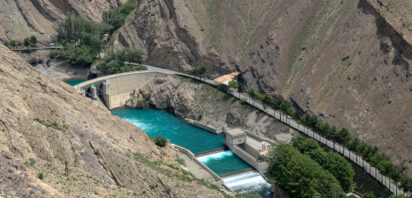
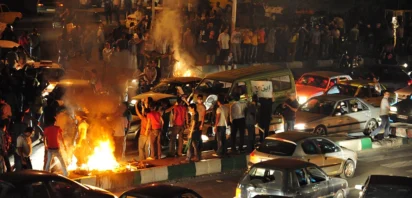
Iran’s water crisis has frequently triggered protests. In 2018, protests broke out with farmers accusing the government of water mismanagement. In July 2021, water shortage sparked protests in southern Khuzestan province. Then, in 2025, water shortage combined with electricity cuts sparked protests. Again, in January 2026, an immediate reason for the protests was a combination of factors, including worsening government austerity measures and a currency crisis. However, it was the climate breakdown and its impact on water supply that fueled the protests. In the lead-up to these protests, about 19 dams across the country were on the verge of drying up. Most of the five major dams providing water to Tehran, the Lar, Latyan, Karaj (Amir Kabir), Taleqan and Mamloo Dams, were running on an average of 10 percent capacity. The impact of climate change is likely to exacerbate aridity in Iran, further escalating these tensions in the future.
Attack on water infrastructure can fuel social destabilization in the country. The United Nations World Water Development Report 2024 has correctly underscored that water issues are exacerbating internal and external conflicts. Though in Iran’s case, current stresses are not a mirror image of the past. Previous water protests funneled anger toward mismanagement on the part of the domestic authorities. Now that the country is under attack, longstanding water stress can be pinned on external forces, potentially impacting not just domestic politics within Iran but the wider regional peace process going forward.