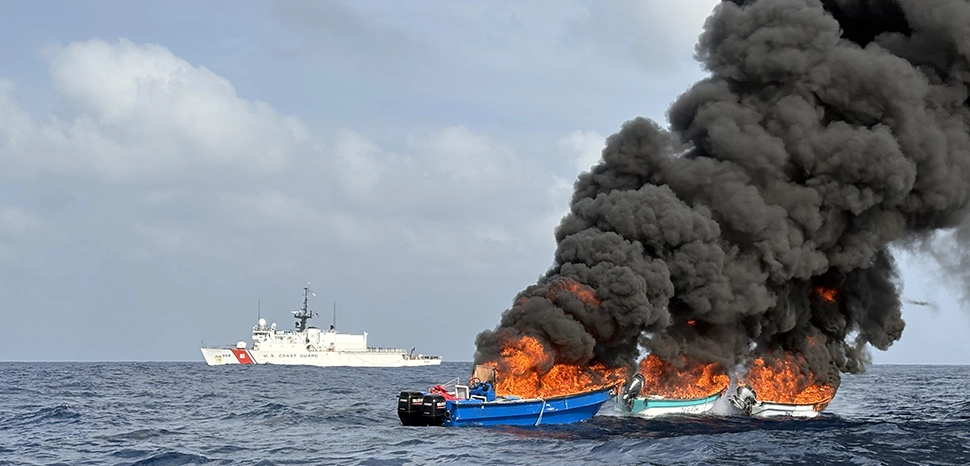
The recent designation of Brazil’s two largest criminal organizations, the PCC and CV as Foreign Terrorist Organizations (FTO) marks another milestone in the Trump administration’s tenuous relationship with Brazil and the broader Latin American region. Recasting Brazilian drug factions as terrorists grants Washington new legal authority to deploy drones, special operations teams, and intelligence assets across the region without the usual congressional notifications required for counter-narcotics missions.
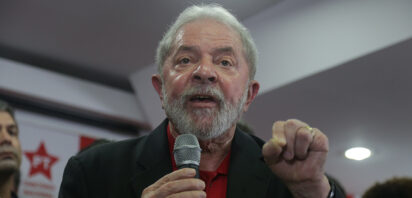
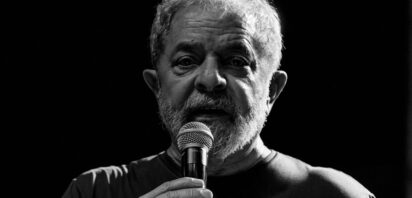
While these criminal organizations are a major threat for Brazil, this terrorism designation was not supported by Brazil President, Luiz Inácio Lula da Silva. Trump announced the designation just weeks after bilateral talks with President Lula, seemingly indicating a failure to reach a deal behind the scenes.
The same playbook was used against Mexican cartels at the beginning of the second Trump administration, but this focus on Brazil seems to be markedly different. It is not a bureaucratic update to a terrorist list; rather, it is a fundamental reshaping of the political, diplomatic, and financial terrain on which Brazil and the US meet.
Diplomatically, these new designations will test already strained bilateral relations between Brazil and the United States. Financially, the terrorist listing triggers automatic asset freezes, global transaction bans, and secondary sanctions on any entity that knowingly facilitates their operations. This translates into greater risk and compliance requirements, especially for banks which have historically been most significantly impacted by sanctioning tied to FTO designations.
It is unclear how this new designation will affect organized crime itself, but there are some cases that can help illuminate why organized crime is being classified as terrorism and what we can expect to see in the coming months.
New FTO Members: Primeiro Comando da Capital & Comando Vermelho
The Primeiro Comando da Capital (PCC) and Comando Vermelho (CV) both originate from Brazil’s brutal prison system. The PCC was founded in 1993 in São Paulo’s Taubaté prison in the aftermath of the Carandiru massacre, whereas the older CV formed in the 1970s from a Rio de Janeiro prison alliance between common criminals and leftist militants during the military dictatorship. Today, both groups have evolved into major transnational forces. The PCC operates in all 27 Brazilian states and has expanded into Paraguay, Bolivia, and Europe. The CV, while strong in Rio de Janeiro favelas, also maintains a presence in eight South American countries. Their core business is drug trafficking, although profits are also derived from arms smuggling, extortion, and regional rackets. Their operational styles diverge significantly; the PCC operates with a hierarchical, quasi-corporate model resembling a cooperative, while the CV is more decentralized, granting greater autonomy to its local units.
The new designation of the PCC and CV traces directly to President Trump’s earliest actions in office. On his first day back in the White House, he signed an executive order directing the State Department to classify major drug cartels as Foreign Terrorist Organizations (FTOs). Under the direction of Secretary of State Marco Rubio, that order was swiftly executed: in February 2025, the administration designated six Mexican cartels as FTOs, including the Sinaloa Cartel and Jalisco Nueva Generación (CJNG). It soon applied the same label to Venezuela’s Tren de Aragua and Haitian gangs. Rubio has been the principal architect of this broader redesign of hemispheric security, pushing to militarize the US approach and treat organized crime as an existential threat warranting full counter-terrorism tools. As experts have noted, the administration’s objective is not merely counternarcotics but projecting US dominance in the Western Hemisphere. The FTO designations thus form the keystone of a campaign to expand US military and oversight activity across Latin America, with the PCC and CV now integrated into a region-wide architecture of counter-terror sanctions, drone surveillance, and potential special operations.
Diplomatic and Compliance Blowback
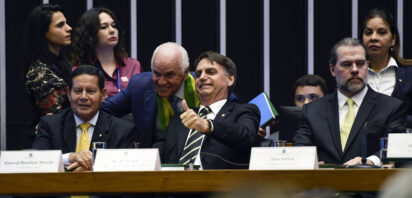
Unlike the Mexican cartel designations, which were announced without a parallel domestic firestorm, the US move against the PCC and CV has become deeply politicized, landing in the caustic space between Presidents Trump and Luiz Inácio Lula da Silva. The fraught relationship has been marked by unilateral US tariffs on Brazilian goods, Trump’s vocal defense of former President Jair Bolsonaro, and significant diplomatic friction. This tension extends to the terrorist label itself, as the Brazilian government has long opposed the designation, fearing it could undermine national sovereignty and serve as a pretext for US intervention. Critics in Brasília argue that Washington is conflating violence for profit with political terror, a distinction Brazilian law has long maintained to preserve judicial autonomy and avoid legitimizing foreign military intervention under anti-terrorism statutes. Beyond the new designations, the announcement came shortly after a White House meeting between Trump and Jair Bolsonaro’s son, Senator Flávio Bolsonaro. This meeting led Lula to accuse the opposition leader of “treason” for allegedly inviting foreign interference in Brazil’s internal affairs.
The financial ramifications of the terror designations will be immediate and severe, driven by the legal machinery of the US Office of Foreign Assets Control (OFAC). By listing the PCC and CV as Specially Designated Global Terrorists (SDGTs) under Executive Order 13,224, OFAC automatically blocks all property and interests in property of these entities within US jurisdiction and prohibits US individuals from engaging in any transactions with them.
The compliance burden now cascades across the Brazilian economy. Any transaction denominated in US dollars or routed through the US financial system such as correspondent banking, cross-border investments, or trade finance now risks triggering US jurisdiction, asset freezes, and potential criminal prosecution under “material support” statutes that carry penalties of up to 20 years in prison. Brazilian companies must urgently reassess compliance frameworks, supply chain monitoring, sanctions screening, and third-party due diligence to avoid unwitting exposure through front companies or payment systems. PCC alone has been linked to an estimated R$52 billion in assets embedded across fuel, logistics, agribusiness, and real estate sectors. These sectors are now legally contaminated from a U.S. sanctions perspective.
The banking sector faces the most acute immediate risk, as the precedents from Mexico’s cartel designations have demonstrated with brutal clarity. Within months of the February 2025 Mexican SDGT designations, OFAC and FinCEN targeted three Mexican financial institutions CIBanco, Intercam Banco, and Vector Casa de Bolsa for alleged money laundering on behalf of designated cartels, effectively freezing them out of the US financial system. Fitch Ratings downgraded the institutions, Visa cut off international transactions, and Mexican regulators assumed temporary control. Brazilian banks, fintechs, and asset managers now face identical risks. The most feared outcome is “de-risking”: US correspondent banks, perceiving elevated terrorist financing exposure and compliance costs, may preemptively terminate banking relationships with Brazilian institutions, effectively severing their access to dollar clearing and international capital markets.
Adding to the urgency, Brazilian authorities have already uncovered extensive infiltration of the formal financial system: Operação Fluxo Oculto, an offshoot of the ongoing Operação Carbono Oculto investigation, identified R$30 billion belonging to PCC invested in forty funds on Faria Lima, São Paulo’s financial district.
Yet for all its punitive force, the designation risks unintended blowback: criminal groups may simply deepen their reliance on cryptocurrencies, informal value transfer systems, and complicit state actors. The resilience and adaptability of organized crime could render OFAC’s tools less effective while diverting US intelligence resources from genuine terrorist threats. Foreign financial institutions that knowingly facilitate transactions on behalf of an SDGT also face secondary sanctions exposure, meaning the compliance net casts widely beyond primary violators. With the US Treasury signaling aggressive enforcement, Brazilian banks now face a stark choice: rapidly upgrade background check rigor, anti-money laundering, and sanctions screening controls to OFAC’s exacting standards, or risk becoming the next enforcement action.
The designation of the PCC and CV as Foreign Terrorist Organizations is not, at its core, a law enforcement update. It is a geopolitical weapon that reshapes bilateral relations between Washington and Brasília, rewrites the compliance calculus for an entire national economy, and extends the Trump administration’s campaign to militarize US engagement across Latin America. The political fallout is already evident in Lula’s angry accusations of foreign interference and the diplomatic chasm between two adversarial presidents. The diplomatic rupture threatens to undermine regional cooperation precisely when intelligence-sharing against the PCC and CV is most needed. The financial consequences, including asset freezes, secondary sanctions, and the specter of de-risking and dollar exclusion will force Brazilian businesses and banks into an urgent, expensive compliance reckoning.