Transnational Crime News & Analysis

Washington’s New Terrorist Designations Risks Derailing US-Brazil Relations
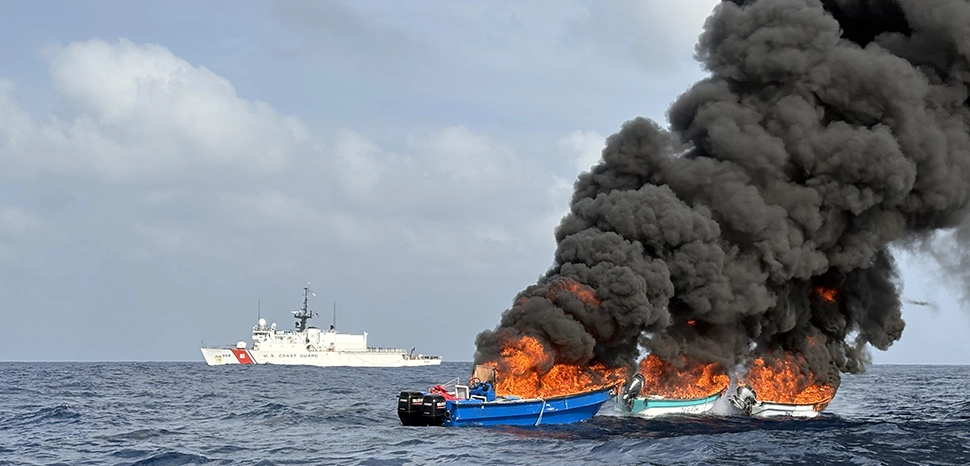
U.S. Coast Guard Cutter Tahoma crew members conduct interdiction operations in the Gulf of America, May 8, 2026. Tahoma’s crew, alongside a deployed Coast Guard Helicopter Interdiction Tactical Squadron aircrew, stopped three suspected smuggling vessels carrying narcotics during a maritime patrol approximately 90 miles off Cartagena, Colombia. (U.S. Coast Guard photo), modified, https://media.defense.gov/2026/May/14/2003930672/-1/-1/0/260508-G-G0107-1002.JPG

A US terrorist designation of two major Brazilian organized crime outfits is not a matter of law enforcement - it’s a geopolitical weapon, speak nothing of a compliance nightmare for regional banks, and it will reverberate across US-Brazilian relations for years to come.

Life After Mencho: A Shifting Landscape of Organized Crime in Mexico

Cubist el Mencho, Mexico, Generated by Google Gemini AI on March 3, 2026. All flags, maps, and likenesses contained within this image are not necessarily accurate representations of reality.

The assassination of New Generation Jalisco Cartel (CJNG) leader ‘el Mencho’ is a game-changer, but not necessarily in the way that some analysts were hoping.

Africa: Next Frontline in the Global Drug Trade?

Exercise Obangame Express 23 Aids Maritime Security and Prosecution in the Gulf of Guinea, modified, https://www.navy.mil/Press-Office/News-Stories/Article/3280270/exercise-obangame-express-23-aids-maritime-security-and-prosecution-in-the-gulf/

The US war on cartels will not end the global drug economy. At best it will merely shift it, and Africa could become the next frontier.

Russia’s Cyber Sanctuary in Transition: Implications for Global Cybercrime

Generated by Google Gemini AI on January 9 2026. All flags, maps, and likenesses contained within this image are not necessarily accurate representations of reality.

Russia’s recent cybercrime enforcement activity is best understood not as a conventional law enforcement campaign, but as a geopolitical signal with second-order security effects.

Venezuela: Chronicle of a Regime Change Foretold

cc US military via Truth Social, modified, altered by Google Gemini AI on January 5 2026. All flags, maps, and likenesses contained within this image are not necessarily accurate representations of reality.

Regime change in Venezuela is a game-changing development that will resonate across the geopolitics of the Americas. But it’s not without its risks.

Taliban Poppy Ban Resets South Asian Drug Flows

Afghan poppy field, modified, Sgt Pete Thibodeauhttps://commons.wikimedia.org/wiki/File:A_poppy_field_in_Helmand_province,_Afghanistan,_April_3,_2013_130403-M-BO337-191.jpg

Once the backbone of Afghanistan’s rural economy and a pillar of the global heroin trade, the opium sector is now in retreat, reshaping drug markets and security dynamics across the wider region.

Setting a Precedent: US War on Drugs Reboots in Latin America

Ships from the Gerald R. Ford Carrier Strike Group (GRFCSG) and the Bataan Amphibious Ready Group (ARG), and Hellenic Navy frigate HS Navarinon (F 461) sail in formation in the Mediterranean Sea, Dec. 31, 2023. The ships from the GRFCSG include the first-in-class aircraft carrier USS Gerald R. Ford (CVN 78) and the Arleigh Burke-class guided-missile USS The Sullivans (DDG 68), USS Bulkeley (DDG 84), and USS Delbert D. Black (DDG 119). The ships from the Bataan ARG include the Wasp-class amphibious assault ship USS Bataan (LHD 5), the San Antonio Class-class amphibious transport dock USS Mesa Verde (LPD 19), Harpers Ferry-class dock landing ship USS Carter Hall (LSD 50). The U.S. maintains forward deployed, ready, and postured forces to deter aggression and support security and stability around the world. (U.S. Navy photo by Mass Communication Specialist 3rd Class Maxwell Orlosky)

It’s not the volume of Washington’s drug boat strikes that’s most important – it’s the precedent they set for future military action. This forecast examines the diplomatic, economic, and military risk factors inherent to President Trump’s militarized approach to counter-narcotics.

UN Cybercrime Pact Hopes to Curb Rise of Transnational Criminal Networks

Generated by ChatGPT on October 24, 2025. All flags, maps, and likenesses contained within this image are not necessarily accurate representations of reality.

State leaders hope that the weekend signing of the United Nations Convention on Cybercrime in Hanoi will mark a step toward reversing the growth of transnational cybercrime networks, many of which operate with impunity just across the Mekong. But as always with global treaties, the devil will be in the details.

Bridging Digital Divides: India’s Cybersecurity Gaps and the Case for US-India Cooperation

India United States flags, Generated by Google Gemini AI on August 28, 2025. All flags, maps, and likenesses contained within this image are not necessarily accurate representations of reality.

For India and the United States, the choice is clear: innovate, cooperate, or fall behind in a rapidly evolving cybersecurity landscape.

Gang Violence Crisis Spreads in Caribbean
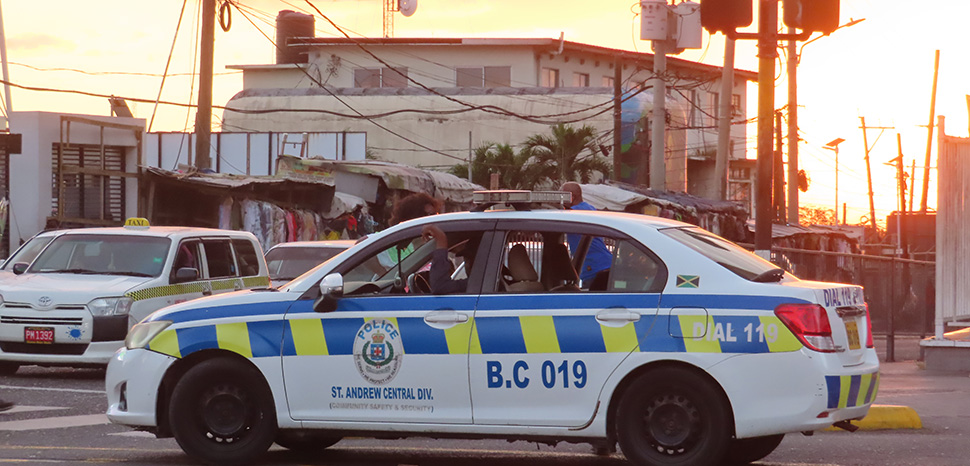
cc Jason Lawrence, modified, https://commons.wikimedia.org/wiki/File:Jamaica_Constabulary_Force_St._Andrews_Central_Division_BC019_Toyota_Corolla.jpg

Flush with cash from North America’s drug markets, and armed by guns smuggled from the United States, drug trafficking gangs have unleashed a wave of violence in the Caribbean.

Cambodia Emerges as Transnational Crime Hub
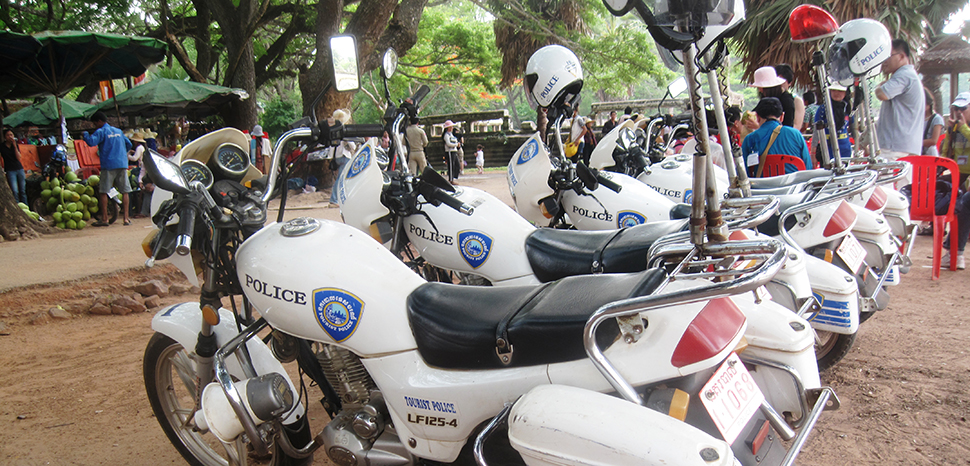
cc Dickelbers, modified, https://commons.wikimedia.org/wiki/File:Police_motorcycles_in_Cambodia_02.JPG

Trans-national criminal networks are becoming entrenched in Cambodia, posing new trafficking, fraud, and governance threats throughout the region and even globally.

Escalating Violence in Ecuador: New Front in a Forever War on Drugs?
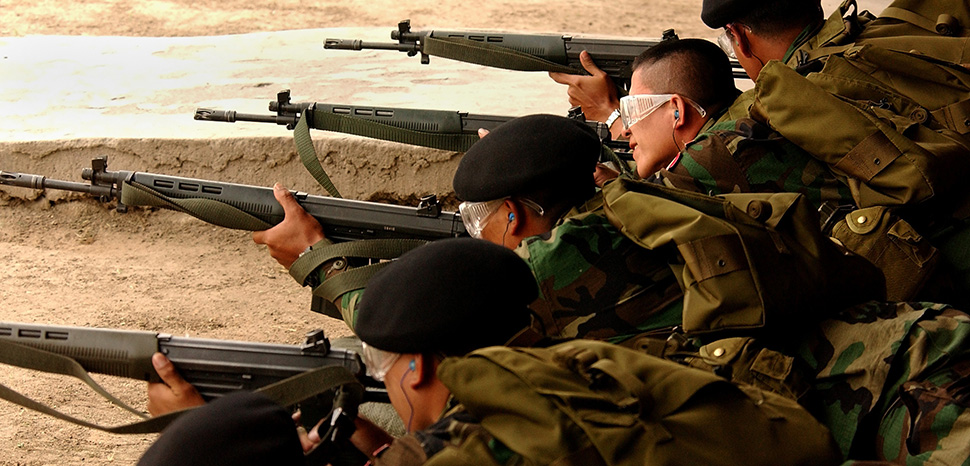
Peruvian and Columbian Army troops train on American weapons systems at Fuerte Lautaro, Santiago, Chile, on Oct. 13, 2002. Cabanas 2002 Chile is a multinational combined readiness training exercise centered around peacekeeping operational tasks. This exercise provides an opportunity for over 1,300 military and civilian personnel from Argentina, Bolivia, Brazil, Chile, Colombia, Ecuador, Paraguay, Peru, Uruguay, and the United States to increase their state of readiness in combined multinational peacekeeping operations and a forum to encourage human rights. (U.S. Air Force photo by Senior Airman Stacy L. Pearsall) (Released)

Now over half a century since the War on Drugs was launched, has the broader campaign against the cartels become a forever war in Ecuador?

Interview: US Drug War and Rise of the Pacific Route

A ship off the coast of Miami. Photographer: Jonathan Alpeyrie;All rights reserved

Photographer Jonathan Alpeyrie discusses humanitarian and security risk stemming from a recent surge in drug trafficking along the Pacific route in the Americas.

Bitcoin and Geopolitical Rivalry

cc Ivan Radic, modified, https://flickr.com/photos/26344495@N05/51129025742/in/photolist-2kU6C3A-a1DE33-ekr8ne-qEVFcv-2i7JL36-25cUm8u-hyiUr5-PxLUq1-Q4keqU-PxLV3y-Q4keEb-PTHtaE-2kp1jtT-frS34B-hyiErG-q3Dorc-hyjhPE-hyiN7b-p4KUT8-hykh9P-hyiHCk-hykqj6-frS6bV-hyjroU-hyjmuq-hyiwqk-hyjpGh-hyjnij-hykpRT-hyiNRh-fs7uis-hyivyk-frS28r-fs7ujW-26m5nuL-jyh8zz-iGPKVR-iH8J6m-iHwsdH-ooXhDK-wYRxkw-xfG8YL-q8FG8r-nU1PQx-nzJp2D-euwXcZ-nQaWnj-nzJfRc-nRVzeP-nRURxH

Examining the hypothetical potential of Bitcoin as a tool of geoeconomic conflict, and the nascent examples that are already emerging.

How Narco-Geopolitics Hinder US-China Antidrug Cooperation

cc Flickr Drug Enforcement Agency, modified, https://flickr.com/photos/190205961@N07/51126058411/in/photolist-2kTQpXH-2nPtmKY-2mdCwGh-2naoaBd-2kTQpV8-2nahMyQ-xE7Ktd-2jJVzmw-2kTUzbU-UxGcy3-2muHkqM-2muNEbD-29ponno-2kTQpJm-2kTP8oR-2gkhorG-2gkhezM-depzFy-2fc8dnm-2mRgv6M-2kTPX7a-2mdDWgv-EVCWny-2kvtEfF-2dWgBEt-2bzxG8f-24EfegP-24Efemt-2fc8did-Rvrqjx-24Efei2-24Efenv-2g7HYb1-Vbixxg-TRi3T4-KygmGD-wYFPks-2nNMqrb-2nMhTsf-2nPs6UA-FNChzu-wYG15G-6iDttX-GVojXd-2jHENGQ-2jHENHr-2nRssVG-2nukKA7-2kydto8-RJPS2n

US-China cooperation on fentanyl precursor chemicals has proven effective in the past; however, it has become a geopolitical casualty as relations sour between Washington and Beijing.

Backgrounder: Evolution of Organized Crime in Mexico
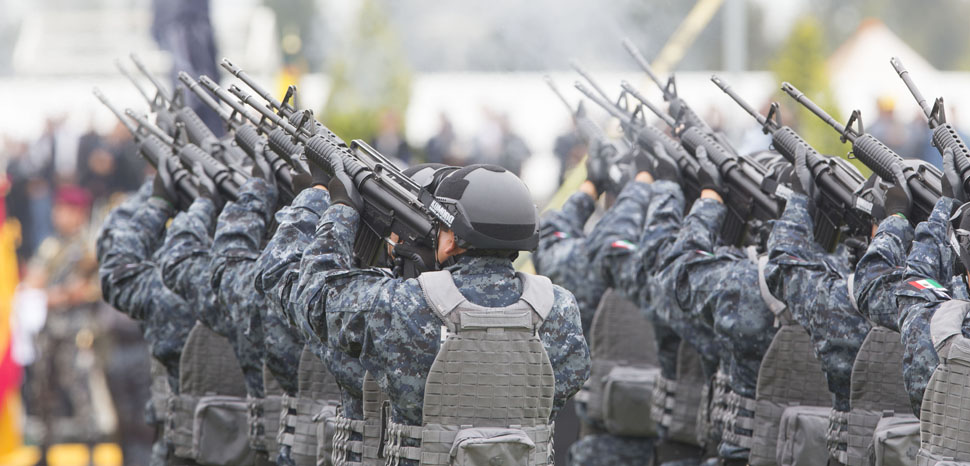
Ceremonia de presentación y abanderamiento de la Nueva División de Gendarmería de la Policía Federal. Ciudad de México. 22 de agosto de 2014., Presidencia de la República Mexicana, modified, https://www.flickr.com/photos/presidenciamx/14817406378/in/photolist-ozn5FL-ozn5q5-oPPEB3-oRPywS-oRPDQN-ozmDBP-ozn9eN-oPPKcW-JvZhiW-JvZhsU-JvZhAQ-JvZhoL-oPPJLf-oRPACA-oznwTK-oRzEnr-oRzEzR-oznAex-oPPJ81-oPPGLU-oznxJc-oznz4X-ozmDwZ-ozmTry-oRzEqT-oRPyS1-ozn93q-ozn7pA-oPPJ9d-oPPEys-oPPFtU-ozmSym-oPPJpo-oRPAxW-oznwXT-oRPz5W-oRPAyC-ozn9bS-oPPDWW-oRzChe-ozn8VG-oRzDeV-oRPBt3-oRzDAM-oRPBL7-oRPyBG-oPPFTb-oznw4D-ozn9CJ-oRzDTv

Ad hoc policy responses on either side of the US border are frequently powerless in the face of the geopolitical, economic, and political forces fueling the rise of organized crime in Mexico.

More Transnational Crime Articles