Canada’s engagement with the Indo-Pacific continues to unfold against one of the most consequential shifts in contemporary global politics: the center of gravity of the international system is steadily moving toward Asia, a region that now accounts for the majority of global population and a dominant share of global economic output. The Indo-Pacific is not only the world’s primary arena of trade flows and supply chain competition, but also the central theatre in the strategic rivalry between the United States (US) and China. In this environment, even middle powers must define clearer regional postures, as ambiguity increasingly incurs strategic costs.
Canada has articulated an Indo-Pacific Strategy (2022) intended to convey Ottawa’s sustained engagement, deepen economic integration, and reinforce security partnerships across the region. The strategy represents an acknowledgement that Canada’s long-term prosperity is closely tied to Indo-Pacific stability and market access, particularly given the region’s role in global manufacturing networks, critical mineral supply chains, and maritime trade routes. Despite this formal articulation, Canada’s actual regional posture remains inconsistent, with limited prioritization and a persistent gap between ambition and capability.
At the core of this disconnect is a structural tension that has long shaped Canadian foreign policy: the attempt to reconcile economic interdependence with China—Canada’s second-largest trading partner for much of the past decade—with deepening security alignment with the US, which increasingly frames China as its principal strategic competitor. This duality has produced a policy environment in which Canada has expressed concern about coercive economic practices and regional instability, while avoiding establishing clear thresholds that would define the limits of acceptable engagement.
The result is not the absence of strategy, but the absence of strategic discipline. Canada’s Indo-Pacific policy encompasses various objectives—economic diversification, normative advocacy, and security cooperation—but lacks a clear ranking or operationalization of these priorities. This situation has produced a posture that is reactive rather than directive, shaped more by external developments than by internally defined strategic choices.
In a region increasingly shaped by hard power competition, economic statecraft, and alliance realignment, this kind of ambiguity is not cost-free. It invites questions among regional partners about Canada’s reliability as a sustained actor and limits Ottawa’s ability to convert declaratory commitments into meaningful influence, which may lead to diminished trust and cooperation from allies in critical geopolitical situations. More broadly, it exposes a central tension in Canada’s foreign policy identity, namely its self-conception as a globally engaged middle power operating in a strategic environment that increasingly rewards clarity, prioritization, and material commitment over broad but under resourced ambition.
This gap also has cumulative strategic consequences. Over time, inconsistent engagement risks normalizing Canada’s marginality in Indo-Pacific security and economic architectures. As regional states deepen participation in minilateral arrangements—ranging from maritime security cooperation to technology governance and critical minerals coordination—actors unable to demonstrate sustained commitment risk exclusion from emerging rule-setting frameworks. For instance, regional actors that are not consistently engaged in Quad-linked initiatives (for example, some Southeast Asian states that participate only episodically in related working groups) tend to have less influence over the emerging agenda, even when it affects their own maritime environment. Canada’s challenge, therefore, is not only episodic underperformance but also structural under-integration into the evolving institutional landscape of the Indo-Pacific.
Strategic Ambiguity and the Absence of Thresholds
At the center of this gap is the absence of clearly defined strategic thresholds. China’s expanding role in the Indo-Pacific—across trade, infrastructure development, and coercive economic practices—requires states to delineate the limits of acceptable engagement and the conditions under which costs will be imposed. Canada has not done so. Official policy simultaneously characterizes China as a disruptive actor while preserving broad avenues for economic interaction. This duality is not the product of deliberate calibration but of unresolved prioritization. Competing objectives—economic access, security alignment, and normative commitments—remain unranked. The result is a posture that is reactive and episodic rather than governed by a stable strategic logic.
This absence of thresholds becomes particularly consequential in the context of contemporary economic coercion. States in the Indo-Pacific increasingly face pressure through non-military instruments such as trade restrictions, investment screening, and supply chain manipulation. In such an environment, ambiguity is not neutral; it is strategically costly. For Canada, the lack of explicit red lines or predefined response mechanisms generates uncertainty not only externally but also domestically, where policymakers and economic actors are left without clear guidance on acceptable levels of exposure or escalation pathways. Policy thus defaults to ad hoc decision-making, often shaped by immediate diplomatic or commercial considerations rather than long-term strategic coherence.
This ambiguity is reinforced by constraints on Canada’s effective autonomy. Its Indo-Pacific posture remains closely aligned with that of the US, both in tone and timing. Shifts in Canadian rhetoric and engagement frequently correspond to changes in US–China relations, indicating limited capacity—and limited willingness—to define an independent course. Such alignment is not unusual among allied states; however, in Canada’s case it constrains the development of a distinct regional role. For Indo-Pacific partners, this raises questions about the reliability and consistency of Canadian engagement as an independent actor in regional affairs.
Capability Gaps and Uneven Implementation
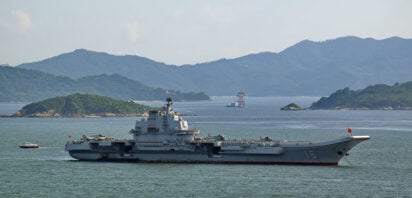
The gap between declaratory ambition and operational capability further undermines Canada’s position. The Indo-Pacific Strategy outlines expanded diplomatic engagement, increased regional presence, and enhanced security contributions. Implementation, however, has been incremental and uneven. Military deployments remain limited in scale and continuity, diplomatic initiatives are not consistently sustained, and economic engagement lacks concentration in clearly prioritized sectors or partnerships. In a region where sustained presence is a key indicator of commitment, such patterns erode the credibility of Canada’s stated objectives.
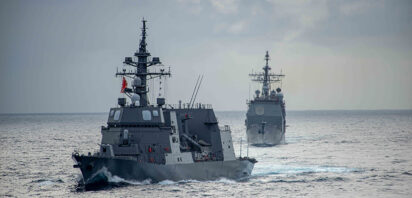
These constraints are further accentuated by structural limitations in force projection and resource allocation. The Canadian Armed Forces (CAF), comprised of 67,827 Regular Force members as of March 31, 2026, operate under persistent capacity pressures, including procurement delays and competing global commitments in the Arctic and Euro-Atlantic theatres. As a result, Indo-Pacific engagement often takes the form of episodic naval deployments rather than continuous strategic presence. Diplomatic expansion similarly lacks sufficient resourcing in terms of staffing, expertise, and long-term country-specific capacity.
Economic diversification policy reflects a parallel problem. While frequently identified as a strategic priority, diversification is not underpinned by sectoral prioritization or defined risk thresholds. Canada has not clearly articulated which industries are strategically sensitive, the acceptable degree of dependency on China, or the mechanisms required to mitigate systemic economic exposure. In practice, diversification thus functions more as a declaratory goal than a structured economic strategy.
Middle Power Constraints and Strategic Incoherence
Arguments emphasizing Canada’s status as a middle power are frequently invoked to explain this posture. In conventional terms, Canada fits the definition: it possesses advanced economic capacity, stable institutions, and a longstanding record of multilateral engagement. It has historically exercised influence through coalition-building, norm promotion, and participation in alliance structures rather than through unilateral power projection. In this sense, the middle power designation remains descriptively accurate.
However, the label also risks obscuring important limitations. Canada’s capacity to shape outcomes independently—particularly in regions such as the Indo-Pacific, among others—remains constrained by its reliance on the US for security; its relatively limited military reach, referred to as a military force that is ‘weak and unprepared’ and ‘no longer combat-ready’, and the dispersion of its economic priorities. As a result, its influence is often contingent rather than autonomous. Moreover, the middle power framework can function as a justificatory narrative, masking the absence of strategic prioritization by recasting constraint as structural inevitability.
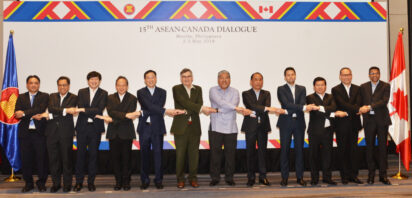
This is further clouded by the perception gap between self-ascribed identity and external reception. While Canada continues to present itself as a constructive, rules-based actor, many Indo-Pacific states increasingly evaluate partners through the lens of material contribution, sustained presence, and strategic clarity. For example, although Canada’s Indo-Pacific Strategy commits to deeper regional security engagement, its military engagements remain ‘relatively modest and sporadic’, limited to occasional deployments and joint exercises. Its broader defense cooperation arrangements in the region have expanded only gradually, which has led some partners to question the consistency of its follow-through in practice. In this context, reputational capital alone is insufficient. Canada risks being categorized as a peripheral rather than a pivotal actor in regional ordering debates without consistent delivery on security engagement and economic alignment.
While it is accurate to argue that Canada lacks the capacity to directly counterbalance China, this argument does not preclude the development of a disciplined hedging strategy. Effective hedging requires clear priorities, consistent signals, and alignment between objectives and resources. Canada’s current approach falls short on each of these criteria. Instead, it attempts to pursue deterrence, engagement, and economic benefit concurrently without establishing a hierarchy among them.
The cumulative effect is a pattern of limited strategic coherence in a region of growing geopolitical significance. Canada is present in the Indo-Pacific, but its engagement lacks the discipline required to shape outcomes or establish itself as a credible independent actor. As China continues to consolidate its regional influence, the costs associated with this approach are likely to increase.
Crucially, these costs are not only external but also internal to policy credibility. Repeatedly articulating strategy without consistent implementation risks eroding confidence in the strategy itself—both among external partners and within domestic institutions responsible for execution. Over time, such behavior produces a feedback loop in which a strategy becomes performative rather than operational, reinforcing the very gap it is intended to close.
The central issue is not the absence of strategy, but the absence of strategic discipline. Without clearer prioritization, greater resource commitment, and a more defined position toward China, Canada’s Indo-Pacific policy will remain limited in both scope and effect.
Scott N. Romaniuk—Senior Research Fellow, Centre for Contemporary Asia Studies, Corvinus Institute for Advanced Studies (CIAS); Department of International Relations, Institute of Global Studies, Corvinus University of Budapest, Hungary.
The views and opinions expressed in this article are those of the author alone and do not represent those of Geopoliticalmonitor.com