A fragile silence has settled over one of the world’s most combustible fault lines. It is not peace—far from it—but rather a pause carved out of exhaustion, fear, and calculated necessity. In April 2026, Pakistan stepped into that narrow diplomatic space and did something few expected: it persuaded Washington and Tehran to stop, if only briefly, and listen.
The 14-day ceasefire announced on 7 April, followed by talks commencing on 11 April, has already been described as a ‘landmark diplomatic win.’ Yet to reduce this moment to a simple success risks misunderstanding its deeper significance. What is unfolding is not merely mediation. It is a test of whether a state long viewed through the prism of instability can recast itself as a stabilizer in a fractured international order.
Dialogue Collapse and the Weight of Irreconcilable Demands
Pakistan’s emergence is not accidental. Geography has always been destiny here, but rarely has it been so politically consequential. Sitting at the crossroads of South Asia, the Gulf, and Central Asia, Pakistan possesses relationships that defy the neat binaries of contemporary geopolitics. It represents Iranian interests in Washington while maintaining deep security ties with the United States.
It is closely aligned with Saudi Arabia and the United Arab Emirates, yet retains functional, even cordial, relations with Tehran. In an era of rigid blocs, Islamabad occupies the uncomfortable but invaluable space in between.
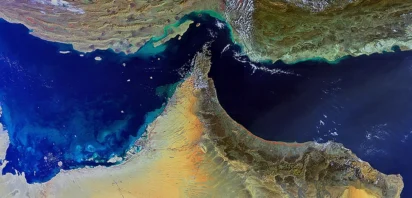
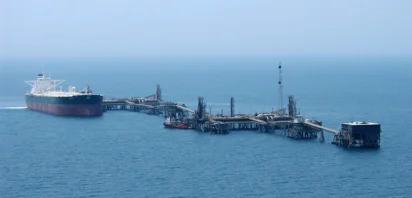
That position has now become indispensable. Iran’s blockade of the Strait of Hormuz sent oil prices surging, rattling economies from Karachi to Canberra. For Pakistan, the stakes are existential. Energy imports underpin its fragile economy, and any sustained disruption threatens cascading crises—currency instability, inflation, and social unrest.
Add to this the risk of refugee inflows along its western border and the ever-present spectre of sectarian tension within its own population, where roughly 20 per cent identify as Shia, and the urgency becomes starkly clear.
Pakistan’s sudden elevation as the face of US–Iran diplomacy did not emerge in isolation, but from a quiet, coordinated push by a newly consolidating regional axis—Saudi Arabia, Türkiye, and Egypt—each gripped by the same unspoken fear: that a widening war would consume not just borders, but the economic lifelines and fragile political equilibria holding the region together.
This informal ‘coalition for peace’ has, in effect, outsourced its diplomatic voice to Islamabad—leveraging Pakistan’s rare ability to speak and be heard, in both Washington and Tehran—while shielding itself from direct entanglement. It is a subtle but profound recalibration of power: influence exercised not from the frontlines, but through a trusted intermediary, where Pakistan becomes not merely a mediator, but the embodiment of a collective regional will to stop the slide toward catastrophe.
There is also a harder edge to this diplomacy. A 2025 defense pact with Saudi Arabia obliges Pakistan to respond if the kingdom is attacked. A wider US–Iran war drawing in Riyadh would not leave Islamabad on the sidelines; it would drag it directly into the conflict. Mediation, then, is not altruism. It is strategic self-preservation.
What makes this moment remarkable is how Pakistan has operationalized that necessity. Through weeks of quiet shuttle diplomacy, officials relayed a reported 15-point US proposal to Tehran and returned with Iran’s 10-point counteroffer. Messages passed through Islamabad because direct contact remained politically untenable. In effect, Pakistan became the conversation.
At the heart of the negotiations lies the most delicate fault line of all—nuclear verification—where demands for intrusive inspections collide with Iran’s sovereignty, turning technical oversight into a deeply emotional contest over dignity, distrust, and the memory of broken promises.
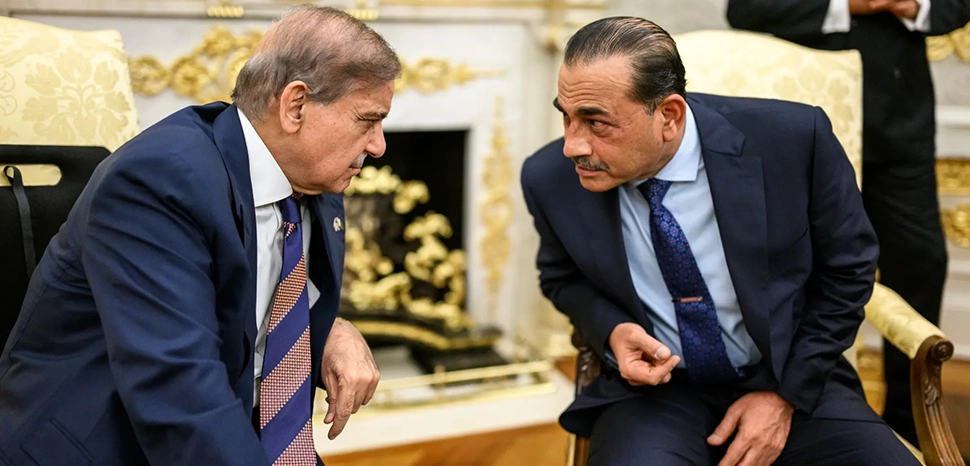
This is diplomacy in its most tactile form—personal, improvised, and fraught. The image of Islamabad’s Serena Hotel sealed off, streets emptied, and convoys threading through a heavily fortified capital captures the gravity of the moment. It is a city holding its breath, aware that the outcomes discussed within its guarded corridors will ripple far beyond South Asia.
Yet the emotional resonance of this moment lies not only in the spectacle of mediation but in its improbability. Pakistan has spent much of the past two decades navigating reputational crises—cast alternately as a frontline state, a reluctant ally, and at times an international outlier. To now find itself facilitating the highest-level US–Iran engagement since 1979 is nothing short of a geopolitical reorientation.
Still, optimism must be tempered. Beneath the choreography of diplomacy lies a bedrock of mistrust that no ceasefire can dissolve. Iranian officials have been explicit: there may be goodwill, but there is no trust. Washington’s demands—reportedly including full nuclear dismantlement—remain maximalist in Tehran’s eyes. Iran’s own conditions, centered on sanctions relief and security guarantees, are equally uncompromising.
What unfolded behind closed doors was not a failure of dialogue, but a collision of absolutes—where Washington demanded certainty through intrusive verification, and Tehran demanded dignity through sanctions relief, leaving no space where trust could breathe.
This is not a negotiation over marginal concessions; it is a contest over sovereignty, security, and ideological endurance. The risk is that Islamabad’s carefully constructed bridge collapses under the weight of irreconcilable expectations. This was never merely a negotiation over policy, but over memory—decades of broken promises hardening into a quiet certainty on both sides that concession would be mistaken for surrender.
External spoilers compound the danger. Israel’s strikes in Lebanon, launched within days of the ceasefire, underscore how quickly parallel conflicts can unravel fragile agreements. Each escalation elsewhere in the region reverberates through the negotiation room, narrowing the space for compromise. For Pakistan, the collapse does not end with diplomacy—it lingers as a quiet erosion of credibility, where the role of bridge risks being remembered not for what it connected, but for where it gave way. Diplomacy, in this context, is less a linear process than a constant act of containment.
For global policymakers, the implications extend well beyond the immediate crisis. Pakistan’s role signals a subtle but important shift in how international mediation may evolve in a more fragmented world. Traditional power brokers are no longer the sole arbiters of conflict resolution. Middle powers—those with overlapping relationships and a capacity for strategic ambiguity—are increasingly stepping into the breach.
This raises uncomfortable questions. Can such mediation deliver durable outcomes, or does it merely delay inevitable conflict? Historical precedent offers little reassurance. Pakistan’s own diplomatic history includes moments where ceasefires were postponed rather than prevented from war. The current process risks a similar fate: a temporary de-escalation that masks unresolved tensions.
Looming just beyond the visible choreography of Islamabad’s diplomacy is China’s quiet but unmistakable shadow—less a director than a patient architect of stability—subtly reinforcing the process through strategic assurance, economic gravity, and an unspoken preference for order over upheaval along the arteries of its Belt and Road.
And yet, even a pause has value. The immediate economic impact of the ceasefire—oil prices easing, markets stabilizing—illustrates how deeply interconnected global systems have become. Beneath the urgency of Islamabad’s diplomacy lies a harsher truth: Pakistan’s economic pulse is tethered to imported energy—over 70 per cent of its oil and a significant share of its gas flowing from a volatile Gulf—making every closure of Hormuz feel less like geopolitics and more like a tightening grip on the nation’s future.
A Region Recalibrates as the Bridge Gives Way
Across the Gulf, a quiet unease lingers as Gulf states watch the negotiations unfold—fearful that any miscalculation could redraw the region’s security balance overnight, exposing them to retaliation, economic shock, and the unforgiving proximity of a war too close to ignore. Beyond Islamabad, the silence of failed talks travels quickly—arriving in Riyadh as anxiety, in Ankara as recalibration, and across the Gulf as a quiet preparation for what may come next.
What lies ahead is no longer a single path but a narrowing corridor of possibilities—where renewed talks, managed escalation, or wider conflict exist side by side, each shaped by decisions made in the shadow of failure. In that widening uncertainty, China does not rush forward, but steps carefully into the vacuum—its influence felt less in declarations than in the quiet assurance that instability will not go unanswered.
A sustained opening of Hormuz is not simply a regional concern; it is a global public good. Energy security, supply chains, and economic confidence all hinge on its stability. As markets react and oil prices tremble upward, the pressure is felt not in conference rooms but in households—where economic fragility turns geopolitical failure into something painfully immediate.
Threaded through Pakistan’s diplomatic gamble is a quiet domestic fragility, where civil–military recalibrations, economic strain, and a watchful public leave little margin for misstep, turning every external concession into an internal political risk that could unravel consensus at home.
For middle powers across continents—from Canberra to Ankara, from Jakarta to Johannesburg—there is an emerging, almost unsettling truth reshaping the emotional architecture of global diplomacy: power is no longer the exclusive language of scale, but of trust in an age defined by fracture. The old hierarchies, once anchored in aircraft carriers and GDP rankings, now sit uneasily beside a more fluid reality where credibility travels faster than coercion, and access outweighs dominance.
Pakistan’s precarious intervention illuminates this shift with rare clarity—it reveals that in a world of hardened mistrust, the most valuable currency is not force, but the fragile confidence of rivals who have run out of places to turn.
This is not simply a tactical advantage; it is a quiet reimagining of influence itself, where nations willing to inhabit the uncomfortable spaces between adversaries become custodians of dialogue when dialogue feels impossible. For global policymakers, the lesson carries both promise and burden: the future of order may depend less on commanding outcomes and more on sustaining conversations—often unseen, often uncelebrated, yet profoundly consequential—where the fate of stability rests not in the hands of the strongest, but in those still trusted to be heard.
Whether this moment becomes a turning point or a fleeting anomaly will depend on what follows. A durable agreement—an ‘Islamabad Accord’—would elevate Pakistan’s status and potentially reshape regional dynamics. A breakdown, by contrast, could entrench cynicism about mediation and expose Islamabad to the very conflict it seeks to avoid.
To mediate between adversaries is to carry the weight of their mistrust, and to risk becoming the fault line when that mistrust refuses to yield. For now, the world watches a delicate experiment in diplomacy unfold. It is an experiment driven not by idealism but by necessity, not by symmetry but by imbalance. In that tension lies both its fragility and its promise.
The silence in Islamabad is heavy with consequence. It carries the weight of a region’s anxieties and the cautious hope of a world that has seen too many wars begin and too few truly end. If the bridge collapses, the world will not only measure the debris—it will measure the silence that follows.
The views expressed in this article belong to the author(s) alone and do not necessarily reflect those of Geopoliticalmonitor.com.