Chinese private military and security companies (PMSCs) are emerging as a critical, yet underexamined, component of Beijing’s global strategy. Firms such as Beijing DeWe Security, Frontier Services Group, and Huaxin ZhongAn Group have provided protection for Belt and Road Initiative (BRI) projects, safeguarding Chinese infrastructure and personnel abroad. Unlike their high-profile counterparts such as Russia’s Wagner Group or US-affiliated PMSCs like Academi (formerly known as Blackwater), Chinese PMSCs receive far less attention despite their growing role in international affairs.
While US-affiliated PMSCs typically market compliance, legitimacy, and risk management to multinational clients, and Russian firms thrive on visibility in conflict, Chinese PMSCs occupy a different niche. Their business model—low-profile, closely tied to Chinese state-owned enterprises, and tailored to the BRI—introduces a new mode of competition into the global security market. This approach privileges discretion and political loyalty over transparency and reputation, allowing Chinese firms to secure contracts in volatile environments while avoiding the scrutiny that has plagued its Western and Russian counterparts.
The rise of Chinese PMSCs may, thus, fragment the global market into competing geopolitical blocs: Western firms marketing their services as a legitimate business, Russian operators leveraging combat power, and Chinese companies offering quiet, state-linked protection at scale. Far from being a mere regulatory challenge, the expansion of Chinese PMSCs signals a structural transformation in how security is bought, sold, and aligned with state interests across the globe.
The Legal Framework Behind Chinese PMSCs
Like many other countries, China saw the emergence of private military and security companies (PMSCs) as early as the late 19th century. Although these early entities were far less sophisticated than their modern counterparts, they served similar purposes—protecting goods, personnel, and assets as they moved across a fragmented and often insecure landscape. In 2009, the Executive Meeting of the State Council introduced the Regulation on the Administration of Security and Guarding Services, establishing a domestic licensing regime to oversee PMSC operations both within China and abroad. However, the issuance of licenses also raised growing concerns about the expanding role and oversight of these companies. The passage of the National Security Law in 2015 further broadened the state’s approach to defining and safeguarding China’s political, economic, and military interests. Although the law does not explicitly reference PMSCs, its expansive scope clearly extends to private entities whose activities—particularly overseas operations—could have national security implications. Additional laws, including the Counterterrorism Law of 2015 and the Anti-Foreign Sanctions Law of 2021, further shape the operational environment of Chinese PMSCs by addressing threats abroad, ensuring international compliance, and safeguarding Chinese interests from foreign interference. Together, these legal instruments provide the foundation for Chinese PMSCs to operate in a manner that supports commercial objectives while simultaneously advancing China’s national security objectives.
Chinese PMSCs and the Belt and Road Initiative
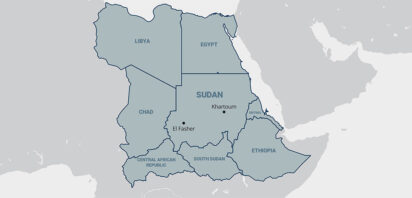
Security is of paramount importance to the BRI, particularly for protecting infrastructure, personnel, and critical operations in regions characterized by political instability and elevated security risks. To address these security challenges, Chinese firms such as DeWe Security and Frontier Services Group have entered the market, offering low-profile, state-aligned protection for overseas investments. DeWe Security, in particular, has gained significant traction for its involvement in protecting BRI backed projects with more than 2,000 forces reportedly stationed in Kenya protecting a nearly $3.8 billion USD 480km-long Mombasa-Nairobi Standard Gauge Railway system and a $4 billion USD Chinese LNG facility across Ethiopia and Djibouti. Additionally, DeWe Security has reportedly been responsible for protecting Chinese personnel abroad, evacuating 330 Chinese CNPC oil workers from South Sudan when the country erupted in civil war back in 2016.
Similarly, Frontier Services Group (FSG) has gained recognition in the Chinese PMSC market. While it was originally founded by Erik Prince—the same entrepreneur who created Blackwater—the company is now fully owned by CITIC Group, a Chinese state investment company. FSG operates primarily in Southern Africa, the Middle East, Northern Africa, and Western Africa. Notably, the FSG allegedly received a payment of $23 million from South Sudan’s Ministry of Petroleum for security at oil production facilities and is supposedly involved in protecting one of China’s largest BRI projects—a $1.36 billion USD investment in South African copper mines. These companies collectively illustrate China’s hybrid approach to private security: they provide economically efficient protection while advancing state and military objectives, making them dual-purpose instruments that simultaneously support investment security and national interests.
Geographic Spheres of Influence: US, Russian, and Chinese PMSCs
Chinese PMSCs occupy a unique position in the global private security landscape, representing a hybrid model that integrates the strengths of both US and Russian approaches. US PMSCs like Academi operate primarily on a commercial basis recruiting former military officials and bidding for government contracts with a profit driven mentality. On the other hand, Russian PMSCs, exemplified by the Wagner Group, often act as semi-official extensions of state power, deployed in conflict zones as evidenced by their presence on the battlefield in the Ukraine war or politically sensitive regions such as Venezuela and Syria to advance Russia’s strategic and geopolitical interests. Chinese PMSCs combine the advantages of both models: like US firms, they are commercially efficient, capable of deploying large, highly trained teams, and able to operate across multiple regions to protect investments and similar to their Russian counterparts, Chinese PMSCs are also strategically aligned with state objectives but with less exposure, as this has been used as a means of protecting investments rather than direct military action. This hybrid approach allows China to project both soft and hard power abroad. Within the context of the BRI, the model has proven particularly effective, enabling China to safeguard personnel and assets in high-risk environments while extending its geopolitical reach.