Among representatives of the Western political establishment, leading analysts from “think tanks,” and experts on the architecture of global security, there circulates a surprisingly resilient myth, bordering on the religious in its dogmatism. Looking at Russia, they see in it, forgive my analytical bluntness, simply a “defective Europe.” Their logic, in essence, is distressingly linear and at a first, superficial glance appears entirely rational. It sounds something like this: “The fundamental problem with Russia lies exclusively in the figure of Vladimir Putin. He represents a malignant tumor on the body of an inherently healthy nation. Consequently, as soon as the dictator exits the historical stage—as a result of a natural death, illness, or a nomenklatura palace coup—Russia will inevitably and entirely automatically pivot back to the path of civilizational normalization. Pragmatic technocrats or systemic liberals will take the helm, a process of soft democratization will launch, and the world, at long last, will receive a predictable partner equipped with gas and classical ballet.”
I am writing this article with one single objective—to officially declare: this is a highly dangerous, fatal geopolitical illusion. To treat Russia as some sort of “dormant democracy” that was merely temporarily hijacked by malicious KGB agents is to absolutely, catastrophically fail in understanding the fundamental, underlying institutional nature of this state.
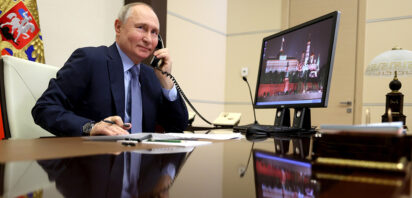
The modern Russian Federation is by no means an innocent victim of a regime, just as it is not a hostage to circumstances. In reality, it is an exceedingly complex historical-economic construct, a genuine institutional “Frankenstein of contradictions.” This structure is kept in a unified, solid physical state exclusively thanks to two load-bearing pillars: a rigid, ruthless authoritarian “clamp” (the centralized vertical of power) and anomalous, narcotic windfall profits from raw material exports. Putin, as we can see, is not at all some external virus that accidentally struck the healthy immune system of the nation. Putin is, if you prefer, that exact single load-bearing “nail” upon which this entire dilapidated, archaic imperial structure hangs like a dead weight.
Yank out this nail, attempt to artificially inject genuine political federalization or, God forbid, a fully-fledged competitive democracy—and you won’t cure this complicated patient. On the contrary, you will kill him. The state organism will collapse instantly and irrevocably. The Western expert community ought to pragmatically brace itself not for the building of a “Beautiful Russia of the Future” circa 2030 with independent courts and trendy coffee shops (Starbucks). It must prepare for the massive geopolitical collapse of the largest nuclear power, which at a single historical flashpoint will concurrently run out of financial resources, its allotted historical time limit, and, most crucially, the moral right to exist any further.
The Anatomy of Parasitism: Why Moscow Frantically Dreads Freedom
To truly comprehend, on the level of core financial mechanics, why the Western model of democracy is physically and economically unfeasible in Russia, one must set aside the philosophical volumes of Dostoevsky and Tolstoy. One simply needs to pick up a calculator.
The Russian Federation is branded a “federation” solely on paper, within the clauses of a long-defunct Constitution. In objective economic reality, it is a rigid, textbook colonial empire of an extractive type, where the metropole (Moscow) ruthlessly, with the cold efficiency of a giant vampire, exploits its internal colonies—the remaining regions.
To an American or European reader, historically accustomed to states wielding their own sovereign budgets, broad fiscal rights, and a National Guard, the mechanics of this Russian macroeconomic “vacuum cleaner” will look like a theater of economic absurdity. Picture Yakutia—a harsh region the size of India, fabulously endowed with diamonds, gold, and gas. Or the Khanty-Mansi Autonomous Okrug (KMAO), which is quite literally floating on subterranean seas of oil. These territories daily generate colossal, unimaginable foreign exchange revenue, tallied in hundreds of billions of dollars. However, pursuant to Russian tax laws, intentionally and painstakingly engineered by Putin’s power vertical, the lion’s share of this capital is instantly and automatically extracted into the Federal Center via the mineral extraction tax (MET), export customs duties, and VAT. That is to say, directly to Moscow.
The headquarters of such energy leviathans as Gazprom or Rosneft are legally registered by no means where roughnecks drill wells in the permafrost under the most grueling conditions. They are domiciled in the gleaming glass skyscrapers of Moscow or St. Petersburg, which is exactly where the corporate profit taxes ultimately settle. As a result of this legalized institutional pillaging, the donor region, which essentially feeds the entire country with its labor, is left infrastructure-poor. Local elites are forced to travel to the capital hat in hand, humiliatingly begging for federal subsidies (their own actual money) to construct basic district schools, hospitals, and lay foundational roads. Moscow, acting as the metropole, siphons off 80% of the generated resources, only to graciously return 20% in a brutal exchange for the absolute, slavish political loyalty of the regional elites.
This depraved, hyper-centralized fiscal system has spawned a unique and economically horrific phenomenon in Russia—the triumph of the “toll-based economy.” A massive chunk of Russian heavy industry (civil aviation, the auto sector, numerous so-called “strategic” company towns) operates at a planned and hopeless loss. It physically sustains itself not by generating market profit, but exclusively through the opaque redistribution of oil rents. Furthermore, this system has artificially bred a grotesquely bloated, privileged social class within the capital center. We are talking about millions of federal bureaucrats, security enforcers, state corporation administrators, countless security guards, and managers. From the vantage point of strict market macroeconomics, these are textbook “rent-seekers.” They fundamentally do not create new value-add; they merely methodically “subtract” it. They exist solely for the reason that the state currently still possesses “free,” windfall oil cash to underwrite this ravenous army of parasites.
Now entertain a bold thought experiment for a second: real democracy miraculously arrives in Russia, and absolutely fair, competitive gubernatorial elections are held. The very first, entirely unavoidable political slogan of any legitimately elected leader in Siberia, the Urals, or an affluent Tatarstan will be the uncompromising phrase: “Stop feeding Moscow!” This is not radical separatism, but ironclad economic logic. The regions will immediately demand the implementation of equitable fiscal federalism (following the US or German blueprints) and will keep the cash they generate for themselves.
At that precise historical moment, Moscow will instantly, in a matter of months, go totally bankrupt. The capital, spoiled for years by granite paving, City skyscrapers, and hipster pumpkin spice lattes, will confront a socio-economic situation orders of magnitude worse than a bankrupt Detroit. It will simply lack the physical funds to pay the high salaries of millions of officials and enforcers. That is exactly why Moscow harbors an animalistic, existential terror of a repeat of the 1990s. The trauma of the 90s for a native Muscovite is not just about criminal mobsters on the streets, but, first and foremost, the loss of monopolistic control over regional financial flows. Back then, under a weak President Yeltsin, the regions snatched up sovereignty, and Moscow experienced genuine, acute hunger. Consequently, the “deep people” in the Center and the entire multi-million-strong bureaucratic machine will fight against democracy to the bitter end. In essence, for them, freedom is not some abstract boon, but a direct threat to physical survival and the loss of their feeding trough. The centralization of power and the centralization of the economy have fused inextricably in Russia into a single organism. You cannot alter one without killing the other in the process.
The Margin of Terror: The End of the “Petro-Bliss” Era
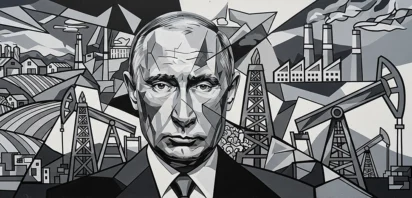
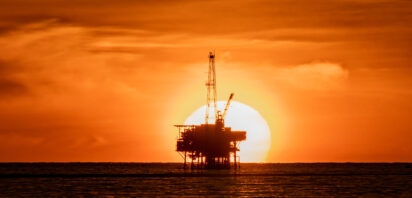
The second critical “nail” upon which the current political regime miraculously hangs is oil. But a paramount clarification is required here: the conversation is not simply about oil as a black combustible liquid, but specifically about the Profit Margin—the giant delta between extraction costs and the final market price.
Many Western macro-analysts frankly fail to grasp one simple thing: Putin’s “oil miracle” of the 2000s was built entirely and completely on the blatant cannibalization of a tremendously rich Soviet legacy. The USSR, in its time, surveyed and heavily developed giant deposits in Western Siberia, unparalleled in their characteristics, where crude literally gushed under its own reservoir pressure at a dirt-cheap extraction cost. By selling it at $80-100 per barrel, the Kremlin raked in trillions of dollars in pure super-profits literally “out of thin air.” It was exactly with this easy money that the political loyalty of the populace was mass-purchased, the mega-yachts of oligarchs were built, the large-scale rearmament of the military was funded, and, ultimately, war was unleashed. But today, we are hurtling full steam ahead toward the macroeconomic “Perfect Storm” of the 2030s.
Russia, at this given historical moment, is behaving like a temporary, alcoholic tenant who knows for a fact that he will soon be disgracefully evicted from the apartment for unpaid debts. And therefore, he is feverishly pawning the landlord’s furniture and ripping the copper wiring out of the walls. To underwrite the colossal expenditures for the war “here and now,” a blatantly predatory extraction is underway across the country. Oilmen are barbarically exploiting legacy fields, grossly violating every conceivable engineering protocol (for instance, by excessively pumping water into seams to squeeze out the remaining crude under pressure), thereby cynically murdering the future for the sake of the present.
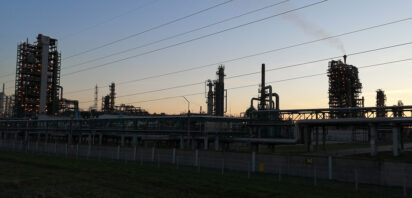
The light, cheap-to-extract oil is running out. The peak of profitable production has been passed forever, and predominantly only “hard-to-recover reserves” remain in the depths: the inaccessible icy Arctic, deep-water offshore shelves, and ultra-viscous crude. For their safe and viable commercialization, an advanced technological base is critically required (horizontal drilling, complex proprietary software, subsea robotic complexes from Halliburton, Schlumberger, Baker Hughes), which Russia simply lacks.
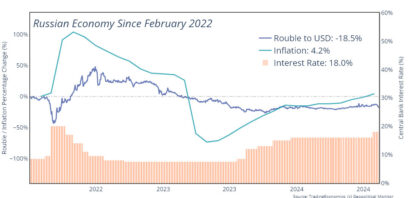
Tough sectoral sanctions have completely sealed Russia off from its technological future. This spells the country’s unavoidable entrapment in a lethal, closing economic pincer by the 2030s. On one side of the blade, the cost basis for Russian crude extraction is spiking sharply, exponentially upward due to the natural depletion of light reserves and total technological backwardness. On the flip side, the global price of oil is structurally stagnating or sinking amid the green energy transition, the mass adoption of electric vehicles, and the systemic deceleration of the Chinese economy.
When these two lines cross on the chart, the Margin will vanish. Oil, undoubtedly, will still be physically pumped, but it will permanently cease delivering those very super-profits, devolving into a heavy, low-margin commodity much like coal. And bereft of giant windfall profits, the Center will simply lack the funds to sustain a loyal “army of parasites” in Moscow, to finance colossal subsidies for Chechnya and Dagestan, or to purchase the loyalty of millions of pensioners. The economic glue that has bound the Empire for decades will finally desiccate and crumble to dust.
The Political Vacuum and the Social Time Bomb
In debates, one can frequently hear an astonishingly naive question: “Why don’t the Russian elites simply remove Putin? After all, they are losing billions every single day because of his policies!” The exhaustive answer lies in the ingenious (and simultaneously villainous) institutional management of the president himself, who engineered a system of “checks and balances” of a purely mafia, cartel-like design.
The top Russian elite has plunged into a severe fragmentation trap, morphing into a sealed jar of aggressive spiders. FSB factions fiercely loathe the Ministry of Internal Affairs apparatus; army generals despise the autonomous “Kadyrovites”; systemic technocrats harbor a quiet hatred for the radical war ideologues, and the oligarchs are terrified to the point of trembling knees by the security forces. Putin deliberately spent years calibrating this system so that no single clan would possess a theoretical 50% stake of influence to successfully orchestrate a coup on its own. They are all institutionally feeble in isolation and gain strength only when there is a Supreme Arbiter to settle disputes. This magnificently guarantees Putin’s security while he breathes, yet also mathematically hardcodes a total catastrophe the exact moment he departs. The legal mechanism of succession has been utterly eradicated in Russia, and there is no legitimate Party that could convene and collectively elect a new leader.
You cannot cheat the fundamental laws of biology: by the 2030s, Putin and his inner circle will physically exit the stage. The instant the Arbiter vanishes, an absolute, echoing power vacuum will emerge across the massive country. And given that legitimate institutions no longer exist, the matter will be settled in the sole language understood—brute kinetic force. A war of all against all will kick off: the FSB clashing with Zolotov, corporate private armies battling influential ethnic clans. The technocrats, upon whom the West pins such naive hopes, will simply be swept aside, because “accountants” do not command armored divisions. This will be far from a velvet democratic transition, but rather a brutal, bloody mob war over the redistribution of a rapidly shrinking resource pie.
The situation is magnified manifold by the undeniable fact that Russian society is deeply, mentally ill. The West has practically glossed over a planted social time bomb: an entire generation of 40-something males has come of age in Russia, whose turbulent youth coincided with the late 90s and early 2000s—the era of the aggressive boom in neo-Nazism and hooligan factions. These men have donned the sharp suits of bureaucrats and the heavy epaulets of majors, yet deep inside them, the original ideological firmware of caveman xenophobia, imperial revanchism, and hatred toward “outsiders” remains intact. Today, these smoldering ethnic conflicts in Russia are held at bay exclusively by the fear of the policeman’s baton. But the moment Central authority inevitably falters amid the battle for the throne, this horizontal hatred will burst outward like an avalanche. Russian nationalists will wage open warfare against diasporas, impoverished regions will turn against wealthy megacities; a full-scale war of all against all will commence.
The Lost Renaissance: Why the “Beautiful Russia of the Future” Will Never Arrive
Russia’s deepest, practically incurable predicament is rooted not at all in its wallet, but in the mind of the nation—it is an acute, ontological crisis of identity. Western liberal thinkers try with enviable stubbornness to dose Russia with the humanistic prescriptions of the Enlightenment, completely failing to realize that the patient is mentally still living in the deep Middle Ages.
If we peer into the French historical mirror, we will spot a highly intriguing parallel. The French nation was also once rigidly, tightly welded to the institution of absolute monarchy, where the bloody St. Bartholomew’s Day massacre acted as the nation’s legitimate immune response against a threat to unity. However, France managed to navigate a protracted, bloody evolutionary path: via the humanism of the Renaissance, the Enlightenment, and the Great Revolution. It permanently decoupled the concepts of “Nation” and “King,” thereby birthing the free Citizen in agony. Russia, conversely, simply “bypassed” this critically essential milestone.
The Russian statist mentality was forged in the harsh conditions of the Muscovite Ulus, under the powerful, shaping influence of the Golden Horde’s bureaucracy. In that coordinate system, physical survival hinged exclusively on constructing a rigid managerial vertical, collectivism, and unquestioning submission to the Khan (the Tsar). The rights of the individual meant absolutely nothing there. This baseline socio-cultural matrix remained fundamentally unchanged in both 1917 and 1991: the Tsar was rebranded as the General Secretary, and the General Secretary as the President, yet the foundational essence of relations along the “Power—Serf” vector held firm.
For the “deep Russian populace,” the state itself constitutes an infallible sacral value. Whereas Democracy and Freedom are perceived by them as a direct existential threat and a corrosive Western virus decaying the sacred body of the Empire. The liberal opposition in this country is historically doomed: they pitch European “freedom” to the people, but the historical memory of the populace flawlessly translates this word as “Time of Troubles,” subconsciously grasping a dreadful truth: “If we are given real freedom, we will simply fall apart.” And for the sake of the instinctive preservation of the Empire, the Russian individual is ready to submissively endure brutal dictatorship, total destitution, and war. This is a genuine, insurmountable cultural dead end.
The Western establishment makes a foundational misstep by naively assuming that support for the dictatorship relies exclusively on aggressive television propaganda aimed at the uneducated masses. In reality, the most reliable, intellectually robust pillar of the regime is, paradoxically enough, the Russian “thinking class” itself, which has found itself hostage to a severe macroeconomic Stockholm syndrome.
Any highly educated Russian analyzing the economic situation without patriotic rose-tinted glasses perfectly sees the economic fragility of the construct. He understands with a cold mind that the relative prosperity of his comfortable city (Moscow or St. Petersburg) rests exclusively on the cynical plundering of the regions. If true democracy were to be established tomorrow, these regions would immediately shut off the financial faucet, leaving the imperial capitals destitute. He also clearly, with a shudder, sees the frightening ethnic fault lines: complex territories (the Caucasus, Tuva, Tatarstan) are tethered to Russia by brute military force and cash alone. Bereft of the steel rod of the Vertical, a parade of sovereignties will instantly kick off, capable of escalating into a bloodbath.
As a result of this cold analysis, the “thinking Russian” inescapably arrives at a grim, paralyzing conclusion: Democracy is mathematically equivalent to Disintegration. He realizes with crystal clarity that the Power Vertical, no matter how blatantly corrupt and vile it may be in practice, is the sole functional tool physically guaranteeing the integrity of the country. And geopolitical Chaos will always be more terrifying to the Russian consciousness than any, even the most ferocious, tyranny.
Over long centuries, Russian national self-awareness has braided itself dead-tight with the State into an unbreakable Gordian knot. Therefore, the typical reflecting intellectual makes a heavy, yet entirely conscious choice in favor of the prison cell. He is ready to submissively tolerate the Tsar to preserve Russia, because beyond the walls of this imperial prison, his imagination sketches only certain death and the blazing Wild Fields. Even the most progressive, brilliantly educated Russian minds instantly morph into hardcore imperialists on academic issues concerning the state’s territorial integrity. Objectively, there is no real political opposition in Russia—there are merely people who sincerely wish to make the conditions of the prison stay slightly more comfortable (improve the food, change the warden), yet absolutely none of them are prepared to grab a sledgehammer and demolish the load-bearing imperial walls themselves. Because for them, those walls—are Russia itself.
Conclusion: There Is No Middle Ground
Under these incredibly harsh historical, demographic, and macroeconomic parameters, the Russian Federation simply lacks a mathematically calculable path toward normal, tranquil democratic development.
This archaic Empire will either attempt to preserve itself in its current form at any, even the most horrifying and bloody, cost. In this conservative scenario, the Russians themselves, driven by a deep chthonic fear, will repeatedly rebuild and cement the vertical power system, because on a subconscious level, it represents their sole salvation from total chaos.
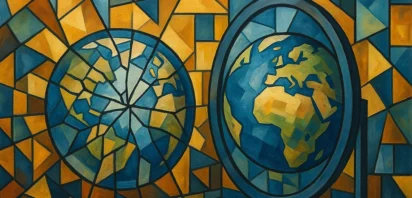
Alternatively, it will totally and swiftly collapse. If this historical “Russian cement” definitively cracks under mounting economic pressure, there will be no soft, managed democratic transition. Russia will genuinely, physically detonate into minor warring shards.
There is no middle ground in this brutal historical equation. It will either remain a feral, aggressive, isolated Empire, or it will fall apart with a deafening crash. A transitional, cozy European alternative for this territory simply does not exist.
The views expressed in this article belong to the author(s) alone and do not necessarily reflect those of Geopoliticalmonitor.com.