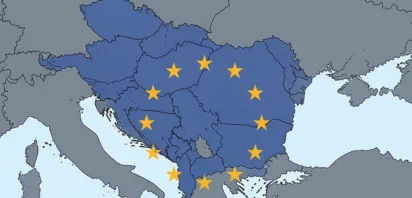
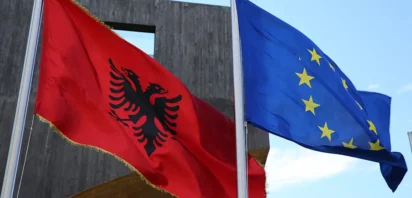
The United States has had a profound influence on the Balkans over the last few decades. This influence bore multifaceted results and was strategically paired with EU accession interests from states like Montenegro, Serbia, and Albania. These states reaped benefits from aid, with signs of gratitude dotting the landscape. George Bush, in statue form, unexpectedly stands prominently in the town center of Fushë Krujë, Albania. The amicable relationship between the Balkans and Western partners runs deep, yet efforts for reform continue to yield little positive change.
EU accession states continue to struggle with institutional weaknesses, political malpractice, and corruption. One reason is that the EU accession process has unintentionally prioritized enforcement optics and crackdowns on corruption over legal safeguards. The dilemma applies to any reforming state that tries to meet accession demands, whether to the EU, ICC, WTO, or other international legal bodies. When states with weaker institutions need to prove reform efforts, they may take shortcuts to showcase change while internally backsliding.
The EU and the US have seen immense opportunity in Balkan states for economic growth, and Western alignment. Both Montenegro and Albania are NATO allies, and they have shown the greatest potential for joining the EU. In fact, both the Obama and Biden administrations subtly encouraged Albania to initiate a justice reform agenda that could match European legal standards, cultivating healthier democratic institutions, and eliminating long-standing corruption. The State Department, along with backing from the Open Society Foundations (OSF), developed proposals for cracking down on corruption and meeting institutional reform benchmarks, all supported by EU expansionists. The story is a familiar one, resembling Western-led development around the world, yet the external incentives used along with institutional design choices, have produced vast unintended consequences.
Reform across the region has been riddled with challenges. A prosecution-dominated judiciary, designed and supported by foreign actors, insulated from the checks of democracy, is now being increasingly criticized for the onset of selective justice and persecution. Thus, rather than enhancing democracy, external influence may have actually weakened it. The façade of positive headlines has come at a cost of underlying centralization of power.
The Lackluster Record of Balkan Legal Reforms
Multiple Balkan states are witnessing similar repercussions from Western-led reform efforts. The EU reported that Montenegro has made no progress for judicial reform despite the Justice Reform Strategy for 2019-2022 and the Action Plan for 2021-2022. The report notes political gridlock, ineffective dialogue, and insufficient judicial accountability. Despite Montenegro implementing expansive reforms in 2020 and subsequent anti-corruption institutions, the justice system continues to suffer from state capture and insufficient resources.
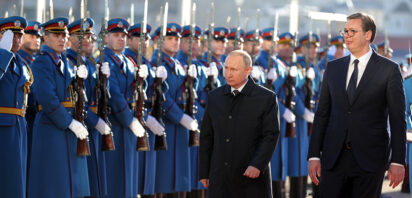
Likewise, in Serbia, the loss of USAID funding in January 2025 immediately showed how states use narratives to both appease Western countries and centralize state power. Serbia responded to the loss in funding by raiding and discrediting NGOs critical for government transparency and human rights reform. It claimed that these NGOs, funded by USAID, were plotting to undermine the state. The quick crackdown has worried the EU and shows how Serbian officials were more eager to please Trump’s campaign against USAID than to follow standard rule-of-law procedures. When EU accession states pair reform with centralization of state power, it actually works against the entire process and creates a backsliding even harder to address in the future.
The Case of Albania
Albania tells a similar story. When Albania’s Special Structure against Corruption and Organized Crime (SPAK) was born out of the 2016 Constitutional reforms in Albania, the process involved both State Department officials and rule of law units in the European Commission. The United States has remained critically involved since these internal reforms, with more than $27.5 million going towards Albania’s judicial reforms, according to the US Embassy in Tirana.
The reforms, unfortunately, instead led to the creation of an imbalanced judicial system, creating a powerful prosecutor-led system without appropriate checks and balances. Indeed, Albania isn’t a one-party state but SPAK is engaged in what many see to be judicial overreach as an unelected body. There was some resistance to how the reform process was progressing, with those concerned claiming that Albania was fast becoming an experiment of the European conception of an “independent prosecutor” not subject to democratic oversight. These claims were quickly dismissed but now seem quite pertinent. For example, critics argue that SPAK is becoming a tool for serving the interests of elites and outsiders, rather than promoting a democratic justice system.
The rationale for corruption is clear. SPAK is incentivized by the EU accession narrative and anti-corruption efforts in Washington to deliver high-profile arrests, provide headlines, and satisfy Western benchmarks. The victim however, is justice itself. There is growing observation by analysts and civil society critics that SPAK discriminates in its prosecutions, going after people who are politically troublesome while ignoring others. The Venice Commission has continued to advocate for judicial independence in Albania as it witnesses the growing concerns.
Investigations have been opaque, oversight is minimal, and unfortunately, pre-trial arrest has become the norm rather than the exception. The detention of former President Ilir Meta, for example, sparked accusations of politicized prosecution, while the prosecution of ethnic Greek mayor Fredi Beleri alarmed minority rights advocates. The most serious case is the still ongoing extended almost year-long pre-trial detention of the mayor of Tirana, Erion Veliaj. Veliaj who according to a 3 November 2025 ruling by the Constitutional Court of Albania was formally reinstated as Mayor, has been held for almost a year in pre-trial detention without being formally charged with any wrongdoing.
It is no coincidence that such high-profile judicial cases are seen as aligning with EU accession goals. Judicial performance is measured internationally, yet arrests are very different than convictions, detentions different than due process, and headlines different than true institutional reform. The arrest of Tirana’s mayor without formal charges reveals a pattern of high-profile detentions timed to deliver results to visiting officials, seeking to showcase commitment to the EU path in name only.
As the US embassy in Albania has said, “corruption and organized crime hinders economic development, it scares away foreign investment, it undermines democracy, and it drives young, ambitious people to other countries for opportunities.” Real reform is needed, but it must uphold democratic norms and the rule of law. Democratic integrity is more important than deliverables or reputation.
In late January 2025, President Trump dramatically switched course from his Democrat predecessors. Along with the removal of USAID, he abruptly halted US funding for SPAK and Albanian judicial reform programs. It was the first implicit recognition that US reform initiatives had turned into a political tool rather than an institutional reform for justice. Scaling back funding is only the beginning. Without detention powers, SPAK cannot operate effectively to mete out justice. In other words, the institution itself contradicts democratic principles and leaves citizens at risk of unfair legal treatment.
Albania and other EU accession states certainly need to reform their justice systems; however, for sustainable change, the international community must demand pre-trial detention restrictions, monthly judicial review for detainees, public reporting of prosecutorial delays, and compatibility with European standards of due process.
The views expressed in this article belong to the author(s) alone and do not necessarily reflect those of Geopoliticalmonitor.com.