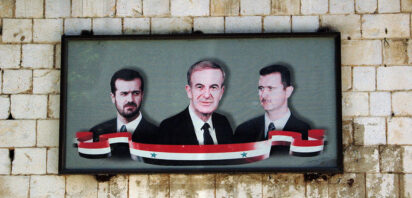
When Ahmed al-Sharaa, better known by his nom de guerre Abu Mohammad al-Julani, walked into the Oval Office this past November, the symbolism was impossible to miss. It marked the first time since 1946 that a Syrian head of state had been welcomed to the White House. Yet this president began his public career not as a diplomat or reformer, but as the emir of al-Nusra Front—al-Qaeda’s Syrian branch—and later as leader of Hay’at Tahrir al-Sham (HTS).
Julani’s trajectory from Camp Bucca detainee alongside Abu Bakr al-Baghdadi to rebel commander, to de facto leader after Assad’s flight in December 2024, and finally to President of Syria’s interim government in January 2025 is often presented as an astonishing twist of Middle Eastern fate.
It is nothing of the sort.
It is the predictable outcome of a decade-long policy architecture that many analysts, including this author, warned about in real time: a regime-change strategy that leveraged jihadist networks, hollowed out the Syrian state, and made balkanization a feature rather than a bug of Western policy. When I wrote on the day Damascus fell that “the collapse has come as part of a long-term Western project that pursued this goal at all costs, even that of supporting organizations formally recognized as terrorist groups,” I was not engaging in hyperbole.
The Long War: Fourteen Years of Methodical Destruction
The story begins not in 2024, but in 2011. Every means was deployed over those fourteen years by the West, Turkey, and the Arab petro-princes in tacit agreement with Israel: a proxy war that served as a training ground for jihadists from half the world and devastated—with frightening human costs and in irreparable ways—all social balances and ethnic structures of the Republic.
The formal vehicle for much of this was Operation Timber Sycamore, the Obama administration’s covert program launched around 2012—a billion-dollar CIA operation that ran through 2017, moving weapons from Libyan stockpiles and Gulf arsenals into the hands of anti-Assad factions.
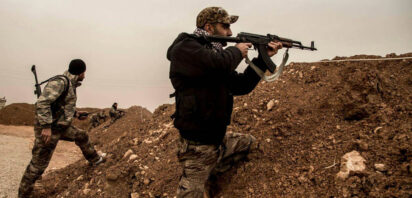
Publicly, Washington insisted it was backing “moderate rebels.” On the ground, that moderate center never materialized. Salafi-jihadist factions—among them Jabhat al-Nusra, led by Julani—proved far more cohesive and effective. The Free Syrian Army label became a convenient brand: Western weapons flowed nominally to FSA units, only to be shared or surrendered to Nusra and its allies.
But the proxy war was only one axis of attack. The West enforced crippling sanctions—the Caesar Act and others—designed to disintegrate Syria’s economic foundations. The United States seized control of Syria’s oil-rich eastern territories, operating from the al-Tanf base to extract resources while denying Damascus its primary revenue stream. Turkey and Israel occupied other territories to establish security zones. And Israel conducted almost daily strikes aimed at degrading Syria’s military system.
After the tree has been attacked and shaken for so long, it is no wonder that the last jolt knocked it down in the historical equivalent of a fraction of a second.
The Delayed Collapse and Julani’s Ascent
The Syrian state could have collapsed as early as 2015. It held out for another nine years thanks to Russian military intervention and Hezbollah’s ground forces. The liberation of Palmyra in March 2016 was highly symbolic. Assad had defended both Syria’s sovereignty and turned Syria into a bulwark confining ISIS.
In late 2024, that bulwark crumbled in days. Hezbollah had been weakened by Israeli strikes. Iran was distracted. Russia, mired in the Ukraine war, could not respond. The Syrian army simply dissolved.
Assad fled to Russia on December 8. Within weeks, Julani—under his legal name—was anointed president for a five-year transitional period, with an interim charter concentrating executive power in the presidency.
What transformed Julani from international pariah to White House guest was not a change in his fundamental nature, but calculated rebranding and Western willingness to accept it. Beginning around 2017, Julani systematically rebranded himself and HTS. He gave carefully choreographed interviews, appeared without jihadist garb, spoke the language of pragmatism, and formally broke with al-Qaeda. Western intelligence agencies and think tanks quietly shifted their assessments. Julani became a “pragmatist” who had “matured.”
The new administration quickly constructed a façade of inclusivity—a “technocratic” government with minority representation, pledges of reconciliation, commitments to reconstruction. Yet beneath this surface, the methods of insurgency persisted: reports of massacres against Alawites, harsh repression in former loyalist areas, HTS security units operating with impunity. Syria had changed flags and faces. It had not escaped the logic of militias.
Israel’s Strategic Windfall: Fragmentation by Design
If the United States’ logic has been regime change and market access, Israel’s has been fragmentation and containment—a vision outlined in Oded Yinon’s 1982 article proposing that Israel’s security depends on the dissolution of large Arab states into smaller sectarian entities.
Syria under Assad, for all its brutality, remained a multi-confessional republic: Alawites, Sunnis, Christians, Druze, Kurds, and Armenians lived under a single state framework. That structure preserved a common Syrian identity and underpinned a national army.
Julani’s rise represents the inverse. A former al-Qaeda emir in the presidential palace is unacceptable to most minorities. Many Christians have emigrated. Druze in the south have armed themselves and look to Israel for protection. Kurds maintain de facto autonomy under US backing. Alawites speak openly of coastal autonomy.
Syria’s fragmentation is now embedded in its social psychology. When minorities no longer trust their Sunni neighbors under Julani’s rule, balkanization has already happened in the mind.
For Israel, the benefits are manifold: a weakened, divided Syria incapable of conventional challenge; justification to extend control beyond the Golan Heights—Israeli forces have seized buffer zones and strategic high ground including Mount Hermon; and the opportunity to position itself as protector of Syria’s minorities, displacing Damascus as their reference point.
During the civil war, Israel maintained studied ambiguity: striking regime targets while quietly providing medical treatment to rebels, including those linked to Nusra, under “Operation Good Neighbor.” The net result is a Syria that functions not as a coherent state but as an archipelago of cantons—exactly the configuration that best serves Israeli security doctrine.
Washington’s Faustian Bargain
The normalization of Julani represents stark realpolitik. As recently as 2023, the State Department offered $10 million for his capture. By early 2025, he was being received in Western capitals.
The pivot began as HTS’s offensive gained momentum. US officials began distinguishing HTS from more extreme groups, emphasizing it had “evolved” and focused on “local governance.” When Damascus fell, carefully worded statements welcomed “the end of the Assad regime” while conspicuously avoiding condemnation of HTS.
President Trump went further, declaring he would “work with whoever can bring stability” and promising to “make Syria successful.” By March 2025, Julani had been invited to Washington. In April, HTS was removed from the Foreign Terrorist Organizations list.
The moral dissonance is profound. The same political class that lectures on democracy and human rights now engages a man whose organization has documented records of torture, extrajudicial killings, and repression. Human Rights Watch reports have been largely ignored.
Yet from a systems perspective, this is entirely consistent. Once Washington committed to regime change through support to opposition forces including jihadist factions, the probability that one would inherit power was significant. The calculus is coldly transactional: Julani delivers what Washington wants—an end to Assad, severance of Iran’s corridor to Hezbollah, market access. In exchange, he receives recognition, sanctions relief, and a blind eye to internal repression.
The Economic Spoils and Regional Powers
With reconstruction needs estimated at $250-400 billion, Julani’s Damascus has become a magnet for foreign investment. The Trump administration suspended the Caesar Act. Gulf states, particularly the UAE, announced billions in reconstruction funds. Turkey secured contracts for its firms. China expressed Belt and Road interest. Russia scrambles to preserve its Latakia and Tartus bases.
What’s striking is the neocolonial character: Syria, devastated by war Western powers helped orchestrate, now depends on those same powers for survival. The terms are extractive—foreign firms profit, sovereignty is compromised, the state cannot set its own development priorities.
Turkey has been perhaps the biggest winner, maintaining close HTS ties throughout the war. Julani’s rise removes a hostile regime, creates conditions for refugee return, and extends Turkish influence. The Gulf states offer funding in exchange for alignment against Iran. Iran, meanwhile, has suffered strategic catastrophe—its land corridor to Hezbollah severed, its investments lost, its alliance structure fractured.
Syria after Syria: The Failure of Statehood
So does Syria still exist? Legally, yes. Politically and sociologically, far less clear.
A state requires shared civic identity, monopoly on legitimate violence, and capacity to provide public goods. Julani’s Syria struggles on all counts.
On identity: Sectarian fractures have not healed. Minorities organize outside the state or under foreign protection.
On violence: Multiple armed factions operate—HTS, Turkish-backed militias, Kurdish forces, ISIS remnants, local warlords. Foreign powers maintain military presence—US forces in the east, Turkish in the north, Israeli beyond the Golan, reduced Russian around Latakia. Syria’s territory is not controlled by its government.
On public goods: Infrastructure is devastated—electricity sporadic, water unsafe, hospitals lacking medicines, schools destroyed. Reconstruction is farmed out to foreign firms on extractive terms. The government lacks capacity to manage development.
Syria has become a laboratory for post-conflict vassalage: formally independent, structurally constrained by external powers. Julani is not the architect of this system. He is its manager—a strongman acceptable because he delivers surface stability without capacity to challenge foreign interests.
The Prediction That Wrote Itself
When Damascus fell, I wrote that the idea of democratic Syria emerging from rebel victory was “risible.” Fifteen months later, that assessment stands.
This was predictable once three choices were made: treat the Syrian state as the enemy requiring destruction; prosecute regime change through support for armed Islamist factions; prioritize external security doctrines over Syria’s territorial integrity and multi-confessional character.
From that point, outcomes narrowed dramatically. Either Assad would cling to power over ruins, or Islamist factions would inherit them under external tutelage. We now inhabit the second scenario.
For Western policymakers, history has vindicated them: Assad is gone, Iran diminished, Israel more secure, contracts being signed. Julani’s background is an inconvenient detail to be memory-holed.
For Syrians who once called themselves simply “Syrian” before any sectarian qualifier, the view is darker. Their country has been transformed from brutal but unified dictatorship into fragmented quasi-state where identity is destiny, foreign powers arbitrate conflicts, and the palace is occupied by a man whose rise was facilitated by powers now claiming to rebuild what they destroyed.
The scorpion I warned about—terrorism finding its lawless base—has not been defeated. It has been given state apparatus, international recognition, and reconstruction funds.
The West has learned to live with President Julani. The question is whether Syrians—of all backgrounds—can endure what Syria has become.
The views expressed in this article belong to the author(s) alone and do not necessarily reflect those of Geopoliticalmonitor.com.