China has taken a decisive step in consolidating its maritime industrial heft with the $16 billion merger of China State Shipbuilding Corporation (CSSC) and China Shipbuilding Industry Corporation (CSIC). The new entity, operating under the CSSC name, is now the world’s largest shipbuilder, boasting more than 530 vessel orders, 54 million deadweight tons, and projected annual revenues of around $18 billion.
While the move was finalized in 2025, the strategic logic dates back to 2019 when Beijing approved the consolidation to curb redundancy, eliminate corruption, and sharpen competitive advantage. It also fits squarely into President Xi Jinping’s military-civil fusion (MCF) doctrine, an economic-military strategy aimed at erasing the line between civilian and defense industries.
From Commercial Capacity to Naval Power
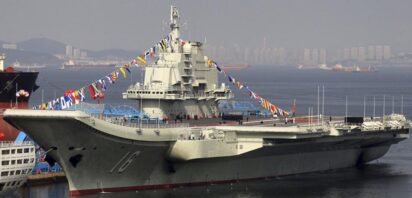
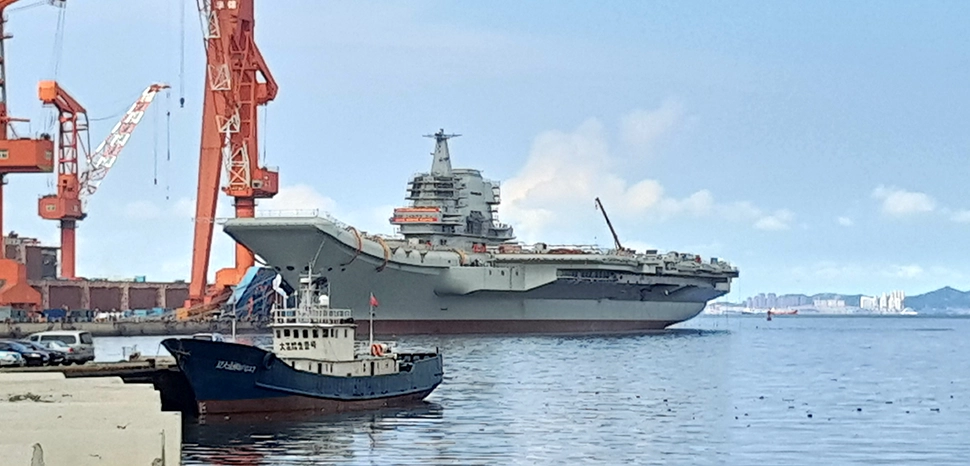
As per the MCF approach, the CSSC merger is not just about industrial streamlining; it is about harnessing commercial shipyards for naval military expansion. CSSC facilities are now equipped to produce both massive container vessels and high-end warships, sometimes in adjacent dry docks.
The Center for Strategic and International Studies (CSIS) estimates that in 2024, one Chinese shipbuilder alone produced more commercial tonnage than all US yards combined have delivered since the end of World War II. This dual-use model allows for rapid naval expansion with relatively low incremental costs, as the necessary infrastructure, supply chains, and skilled labor are already in place.
Moreover, as much as 75% of output from certain dual-use shipyards is sold to foreign clients, including countries aligned with Washington, indirectly fueling China’s technological and industrial base for military shipbuilding.
Building a Naval Juggernaut
China’s dominance is underpinned by decades of state-backed subsidies and directed financing. Since the early 2000s, Chinese shipyards have received an estimated $91 billion in direct subsidies, preferential loans, and tax incentives.
The result is a cost advantage unmatched by Western competitors. For instance, a wind turbine installation vessel that would cost $625 million in the United States can be built in China for just $330 million. Similarly, a large container ship quoted at $333 million in the U.S. can be produced in China for only $55 million.
These disparities are not merely the result of lower labor costs, they stem from vertically integrated supply chains, industrial clustering in provinces like Jiangsu and Shandong, and the ability to amortize fixed costs over a massive order book.
The scale of Chinese output is staggering. In 2024 alone, Chinese shipyards delivered 1,286 vessels totaling 39.12 million tons, representing 54.6% of global output. By contrast, US shipyards delivered just 28 vessels, none of which were oceangoing cargo ships.
South Korea remains a formidable competitor, commanding about 30% of global orders, while Japan holds a smaller though technologically sophisticated share. However, neither matches China’s combination of scale, speed, and state support.
The US Response: Playing Industrial Catch-Up
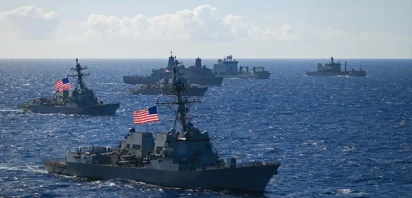
Faced with a shrinking commercial fleet and a naval force that risks being outpaced, the United States is scrambling to rebuild its maritime industrial base. Under President Trump’s second term, the administration has unveiled a series of proposals aimed at revitalizing the shipbuilding sector. These include imposing docking fees on Chinese-built or Chinese-operated vessels entering US ports, creating a National Shipbuilding Office within the White House, advancing legislative measures such as the SHIPS for America Act to channel federal contracts to domestic shipyards, and offering fiscal incentives to modernize shipyards and expand the maritime workforce.
The proposed fee system would start at $50 per net ton per US voyage for Chinese vessels, increasing annually, with caps to limit excessive trade disruption. Critics warn of potential inflationary effects on freight costs, but proponents argue it’s necessary to revive a sector that now accounts for less than 0.05% of global shipbuilding output.
Certain US regions are already positioning themselves for revival. California’s Mare Island and Stockton, along with Solano County, have begun exploring partnerships to attract new shipbuilding contracts.
At the same time, the US is deepening cooperation with allies. South Korean giant HD Hyundai Heavy Industries is contracted for US Navy vessel maintenance, while Japan is pursuing its own shipbuilding expansion, aiming to double market share by 2030.
Even with this renewed political focus, Washington faces significant structural hurdles. Many shipyards operate with aging facilities that have not seen substantial upgrades in decades, while a shortage of skilled shipbuilders reflects the decline of vocational training pipelines. Maintenance backlogs further strain capacity, with US Navy vessels sometimes waiting years for essential refits, such as the submarine USS Boise, which was sidelined for more than half a decade due to a lack of dry dock space. Overcoming these challenges will demand sustained investment, regulatory reforms, and a long-term industrial policy, something the United States has historically struggled to maintain beyond electoral cycles.
Strategic Implications: More Than an Economic Contest
The US-China shipbuilding race is not simply about economics, it is about control over maritime power projection, supply chain security, and global influence. For China, the CSSC merger paves the way for rapid naval vessel production in both peacetime and wartime, greater control over global shipping lanes through both commercial and military presence, and the ability to influence international shipbuilding standards and pricing.
For the United States, the challenge is twofold: rebuild an atrophied domestic industry while forging a network of capable allies to share the burden. This means investing in both infrastructure and geopolitical relationships, particularly in the Indo-Pacific.
In the short term, China’s shipbuilding edge is unlikely to be challenged. Its vast production capacity, cost advantages, and integration of military and civilian production make it the dominant global player. However, sustained US and allied investment, coupled with strategic trade policy, could slow or even reverse the trend over the next decade.
What is clear is that the CSSC merger is more than a business deal. It is a geopolitical statement, a signal that Beijing intends to dominate not only the oceans but also the industrial means of sustaining that dominance. Whether the United States can mount an effective industrial comeback will determine not just the balance of trade, but the future shape of maritime power itself.