As the thunder of artillery and the roar of F-16 engines echoed across the Dangrek Mountains in late July 2025, Southeast Asia’s century-old experiment in regional peace hung by a thread. Thailand and Cambodia—once the twin heirs of Angkor and Ayutthaya—turned their border into a battlefield, inflicting civilian casualties, displacing over 300,000 people, and damaging the sacred Preah Vihear complex in the worst clashes since 2011.
On 28 July, Malaysian Prime Minister Anwar Ibrahim—backed by ASEAN’s collective will—secured an immediate ceasefire between Thailand and Cambodia, halting weeks of artillery exchanges and mass displacement. Yet this pause only highlights the unfinished business: without permanent monitoring, heritage protection protocols, and community reconciliation, the same fault lines will reignite. The ceasefire is a vital pause—but not a solution.
ASEAN’s familiar scripts of ‘quiet diplomacy’ and ‘non-interference’ have thus far yielded only statements of concern, while an urgent recalibration of policy is desperately needed to prevent a slide from intermittent skirmish to full-scale war.
The roots of recent Thailand-Cambodia border tensions lie in colonial carve-ups and nationalist mythmaking. The 1904 and 1907 Franco-Siamese treaties left the Preah Vihear precinct ambiguously demarcated, a fault line Europe bequeathed to two emerging nation-states. Cambodia’s 1962 ICJ victory finally cemented sovereignty over the temple, but successive Thai governments, stung by nationalist politics, have repeatedly reopened the wound—most recently by constructing an unauthorized replica of Angkor Wat in Buri Ram Province, provoking Phnom Penh’s ire under UNESCO rules. Cultural kinship—shared Theravāda Buddhist rituals, intertwined scripts, and common folklore—has thus been perverted into a totem of grievance rather than a bridge of reconciliation.
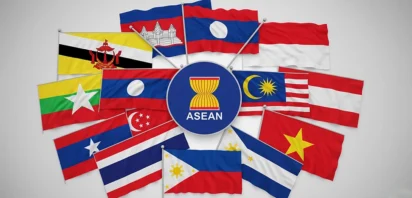
Since its founding in 1967, ASEAN has valued consensus, non-interference, and the peaceful settlement of disputes, as outlined in the Bangkok Declaration and the 1976 Treaty of Amity and Cooperation. Yet these norms have morphed into liability: the ASEAN Way has no mechanism to enforce ceasefires or dispatch observers without mutual consent. In 2011, Indonesia brokered a four-point ceasefire and deployed observers only after repeated clashes exposed bilateral talks’ inadequacy. Today, Malaysia’s Anwar Ibrahim and Indonesia’s Hun Mahardika echo the same recipe—urgent appeals to restraint, offers of good offices—but without binding force, their words risk evaporating amidst renewed gunfire.
To break this deadlock, ASEAN must innovate beyond slogans. It must propose the creation of an ASEAN Heritage and Security Corps (AHSC): a standing, multicountry force of civilian observers, cultural heritage experts, and unarmed security personnel. Under a Charter amendment, AHSC would deploy—at short notice—to any intra-ASEAN flashpoint threatening both human lives and regional patrimony. Its rules of engagement would be clear: ceasefire monitoring, with authority to inspect artillery positions; also, as humanitarian liaison, coordinating relief corridors under the ASEAN flag; besides, as heritage protection, working with UNESCO to secure temples and monuments. By situating historians, archaeologists, and peacekeepers side by side, AHSC would leverage ASEAN’s soft power—recognizing that safeguarding Angkorian and Ayutthayan legacies is inseparable from preserving human security.
Physical observers must be complemented by a Digital Border Diplomatic Network (DBDN). This platform—co-managed by ASEAN’s Secretariat and the ASEAN University Network—would livestream geolocated updates from vetted citizen-journalists, temple-site cameras, and cross-border NGOs. Real-time transparency creates political costs for any party breaking the ceasefire and empowers ASEAN-wide public opinion to demand accountability. Simultaneously, a Khmer-Thai Cultural Exchange Voucher program—funded by the ASEAN Cultural Fund—could underwrite tourism across shared heritage circuits (e.g., joint visits to Angkor Wat and Ayutthaya), village homestays, and communal merit-making ceremonies. By weaving everyday encounters into policy, ASEAN can undercut nationalist firebrands and rebuild trust at the grassroots.
The Cambodia–Thailand border is more than a line on a map—it is a crucible for climate-driven resource competition, landmine hazards, and cyber-propagated hate speech. ASEAN’s existing frameworks for haze, cyber, and disaster response must be integrated under an Inter-Pillar Early Warning System, including landmine clearance teams, joint water-resource management, and cyber-monitoring of incendiary online content. These non-traditional security threats often co-trigger conventional clashes; their joint mitigation can thus serve as confidence-building measures that shape a more resilient borderland ecosystem.
Critics have long warned that ASEAN’s centrality risks becoming mere symbolism. However, by embedding enforceable, multilateral instruments—such as the AHSC, DBDN, and joint threat management—within its Charter, ASEAN can develop from a “talk shop” into a practical security community. Implementing qualified majority voting—an ASEAN-minus-X option for deployment decisions on crises affecting life and heritage—could bypass obstruction without breaking unity. The ASEAN Secretariat must be assigned a dedicated budget line for rapid response, and the Secretary-General given the authority to convene emergency sessions within forty-eight hours of any border incident.
Furthermore, the sounds of Thai artillery on Cambodian hills and Cambodian rockets on Thai plains serve as a clear warning: the old methods of bilateral talks and empty promises won’t work this time. ASEAN’s core principles—justice, the rule of law, and peaceful dispute resolution—must be supported by practical, enforceable measures. Only then can shared Buddhist chants and Sanskrit writings regain their power to unite instead of divide. If ASEAN does not act decisively now, the temples of Preah Vihear and the lives of border residents will tell a tragic story of regional deadlock. The moment to take action is now.
The views expressed in this article belong to the author(s) alone and do not necessarily reflect those of Geopoliticalmonitor.com.