Germany’s new chancellor has quietly reshaped Berlin’s Ukraine strategy in ways that shift the terms of the war and the geopolitical posture of Europe itself. While Washington continues its slow, public, and politically fraught drip of weapons to Kyiv, Merz is playing a different game: strategic ambiguity backed by meaningful escalation.
The headlines focused on Germany’s new defense agreement with Ukraine and vague pledges of increased missile production. But what went underreported is what makes Merz’s approach so different and potentially decisive.
It begins with the Taurus missile.
The Taurus is a long-range cruise missile with a range of 500 kilometers. That puts key Russian military infrastructure well within range, not just on the front lines, but deep into Russian territory. Kyiv has long pleaded for access to these weapons. Berlin had hesitated, fearing escalation. But now Merz has done something bold: he hasn’t just promised support; he’s removed the strings.
Merz pledged to help Ukraine develop its own long-range missile capabilities, free from Western-imposed range or target restrictions. That single decision changes the logic of the battlefield. It means Ukraine can strike legitimate military targets inside Russia without worrying about the political consequences falling on Washington, Berlin, or NATO writ large. This is more than a symbolic gesture; it’s strategic decoupling.
And it’s already being matched by action on the ground.
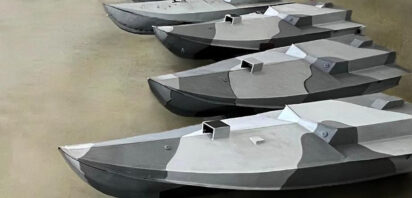
Just this week, Ukraine pulled off its most ambitious cross-border attack to date; not with cruise missiles, but with drones smuggled deep inside Russian territory. The operation, codenamed Spiderweb, targeted four airbases across three time zones, destroying or damaging dozens of aircraft, including Tu-95 bombers and A-50 surveillance planes. These were not random strikes. They were carefully coordinated hits on the very assets used to launch cruise missiles into Ukrainian cities.
The drones were concealed in containers disguised as sheds and transported by truck near Russian airfields. Once remotely activated, they emerged and struck with precision, bypassing Russian air defenses that would have intercepted drones launched directly from Ukraine. According to Kyiv, over $7 billion in Russian military aircraft were hit.
This kind of operation is not just daring; it’s strategically coherent. It complements the logic behind the Taurus missiles: disrupt Russia’s ability to project power from within its borders. While drones offer a low-cost, high-impact asymmetric strike, Taurus missiles can do the same at a greater scale and range, with even more destructive power. Together, they represent the shift from passive defense to active disruption.
More importantly, Merz lifted the range limits that Germany itself had previously imposed on supplied weapons. That’s a quiet but profound break from the risk-averse posture of many NATO capitals. Germany is now signaling trust in Ukraine’s operational judgment and increasing the cost of Russian aggression.
This stands in stark contrast to continued reliance on systems like the US-made Patriot missile defense. In the current phase of the war, Patriots are of limited use. They’re expensive, vulnerable to saturation, and paradoxically, may encourage more aerial attacks. The lesson here is one we should have learned from the Cold War: Overinvesting in defensive systems can actually destabilize deterrence by inviting an overwhelming counterattack.
That is exactly what we’re seeing now: mass drone and missile attacks designed to exhaust and overwhelm defensive coverage. Static defense is not a strategy. Merz’s approach recognizes that and pivots.
Germany is also partnering with Ukraine to co-produce missiles at scale and at speed. In a war where time and supply chains often determine the tempo of conflict, this is no small feat. It reduces Kyiv’s dependence on Western inventories and builds a longer-term foundation for European defense autonomy.
Perhaps most striking is Merz’s decision to station German troops in Lithuania. This move sends a clear signal to Moscow: any adventurism in the Baltic will not go unanswered. However, it also suggests that Taurus missiles, or similar systems, may soon be positioned even closer to Russian territory.
Unlike the Trump-led Washington, where strategy is often broadcast and walked back in real time, Merz is playing his cards close. Germany, he said, will not publicly disclose every channel of support for Ukraine. In a war defined as much by perception as firepower, that ambiguity adds leverage.
Merz’s approach blends clarity of purpose with operational ambiguity. That combination may be what Ukraine needs most right now. Not just more weapons, but a shift in how, where, and when they can be used.
Ukraine’s drone warfare proves it can act with initiative inside enemy territory. Germany’s Taurus decision ensures it can do so with even greater effect. Together, they redefine what victory might look like.
The views expressed in this article belong to the authors alone and do not necessarily reflect those of Geopoliticalmonitor.com.