Europe is struggling to fully grasp the shift in US-Europe relations under a second Trump administration, and the pressing need to rethink long-held strategic assumptions. Leaders on the continent should be worried. First, their states fell behind on technology, then on the economy, and now in politics and foreign policy, too. To change this negative trend, Europe must finally realize its much-announced dream of achieving strategic autonomy and a more assertive foreign policy.
Europe Is Trapped in an Outdated Model
Europe is deeply trapped in its shared values-based approach to diplomacy and international relations, where loyalty to allies plays a major role. It has long operated within a framework of multilateralism, consensus-building, and institutional cooperation, relying on alliances like NATO and the transatlantic partnership to shape its global strategy. This is the liberal theory of international relations put into practice.
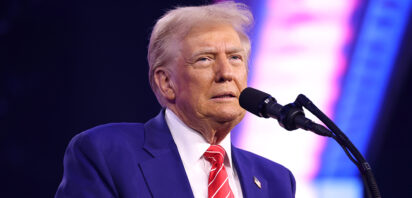
However, this approach is completely alien to President Trump, who views diplomacy transactionally—as a series of deals where power, leverage, and immediate national interest matter far more than long-term alliances or shared values.
The problem is that Europe does not know how to function outside this liberal hermeneutic framework. It struggles to engage in pure realpolitik, where security guarantees are not granted out of loyalty but are bargained for like commodities. Unlike Trump, who thrives in a world of bilateral deal-making and unpredictability, Europe remains stuck in a rules-based, trust-driven paradigm—one that Trump neither respects nor follows.
This leaves the EU in a precarious position. It expects stability and predictability from its partners, but Trump thrives on disruption and leverage. It seeks collective security, while he demands quid pro quo arrangements. Without a fundamental shift in its strategic thinking—one that embraces hard power, self-sufficiency, and strategic autonomy—Europe risks being outmaneuvered in a world where its traditional methods no longer hold sway.
Facing a More Brutal America
Trump’s “America First” policies are nothing but disruptive. NATO faces scrutiny like never before, with Europe nudged—some might say shoved—toward taking greater responsibility for its defense. While this shift was long overdue in some quarters, Trump’s combative tone is leaving lasting scars. This second term intensifies the need for Europe to unify its security strategies, particularly in light of the Ukraine war and open threats to seize Greenland.
Europe remains deeply tied to its ally-based way of doing business and diplomacy. Still, it urgently needs to face the new reality: traditional allies like Trump’s United States are apparently no longer reliable partners. At the same time, so-called adversaries like China and Russia could become strategic allies—at least in economic terms.
The harsh truth is that Trump’s zero-sum, transactional approach treats Europe more like a competitor than a partner. Instead of prioritizing long-standing relationships, he demands economic concessions, defense spending increases, and trade deals that disproportionately benefit the United States. In contrast, cheap Russian gas, oil, coal, and critical minerals, along with Chinese investments and access to its vast consumer market, could provide a much-needed boost to Europe’s struggling economy.
While political and security concerns cannot be ignored, economic survival comes first. If Washington continues down a path of economic nationalism and strategic neglect, Europe may have little choice but to redefine its alliances based on pragmatic interests rather than outdated loyalties.
A New Geopolitical Landscape
Trump’s unpredictable foreign policy is remaking contemporary geopolitics. His admiration for strongmen leaders and skepticism of traditional allies leaves Europe questioning its place in a shifting world order, and by extension, its long-term security.
Whether it’s defense, trade, climate, or diplomacy, Europe faces a monumental challenge: how to position itself as a resilient, autonomous actor in the global arena. The lesson from the first Trump presidency is clear—reactive strategies won’t cut it. Europe must proactively prepare for a world where it cannot take US alignment for granted.
Under Trump, climate action took a backseat in US policy, with the Paris Agreement abandoned. For Europe, which has placed climate change at the heart of its agenda, Trump’s decision to withdraw the United States from the Paris Climate Agreement complicates global efforts to tackle the climate emergency. Can Europe lead the charge alone, or will it find new allies in the absence of US cooperation and financing? Here we see in Xi Jinping’s latest declarations an attempt on the part of China to fill this space and position itself as a reliable ally to Europe.
Europe’s Struggle for Strategic Independence
At its heart, Europe’s challenge in responding to this second Trump presidency lies in its persistent lack of strategic autonomy. While the rhetoric of self-reliance has grown louder in Brussels and across national capitals, translating words into meaningful action has proven elusive. The EU, despite its economic might and political influence, remains deeply reliant on the United States for security, economic stability, and global diplomatic leverage.
Take, for example, Trump’s previous willingness to impose tariffs on European goods, from steel to agriculture, and the subsequent paralysis it caused in European capitals. The EU’s fragmented decision-making processes—where 27 member states must align on a response—make it slow to counter such moves. This signals the need for new governance in the EU’s decision-making process.
Meanwhile, the absence of a unified military force leaves Europe dependent on NATO, where the United Stats plays an outsized role. Trump’s skepticism towards NATO funding and his casual remarks about not defending member states further exposed this vulnerability.
At the core of Europe’s difficulty is a fundamental tension: its ambition to act as a global power versus its deep interdependence with the United States. Even as the EU pushes for greater independence in areas like defense and technology, it struggles to overcome internal divisions, balancing the interests of larger states like Germany and France against other nations like Poland and the Baltic States that privilege closer ties to the U.S.
Trump’s Greenland threats underscore this imbalance. His assertiveness isn’t just a diplomatic test — it’s a provocation that highlights Europe’s inability to decisively counter such threats. Until the EU develops a stronger common defense strategy and diversifies its economic and energy partnerships, it will remain vulnerable to unilateral moves by Washington.
The bottom line? Europe must overcome its internal fragmentation and take bold steps toward strategic autonomy. However, it still has to be translated into operational capabilities, concrete policies, and coordinated action among member states. Without tangible progress in defense, energy independence, and economic resilience, the EU risks remaining a spectator in a world increasingly shaped by power struggles and unilateral decisions.
But is Europe ready to rise to the challenge of Trump 2.0? Politically, economically, and militarily, the answer is no. The EU remains too divided, overly dependent on the United States, and overly committed to outdated diplomatic paradigms to effectively counterbalance “America First.” Unless European leaders adapt quickly, strengthen their economic competitiveness and their own defense capabilities, and embrace a more pragmatic, self-reliant approach, Europe risks being sidelined in a world increasingly dominated by power politics.
The views expressed in this article belong to the author(s) alone and do not necessarily reflect those of Geopoliticalmonitor.com.