Iran’s relationship with both the United States and Israel has long been marked by hostility. Iranian leaders have frequently called for the destruction of the Jewish state, while the chant of “Death to America” has become emblematic of anti-American sentiment in Iran. The animosity between the United States and Iran dates back to the 1953 coup, orchestrated by the CIA, which toppled Prime Minister Mohammad Mossadegh and installed Shah Mohammad Reza Pahlavi, who ruled until the Islamic Revolution of 1979. During this revolution, supporters of Ayatollah Ruhollah Khomeini seized the US embassy in Tehran, holding American diplomats hostage for 444 days. The following year, the United States supported Iraq in its war against Iran. Since then, Iran-backed proxies have launched numerous attacks against both the United States and Israel. The specter of war has loomed large, with Iran often engaging in provocations against both nations, while careful to incite and harass without triggering a full-scale war.
Since the April 2024 Iranian missile attacks on Israel, war between Iran and Israel, and possibly the United States, has become more likely. This report will analyze Iran’s ability to wage war under the PMED approach, which gauges power across the domains of politics, military, economy, and diplomacy.
Political
The political dimension refers to a country’s political systems and institutions, which in turn determines whether the government is stable and if there are internal vulnerabilities that could be exploited during times of war.
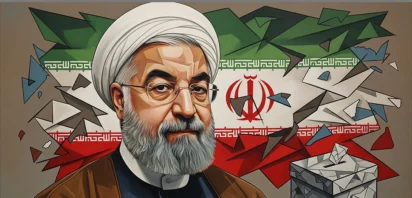
The Islamic Republic of Iran has a population of about 88.5 million people. It is a theocratic republic based on a Shia Islamic legal framework. The country holds elections; however, they are of limited value because the Guardian Council, an unelected body, has the authority to disqualify candidates. Real executive power is held by the head of state, the Supreme Leader Ayatollah Ali Khamenei, who oversees numerous state bodies, including the Guardian Council.
The government is largely dominated by men from the Shiite Muslim majority, while women have fewer rights than in Western democracies. Corruption is a pervasive problem. Transparency International ranks Iran as the 149th least corrupt country out of 180 countries. Amnesty International has identified Iran as being plagued by human rights violations, including suppression of dissent, torture, inhumane conditions in jail, flogging, and the liberal use of the death penalty. Freedom House assigns Iran an overall freedom score of 11 out of 100.